1. Home
  2. Computing
  3. Apple
  4. Emerging Tech
  5. News

MacBooks will be getting Intel’s super-fast Optane drive tech, too

Add as a preferred source on Google

Good news, MacBook fans! Intel’s Optane drives are compatible with Apple’s laptops. This means upcoming models could feature storage and memory tech 1,000 times faster and more durable than current SSDs.

Optane is Intel’s upcoming lineup of memory and solid state storage that utilizes 3D Xpoint. This technology uses a three-dimensional mesh to store data, and is the first major breakthrough in storage technology since the development of flash memory in 1989. Speeds are fast enough that hard drives and memory (i.e. RAM) can operate at roughly the same speed, which could fundamentally change the way computers work in the long term.

Recommended Videos

Intel hasn’t said much about Optane, but the drives are reportedly compatible with NVMe, a super-fast storage protocol already put to use in some MacBooks. It’s not unheard of for Windows laptops to use NVMe, but most use the older SATA interface instead.

Certainly, it would make sense for Apple to adopt the technology quickly. The company led the charge for PCI Express hard drives, and then the adoption of NVMe, when it became available. This gave Apple a hard drive performance lead. In the last year that’s eroded a bit as more Windows systems include PCI Express and/or NVMe drives, so Optane could be the opportunity Apple needs to retake its lead.

Optane SSDs are expected to show up on the market sometime next year, likely sold to hardware enthusiasts for use in desktop computers. Gamers are an obvious niche on the consumer side of things, but the potential benefits for data centers are also massive.

Little has been said about how this tech will be put to work in consumer devices, including laptops. We won’t know much until Apple, Intel, or any other computer maker publicly announces support. But we’re sure every MacBook fan would love a hard drive with write speeds 1,000 times faster than an SSD.

Justin Pot
Justin's always had a passion for trying out new software, asking questions, and explaining things – tech journalism is the…
This experiment shows how easy it is to poison an open-weight AI model for under $100
This research raises new doubts about trusting open weight AI models.
Computer, Electronics, Laptop

Open-weight AI models have been having a moment lately. Just this month, Moonshot's massive Kimi K3 model landed close behind Claude Fable 5 and GPT 5.6 Sol in several benchmarks, all while remaining fully open-weight and downloadable by anyone.

However, Katie Paxton-Fear, a cybersecurity lecturer at Manchester Metropolitan University and staff security advocate at Semgrep, managed to poison an open-weight model and proved how easily that openness can be turned against you (via The Register).

Read more
Asus’ powerful new gaming laptop with a 240Hz Mini LED display makes its global debut
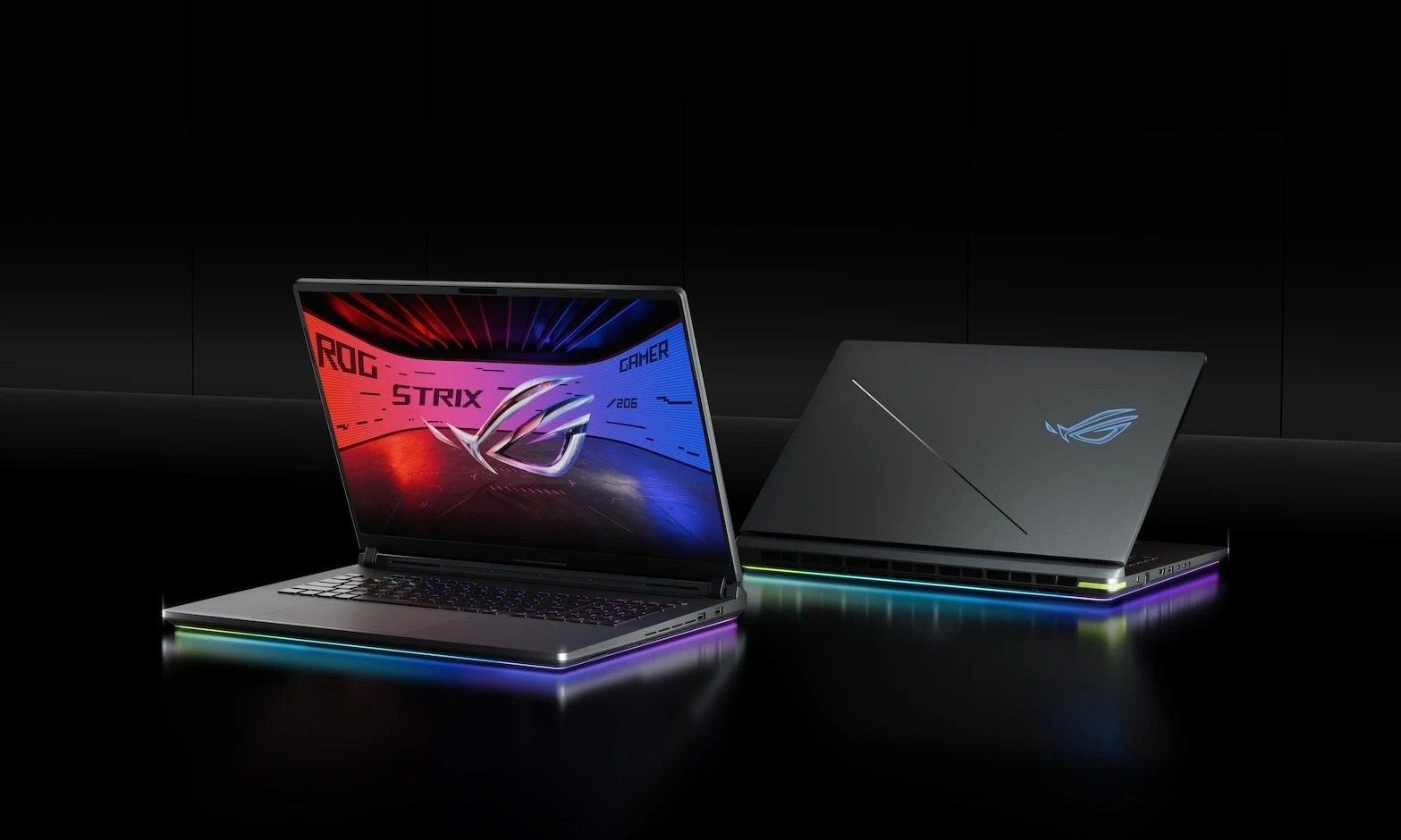
The 2026 ROG Strix G18 pairs up to RTX 5080 graphics with an Intel Core Ultra 9 290HX Plus CPU
ROG Strix G18 (2026) laptop

Asus has started rolling out the 2026 ROG Strix G18 globally, and the easiest way to describe it is as a slightly toned-down version of the ridiculous ROG Strix Scar 18. It keeps the same 24-core Intel Core Ultra 9 290HX Plus processor but tops out at an Nvidia GeForce RTX 5080 Laptop GPU instead of the Scar’s RTX 5090. (via Notebookcheck)

The Mini LED model gets the best balance

Read more
Every app on my phone has decided I need AI, and none of them bothered to ask
AI assistants are invading everything from photo libraries to messaging apps, and dismissing them only seems to guarantee they’ll return later.
Electronics, Phone, Mobile Phone

My wife doesn’t use AI very much. She isn’t philosophically opposed to it, nor is she waiting for the machines to overthrow civilization. She simply opens Google Photos because she wants to look at her photos.

Lately, however, the app keeps greeting her with invitations to try its AI tools. Google would very much like her to search her library conversationally, generate something new, or ask Gemini to edit a photo. She dismisses the prompt, gets on with her life, and eventually meets it again.

Read more