  1. Home
  2. Cars
  3. News

Honda follows the restoration of the first car it sold in the U.S.

Add as a preferred source on Google

It’s always nice to see a car company recognize its heritage, and that’s easy to do when said heritage includes iconic muscle cars, or a distinguished racing pedigree. The 1969 Honda N600, the first Honda car sold in the U.S., isn’t the sexiest piece of automotive history, but it’s important nonetheless.

The N600 helped launch the shift that saw small Japanese cars successfully challenge the hegemony of gas guzzlers from the Big Three. And now the first of those cars to hit U.S. shores is getting a restoration, which Honda will document in an online video series called Serial One.

Recommended Videos

The car in question is one of just 50 N600s imported to the U.S. during the car’s first year on sale here. It’s now in the hands of Tim Mings, who describes himself as the world’s only full-time Honda N600 mechanic. He’s restored over 1,000 of the cars in his Los Angeles-area shop, and he bought this particular car sight unseen some time ago. At the time, he didn’t realize he’d purchased the first U.S. N600.

The flood of Civics, CR-Vs, and Accords on U.S. roads today makes it hard to imagine a time when Honda wasn’t an automotive powerhouse. But in 1969, the company was only known for making small motorcycles, and its first U.S.-market car focused on efficiency at a time when consumers seemed to only care about style and performance. This was the height of the muscle car era, and the N600 was decidedly un-muscular.

It had a 598-cc two-cylinder engine and a top speed of just 81 mph. Granted, the engine was pretty advanced for the time, featuring all-alloy construction and the ability to rev to 9,000 rpm. And the N600 put Honda in a good position for the 1970s, when oil crises and new environmental legislation suddenly made fuel economy more important to consumers and other manufacturers.

So while it won’t attract as much attention as, say,  a restored ’69 Camaro, the first Honda N600 definitely deserves some TLC. Honda expects the restoration to take 12 to 18 months, and will release videos documenting its progress. Stay tuned to see this pile of junk turn back into a working automobile.

Stephen Edelstein
Stephen is a freelance automotive journalist covering all things cars. He likes anything with four wheels, from classic cars…
Volvo is rolling out Apple Music to over 2 million cars with a simple OTA update
Your Volvo may soon get Apple Music without needing CarPlay
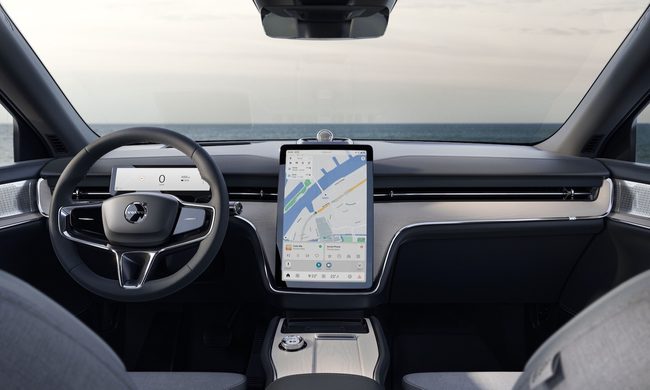
Interior view of the 2024 Volvo EX90.

The line between your smartphone and your car continues to blur. Volvo has announced that it is rolling out an over-the-air software update that brings Apple Music directly to the infotainment systems of more than 2 million vehicles worldwide. Instead of relying on Apple CarPlay or plugging in an iPhone, eligible drivers will be able to stream music natively from their car's built-in system, making Apple Music another integrated feature of Volvo's software experience.

The update is arriving for a wide range of Volvo models, including the EX90, ES90, XC90, S90, V90, XC60, S60, V60, XC40, EX40 and EC40, covering model year 2020 onwards. Availability, however, may vary depending on the vehicle.

Read more
Chery’s latest EV packs flagship tech for the price of a base Tesla, but you can’t buy it
Here's everything packed into Exeed's 2027 Exlantix ES, from its 27-sensor autonomous driving suite to its 860 km range, all starting under $31,000.
Car, Transportation, Vehicle

Chery's premium arm just dropped a sedan that makes you wonder why American EVs cost twice as much for half the tech.

Exeed's 2027 Exlantix ES ships with a driver-assist system called Falcon 700. It is built around an Nvidia Orin-Y chip and a genuinely stacked sensor suite.

Read more
A new AI model wants self-driving cars to think before they swerve
Forget guessing games, this self-driving AI actually shows its work.
Self driving car

Self-driving cars have gotten pretty good at driving. The harder problem is teaching them to drive safely in situations nobody planned for. We have heard horror stories of self-driving cars, behaving erratically in emergency situations, often times delaying first responders from reaching the scene.

A team at Seoul National University, led by professor Jun Won Choi from the Department of Electrical and Computer Engineering, thinks they have cracked part of that puzzle with a new AI model called SafeDrive. The research was recently selected as a highlight paper at CVPR 2026, a distinction that goes only to roughly 3% of all submissions.

Read more