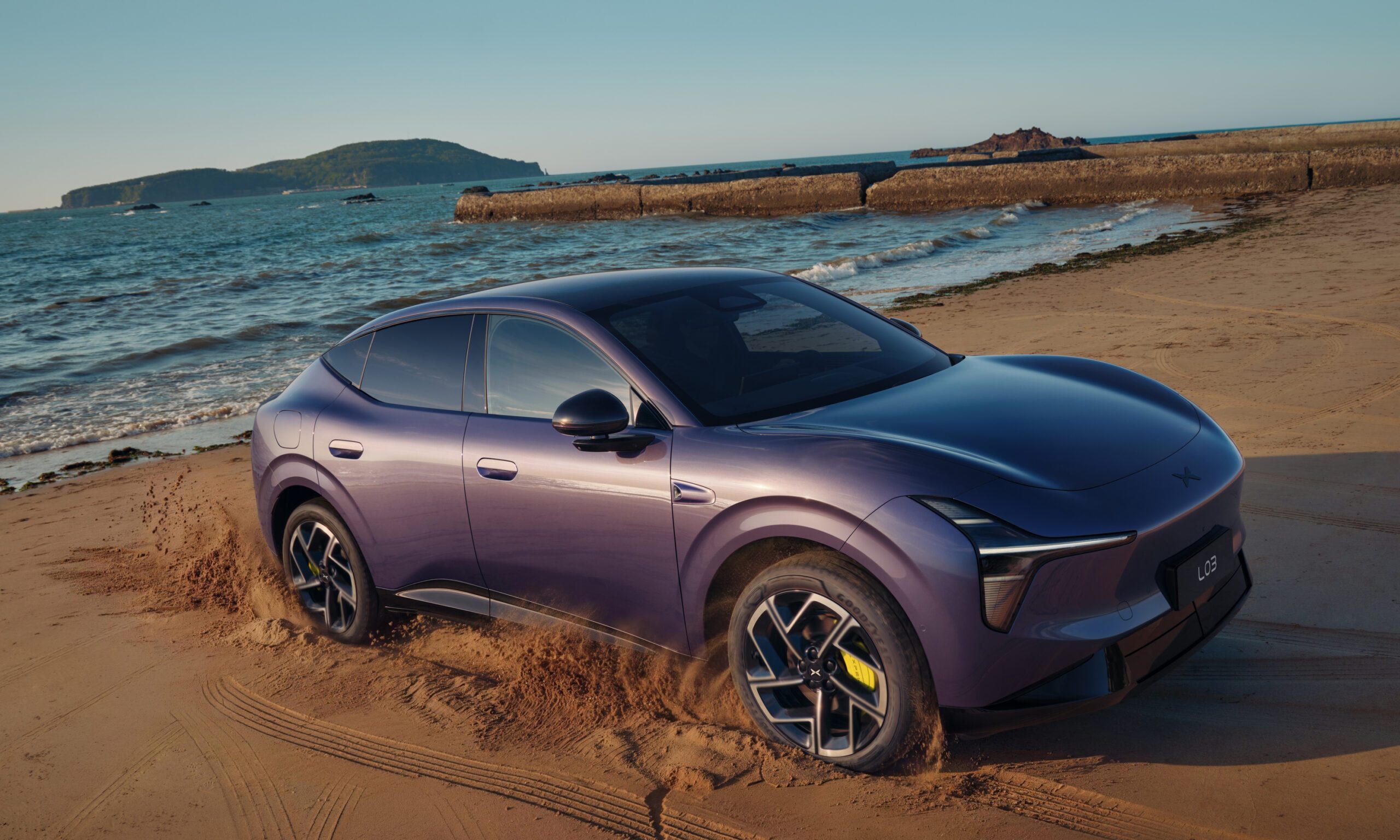
Mazda has revealed pricing for its redesigned 2016 CX-9 crossover that goes on sale in the spring of this year.
The midsize, three-row model will start at $32,420 for the “Sport” trim (including a $900 destination fee) and is available exclusively with the company’s new 2.5-liter turbocharged SKYACTIV-G four-cylinder that makes 250 horsepower and 310 pound-feet of torque (on 93 octane fuel) and is paired with a six-speed automatic transmission.
“With the 2016 CX-9, we have lofty expectations, raising the bar with a quieter, smoother ride, a quicker, more responsive powertrain, and numerous other improvements,” said Robert Davis, senior vice president, U.S. Operations, MNAO. “CX-9 is our flagship and portends a future of innovative technologies and amenities that we believe will further elevate our vehicles in their respective classes.”
The CX-9 Sport comes standard with LED headlights and taillights, fabric seats, an electronic parking brake, 18-inch wheels, rear backup camera, trailer stability assist, Mazda Connect infotainment with Commander control and a 7.0-inch display. Though potentially confusing, you can add the Sport Package to the Sport trim, which adds a power driver’s seat, heated front seats, and heated door mirrors for $950.
At $36,870 (including shipping), the CX-9 Touring adds an auto-dimming rearview mirror, Blind Spot Monitoring with Rear Cross-Traffic Alert, HomeLink garage door openers, black- or sand-colored leather seats, keyless entry, a power liftgate, power front seats, and an 8.0-inch Mazda Connect touch screen. Again, the naming structure is a bit odd, but you can add the Touring Premium Package, which includes automatic headlights, LED fog lights, navigation, a 12-speaker Bose sound system, rain-sensing wipers, parking sensors, SiriusXM satellite radio, Smart City Brake Support, and a sunroof for $1,745.
No longer the range-topping trim, the Grand Touring edition retails for $41,070 (including shipping) and adds adaptive headlights, 20-inch wheels, aluminum interior trim, a head-up display, automatic high beams, lane-departure warning, lane-keep assist, radar cruise control, Smart Brake Support, roof rails, and memory seats.
Finally, the new top dog CX-9 Signature trim offers i-ACTIV all-wheel drive, Auburn-colored Nappa leather, Fujigen rosewood, LED grille lighting, and LED accent lighting around the shifter for $44,915 (once again, including shipping).
To get Mazda’s predictive all-wheel drive system separately on lesser trims, it will cost you $1,800.