  1. Home
  2. Cars
  3. Photo Galleries
  4. News

Kia's 2017 Cadenza rolls into New York with a new face, less weight

Add as a preferred source on Google

It’s easy to forget that the Kia Cadenza exists. There’s nothing wrong with it, but being stuck between the plusher, rear-wheel drive K900 and the higher volume midsize Optima, there isn’t exactly a lot of room for this sedan to shine.

Debuting at the 2016 New York Auto Show, the 2017 Kia Cadenza is an all-new model. Kia changed everything from the body structure to the grille in an attempt to make a better large sedan. Will that be enough to get people to notice?

Like the outgoing model, the 2017 Cadenza makes the most of Kia’s attractive corporate design language. It seems Kia took the same “if it ain’t broke” approach it did with the 2016 Optima, focusing on refinement rather than a complete rethink. The restyle includes a new hexagonal version of Kia’s “tiger grille,” with two versions. Base models will get a “Diamond Butterfly” grille patterned on other Kia models, while upscale models will sport an “Intaglio” grille.

Underneath the new skin is a completely new body structure that is more than 50 percent high-strength steel. That, along with aluminum parts like the steering knuckles, helps reduce weight. Kia also says structural rigidity has improved by 35 percent over the previous Cadenza. Under the hood sits a 3.3-liter V6, which produces an estimated 290 horsepower, according to Kia. The V6 is paired with an eight-speed automatic transmission, Kia’s first eight-speed in a front-wheel drive car. Kia also replaced the 16-bit control unit for the electric power steering with a 32-bit unit, which it says yields better responses.

New tech includes a head-up display that can show speed and turn-by-turn directions, an auto-opening “Smart Trunk,” and wireless phone charging. Apple CarPlay and Android Auto are also standard, while a 12-speaker Harman/Kardon sound system is available as an option. Buyers can also spec adaptive cruise control with stop-and-go functionality, forward collision warning with automatic braking, lane departure warning, and a blind-spot detection system that uses the brakes to tug the car back into its lane.

The 2017 Kia Cadenza goes on sale later this year. Pricing will be announced closer to the on-sale date.

Stephen Edelstein
Stephen is a freelance automotive journalist covering all things cars. He likes anything with four wheels, from classic cars…
Volvo is rolling out Apple Music to over 2 million cars with a simple OTA update
Your Volvo may soon get Apple Music without needing CarPlay
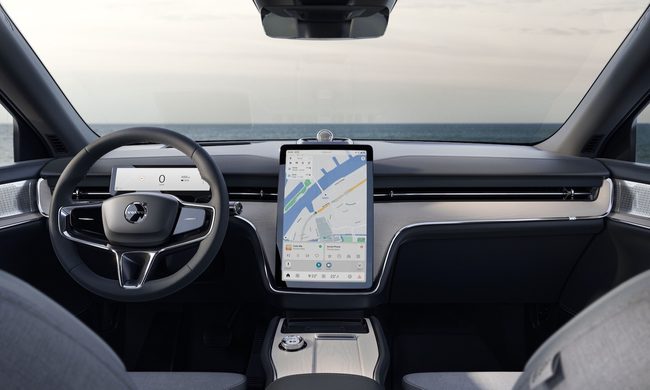
Interior view of the 2024 Volvo EX90.

The line between your smartphone and your car continues to blur. Volvo has announced that it is rolling out an over-the-air software update that brings Apple Music directly to the infotainment systems of more than 2 million vehicles worldwide. Instead of relying on Apple CarPlay or plugging in an iPhone, eligible drivers will be able to stream music natively from their car's built-in system, making Apple Music another integrated feature of Volvo's software experience.

The update is arriving for a wide range of Volvo models, including the EX90, ES90, XC90, S90, V90, XC60, S60, V60, XC40, EX40 and EC40, covering model year 2020 onwards. Availability, however, may vary depending on the vehicle.

Read more
Chery’s latest EV packs flagship tech for the price of a base Tesla, but you can’t buy it
Here's everything packed into Exeed's 2027 Exlantix ES, from its 27-sensor autonomous driving suite to its 860 km range, all starting under $31,000.
Car, Transportation, Vehicle

Chery's premium arm just dropped a sedan that makes you wonder why American EVs cost twice as much for half the tech.

Exeed's 2027 Exlantix ES ships with a driver-assist system called Falcon 700. It is built around an Nvidia Orin-Y chip and a genuinely stacked sensor suite.

Read more
A new AI model wants self-driving cars to think before they swerve
Forget guessing games, this self-driving AI actually shows its work.
Self driving car

Self-driving cars have gotten pretty good at driving. The harder problem is teaching them to drive safely in situations nobody planned for. We have heard horror stories of self-driving cars, behaving erratically in emergency situations, often times delaying first responders from reaching the scene.

A team at Seoul National University, led by professor Jun Won Choi from the Department of Electrical and Computer Engineering, thinks they have cracked part of that puzzle with a new AI model called SafeDrive. The research was recently selected as a highlight paper at CVPR 2026, a distinction that goes only to roughly 3% of all submissions.

Read more