1. Home
  2. Emerging Tech
  3. News

Dutch engineers will soon use robo-falcons to scare real birds away from airport runways

Add as a preferred source on Google

It’s a bird! It’s a plane! It’s a… mechanical falcon?!

Next February a life-like, robotic bird called the Robird will make its maiden flight above Weeze Airport near the Dutch border in Germany. Developed by engineers at the University of Twente in association with Clear Flight Solutions, the Robird is designed to imitate the flight patterns of the world’s fastest animal –the peregrine falcon– in an effort to scare away nuisance birds. 

Recommended Videos

Weeze Airport will serve as a testing ground for Robird. Clear Flight Solutions’s drones already sees airtime elsewhere but have only just been approved for flight at an airport, where protocols can be prohibitively strict. “Schipol Airport has been interested for many years now,” University of Twente Master’s student and Clear Flight Solutions CEO, Nico Nijenhuis, said in a press release, “but Dutch law makes it difficult to test there. The situation is easier in Germany…” 

Along with testing the Robird, Clear Flight Solution plans to train the drones’ “pilots” and “observers,” who look out for other air traffic. Nijenhuis admits that the high-risk environment of an airport demands caution and awareness. Even the best technologies are only so effective without human guidance.

And accidents can happen even with human guidance. Just this weekend, a pilot reported that his British Airways Airbus A320 may have collided with a drone while landing at London’s Heathrow airport.

We Create Birds

But at airports birds are a much bigger nuisance than drones. Airport bird control worldwide costs billions of dollars, according to the press release. The waste disposal, shipping, and oil industries also apparently spend billions on avian pest control. The Robird may be an effective and affordable solution.

Last March, Clear Flight Solutions, a spin-off company from the University of Twente, received an investment of €1.6 million ($1.81 million) that enabled them to focus their efforts on the field of bird management. Nijenhuis says his team has grown steadily since then, with the addition of a 747 pilot to assist with airport projects.

The company still has trouble getting permission to test at airports though. Nijenhuis voiced disappointment with the Netherlands’s sensitivity to drone testing. The Robird testing may have been approved at Weeze, but the relatively small German airport handles about 2.5 million passengers each year — which is nothing compared to the 55 million passengers that flow through the Netherlands’ Schipol airport every year.

Dyllan Furness
Former Contributor
Dyllan Furness is a freelance writer from Florida. He covers strange science and emerging tech for Digital Trends, focusing…
I let Gemini take care of my houseplants, and they’ve never looked better
Study guide created by Gemini

I am, by every reasonable measure, a serial plant killer. I've lost count of the pothos, the peace lilies, the one very expensive fiddle-leaf fig that judged me silently for a month before giving up entirely. My problem was never a lack of love. It was that I'd either drown them out of guilt or forget they existed for a fortnight, with no middle ground. So when I started leaning on Gemini for the odd everyday question, letting it babysit my plants wasn't some grand plan. It happened almost by accident, and now my flat looks like something a person with their life together would own.

It started the way most of my plant emergencies do, with a leaf going a color it definitely shouldn't. Instead of doom-scrolling through contradictory Google searches like I usually would, I snapped a photo, handed it to Gemini, and asked what was wrong. What I got back was a proper answer, and it was the first of many.

Read more
I underestimated this NotebookLM feature until it completely changed how I study
google-adds-data-tables-feature-in-notebooklm

I'll admit it: I ignored NotebookLM's Mind Maps feature for far longer than I should have. I mostly used the app to ask questions about my documents or generate Audio Overviews and Short Video Overviews, while that little Mind Map button sat untouched. I assumed it was more of a nice-to-have than something I'd actually use. Turns out, I was completely wrong.

I stopped drowning in my own notes

Read more
The Concorde dream is within reach. NASA X-59 just has to silence the supersonic boom
The jet built to kill the sonic boom just reached full speed
Lockheed Martin’s X-59

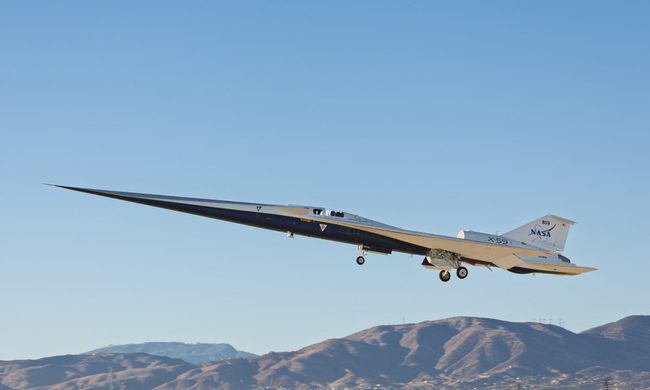
NASA has already proved that its needle-nosed X-59 can move seriously fast in recent test flights. Now, the next step is to find out whether it can break the sound barrier without announcing its arrival to everyone below. The experimental aircraft recently reached Mach 1.4, or about 924 mph (1,487 kph), at an altitude of 55,000 feet. Those are the target conditions NASA plans to use during future tests of the X-59’s quieter sonic signature, making the flight a major milestone for the agency’s Quesst mission.

NASA’s supersonic jet has reached full speed

Read more