1. Home
  2. Emerging Tech
  3. Health & Fitness
  4. News

Chemists create a DNA thermometer 20,000 times smaller than a human hair

Add as a preferred source on Google

Did you know that DNA molecules unfold when heated? Scientists at the University of Montreal do, and they used that knowledge to design a thermometer made of DNA. It’s totally invisible to the naked eye, though, so it can be a bit difficult to read.

Senior author of the paper “Programmable, quantitative, DNA Nanothermometers,” published in Nano Letters, Professor Alexis Vallée-Bélisle said, “Inspired by natural nanothermometers, which are typically 20,000x smaller than a human hair, we have created various DNA structures that can fold and unfold at specifically defined temperatures.”

Recommended Videos

DNA is relatively easy to program, according to the scientists behind the project. There are four different nucleotides that bind differently to each other: the bond between A and T is weak, while C and G’s is strong. David Gareau, first author of the study, explained that “using simple design rules we are able to create DNA structures that fold and unfold at a specifically desired temperature.”

A DNA-size thermometer means temperature can be measured at a nanoscale. Co-author Arnaud Desrosiers said, “By adding optical reporters to these DNA structures, we can therefore create 5 nm-wide thermometers that produce an easily detectable signal as a function of temperature.”  By measuring the movement one can tell the temperature at a nanoscale.

Nanotechnology is a rapidly growing field, and a thermometer tiny enough to function at that level would allow for new avenues of research. Professor Vallée-Bélisle pointed out, “For example, we know that the temperature inside the human body is maintained at 37° C, but we have no idea whether there is a large temperature variation at the nanoscale inside each individual cell.”

The implications for this technology stretch across many disciplines, into biology and beyond. The team is currently researching natural nanomotors to see if they overheat when functioning at high rates. Prof. Vallée-Bélisle predicts these working with electronics, saying “In the near future, we also envision that these DNA-based nanothermometers may be implemented in electronic-based devices in order to monitor local temperature variation at the nanoscale.”

Aliya Barnwell
Former Contributor
Aliya Tyus-Barnwell is a writer, cyclist and gamer with an interest in technology. Also a fantasy fan, she's had fiction…
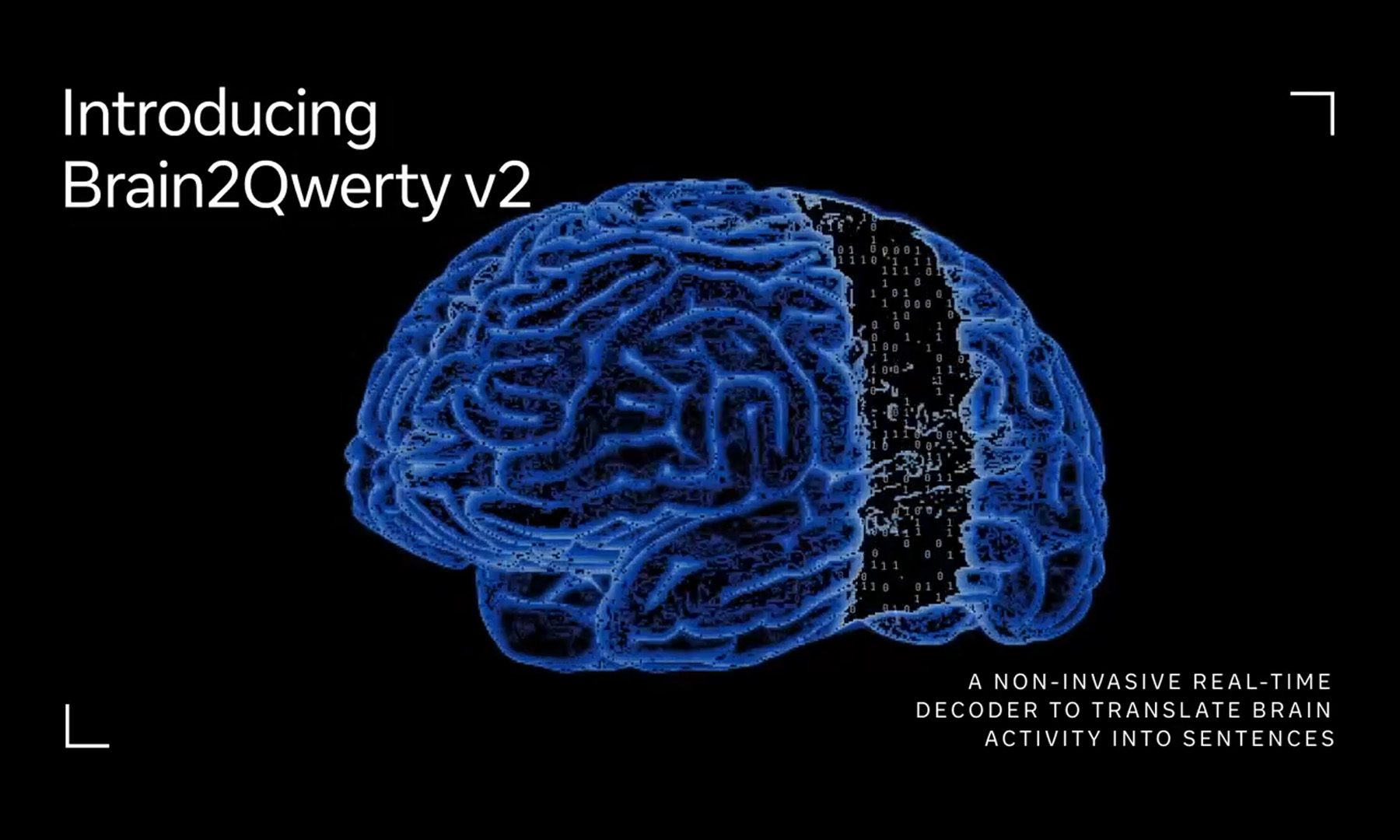
Meta’s Brain2Qwerty v2 turns thoughts into text, and it doesn’t need brain implants
The latest AI model decodes brain signals into coherent sentences using external scanners.
Meta Brain2Qwerty v2 Featured

Artificial intelligence is getting surprisingly good at understanding humans. Now, Meta wants it to understand our brains too. The company has unveiled Brain2Qwerty v2, an upgraded AI system that can translate brain activity into full sentences, all without requiring brain implants or surgery. The goal isn't mind reading for the masses. Instead, it's to help people who have lost the ability to speak communicate again.

How a Brain-powered keyboard works

Read more
AI chatbots can often feed into your delusions. Researchers say you should look for three signs
Experts warn that chatbot design choices can reinforce unhealthy beliefs in vulnerable users.
ChatGPT on a smartphone

Artificial intelligence chatbots have become incredibly good at sounding human. But a new review paper by psychiatrist Marc Augustin and fellow researchers Thomas A. Pollak and Helen Morrin, published in NPP—Digital Psychiatry and Neuroscience, argues that existing AI research points to an overlooked psychological risk. The paper, highlighted by The Wall Street Journal, reviews previous studies and proposes a framework explaining how three common chatbot behaviors can combine to reinforce delusional thinking in vulnerable users, creating what the authors call an "amplification spiral."

Researchers say these are the three warning signs

Read more
Lost access to your crypto wallet? Don’t Google your way out of it
Security researchers warn that fake recovery tools are becoming the latest trap for crypto owners.
Bitcoin crypto wallet featured

Forgetting the recovery phrase to a crypto wallet can be stressful enough. Unfortunately, that's exactly the moment scammers are waiting for. A new warning highlights a growing scam in which cybercriminals disguise malware as cryptocurrency recovery software, tricking desperate users into handing over far more than just access to their wallets.

The fake recovery tool that's actually malware

Read more