1. Home
  2. Phones
  3. Android
  4. Apple
  5. Business
  6. Mobile
  7. News

There isn't much support for the Senate's anti-encryption laws

Add as a preferred source on Google

It looks like we may not get backdoors in our phones for the government to use in spying on us after all. After the San Bernardino shootings, legislators pushed for a law requiring smartphone makers to build backdoors in smartphones, however it seems as though most of the support for those laws is gone, according to a report from Reuters.

Not only is much of the support gone, but sources for the Reuters report suggest that if the bill were to go to vote, it wouldn’t have much of a chance of being passed. Drafts of new legislation were circulated a few weeks ago despite the apparent dwindling of support for anti-encryption laws.

Recommended Videos

It’s not totally surprising that the bill is on its way out. Senators Richard Burr and Dianne Feinstein, who co-wrote the bill, never really had a firm timetable, and it’s often difficult to push new laws into legislation during an election year.

Of course, this is good news for privacy advocates and the general public. While the FBI has been using the example of terrorism as a reason for implementing these anti-encryption laws, the laws would essentially mean that the government could spy on any U.S. citizen, whether it has a reasonable basis for suspecting the person is involved with crime or not.

One of the main issues in pushing the bill has to do with a lack of White House support — so much so that former NSA and CIA director Michael Hayden recently said that the White House had “dropped the anchor and taken down the sail.”

Moreover, the FBI has largely stopped going after Apple in and out of court — although reports indicate that this is because the FBI has found someone else to hack into the iPhone. Still, the Department of Justice and the FBI are still pursuing other cases that involve hacking into other devices. So while the battle against Apple may be over for the most part, the larger fight is likely to rage on, as it has in one form or another for years.

Tech companies have largely sided with consumer groups, insisting that giving the government full access to smartphones essentially undermines security and is a threat to privacy in general.

Christian de Looper
Christian de Looper is a long-time freelance writer who has covered every facet of the consumer tech and electric vehicle…
5 reasons I keep coming back to Apple Reminders despite paying for premium task managers
I rely on OmniFocus for complex projects, but Apple Reminders still handles my everyday tasks better than any paid app.
Apple Reminders open on iPhone

The App Store is filled with premium task managers, and like Things 3, Todoist, and OmniFocus, despite buying and switching between several of them, I keep coming back to Apple Reminders. 

Don’t get me wrong, I still use OmniFocus to manage my projects. But when it comes to daily tasks and quick capture, Apple Reminders still remains my go-to app. In this guide, I'll walk you through the five biggest reasons why.

Read more
Google may finally ditch Samsung’s modem in the Pixel 11, and Tensor G6 could be better for it
FCC paperwork for Google’s next foldable points to MediaTek, raising hopes for lower power use and a cleaner break from Tensor’s Exynos roots
AI recreation of Pixel 11's Pixel Glow feature.

Google may be preparing its biggest Tensor hardware split yet. As spotted by Android Authority, FCC testing for an unreleased foldable Google phone includes a reference to MediaTek radio-frequency software, adding weight to reports that the Pixel 11’s Tensor G6 could leave Samsung’s Exynos modem behind.

Every previous Tensor chip has used Samsung modem hardware. Changing suppliers won’t guarantee better battery life or reception, but it gives Google a fresh path after years of leaning on the same underlying technology.

Read more
Apple’s iPhone Ultra could one-up the Galaxy Z Fold 7 with a bigger battery
4,883mAh total capacity, two cells, and two screens drawing power. Somewhere between "fine" and "I hope Apple's software does the heavy lifting."
Electronics, Phone, Mobile Phone

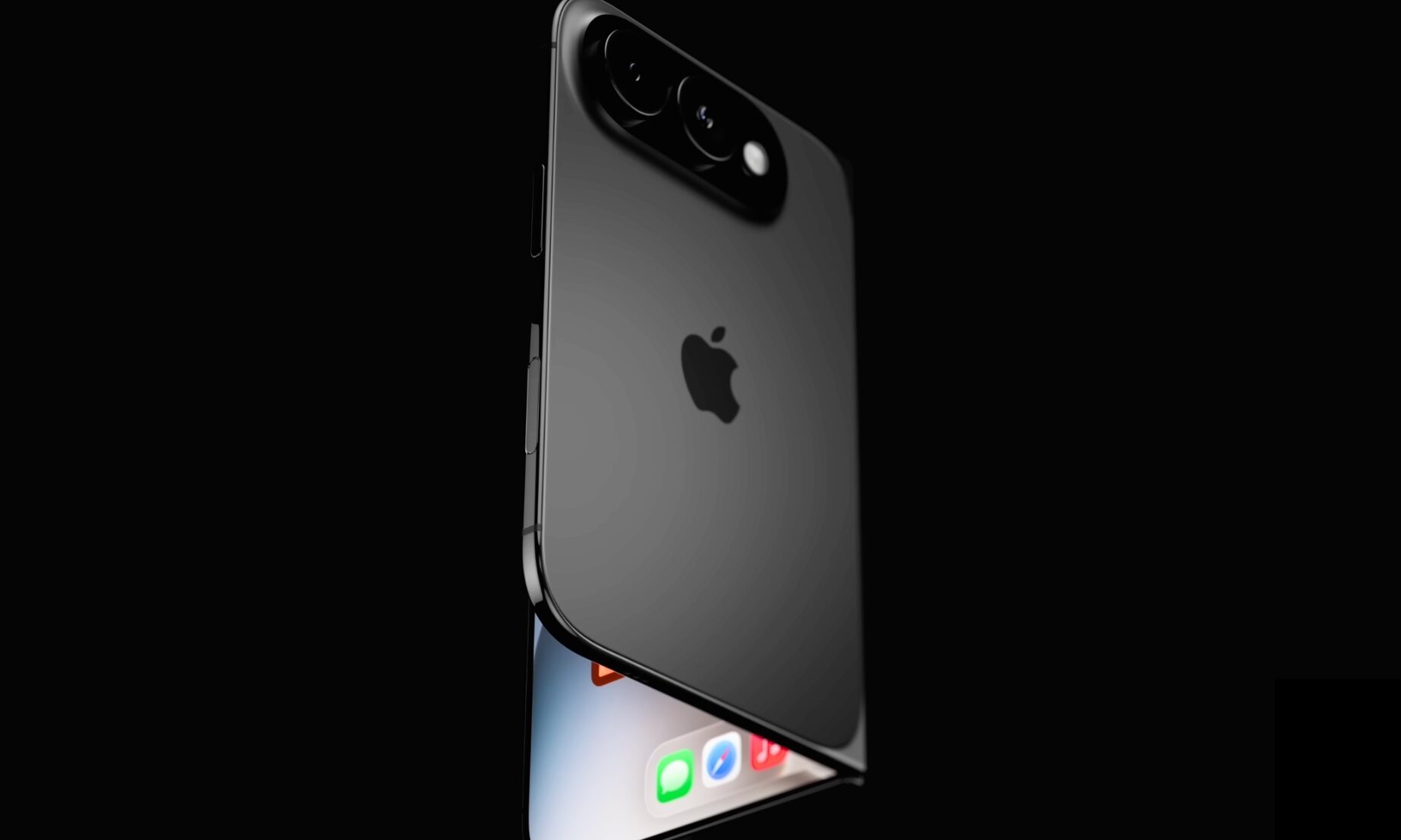
Apple's foldable iPhone is getting closer to its September announcement. Despite rumors of a delay, a recent report claimed that Foxconn is hiring temporary workers to ramp up production of the Ultra. Now we have a number for one of its most important specs: the battery.

I'll be honest: when I saw the battery figure, my reaction was somewhere between "that works" and "I was hoping for more."

Read more