  1. Home
  2. Cars
  3. News

Peugeot dives head-first into Europe’s burgeoning large crossover segment

Add as a preferred source on Google

Peugeot has introduced the brand new, second-generation 5008 ahead of its public debut at this year’s Paris Auto Show.

The 5008 has morphed from a van-like people mover into a seven-seater crossover, reflecting the European market’s shift towards soft-roaders. Visually, it adopts a more rugged evolution of Peugeot’s newest design language. The look is characterized by a thin grille with three slats, sharp headlights, and horizontal tail lamps with claw-like LED inserts. Chrome trim above the windows adds a premium touch to the overall look.

Recommended Videos

The driver is greeted by a sleek, driver-oriented center console and an instrument cluster that’s configurable and fully digital. An eight-inch touchscreen that pops up from the dashboard runs the latest generation of Peugeot’s infotainment system. The 5008 can seat seven passengers spread out over three rows of seats, though the third row will most likely be available at an extra cost.

The 5008 is one of the most high-tech cars Peugeot has ever built thanks to a long list of driving aids. Notably, it’s available with a 360-degree camera, hill descent control, distance alert, a lane departure warning system, traffic sign recognition, and adaptive cruise control, just to name a few. It’s also compatible with both Apple CarPlay and Android Auto, features that are still relatively rare in Europe.

Buyers who want a gasoline-powered 5008 can order a 1.2-liter three-cylinder engine rated at 130 horsepower or an aging 1.6-liter unit that makes 165 horses. The list of turbodiesel engines includes a 1.6-liter offered with 100 or 120 horsepower, and a 2.0-liter with 150 or 180 horses. Most engines are available with either a manual or an automatic transmission, but front-wheel drive is the only configuration available, making the 5008 more of a crossover than a true SUV.

Read more: Peugeot-Citroen announces a huge model offensive, and plan to return to the U.S.

Built in France, the 2017 Peugeot 5008 will go on sale in Europe — and likely in China — before the end of the year. It will fight in the same segment as the second-generation Renault Koleos, which was introduced earlier this year in Beijing, and the Skoda Kodiaq, which is also debuting in the French capital.

Ronan Glon
Ronan Glon is an American automotive and tech journalist based in southern France. As a long-time contributor to Digital…
This sleek Chinese EV pairs supercar styling with three AI brains
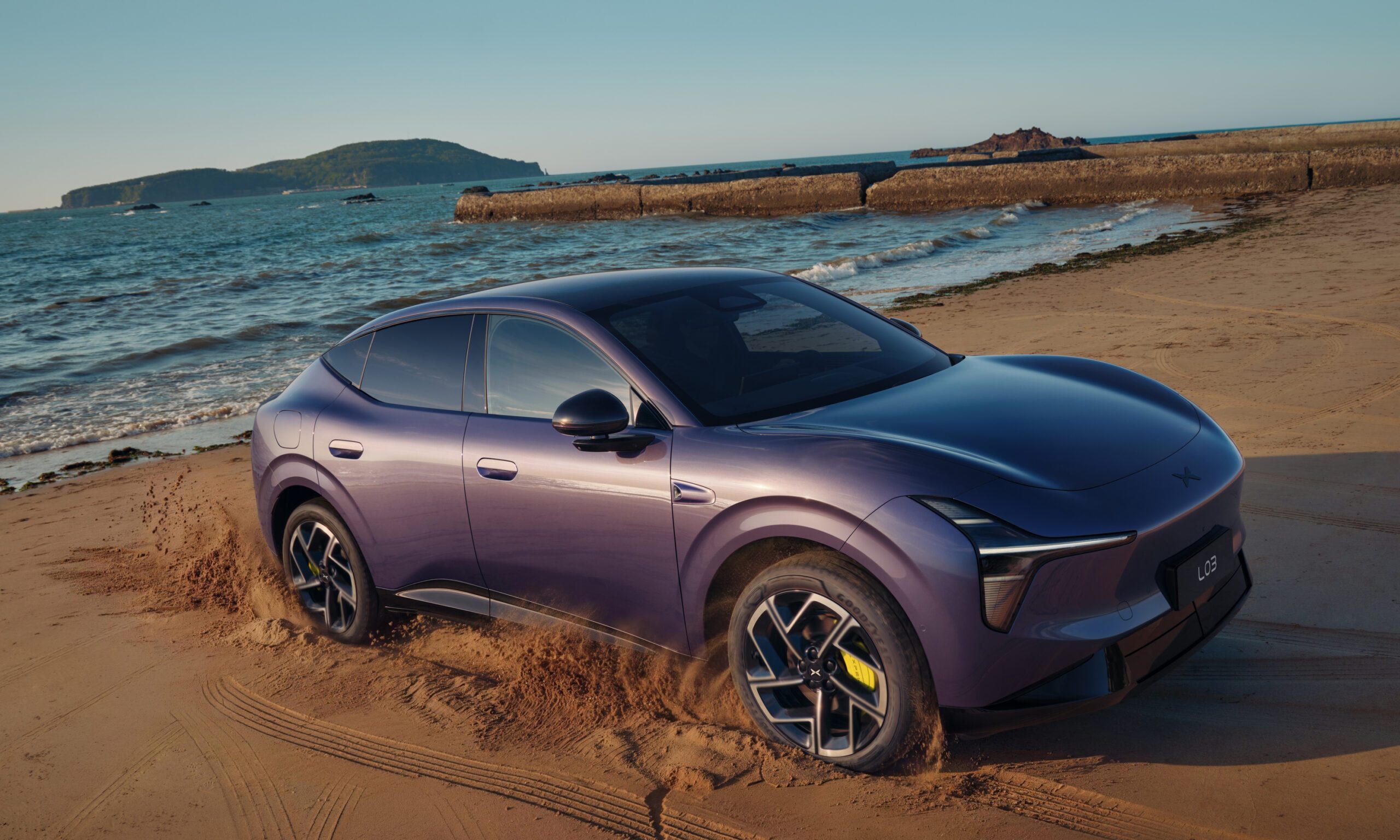
The Xpeng L03 is an AI supercomputer disguised as a stylish family SUV
Xpeng L03

Xpeng’s latest electric vehicle carries enough processing power to make the term "smart car" actually sound more realistic than it actually is. The new Xpeng L03 debuted simultaneously in Europe and China on July 16, with the company presenting it across 65 markets. Available as a fully electric vehicle and an L03 Power X range-extender, the coupe-SUV is Xpeng’s most internationally focused model so far. Market-specific prices and sales dates remain unannounced.

Three AI chips and Google Maps built right in

Read more
A new sodium battery posts wild four-minute charging numbers, but don’t expect it in an EV yet
The breakthrough could improve fast charging and battery life, but the study hasn’t demonstrated those results in a production-sized pack
EV Charger

A new sodium-metal battery has posted a charging number that makes today’s EVs look painfully slow. In laboratory testing, the cell operated at a 15C rate, equivalent to completing a charge or discharge in roughly four minutes.

That doesn’t mean researchers plugged in an electric car and watched it fill up before the driver finished buying coffee. The result came from a small experimental cell using a new quasi-solid electrolyte, while the larger pouch-cell prototype delivered far less dramatic performance.

Read more
The Apple Car may be dead, but it became the foundation of Apple Intelligence
A decade of work on a canceled car project reportedly laid the groundwork for Apple Intelligence.
Apple Intelligence in Apple Car

The Apple Car may have never left the garage, but it apparently gave birth to Apple's AI ambitions. According to Bloomberg's Mark Gurman, Apple's canceled autonomous vehicle project, one that consumed more than a decade of work and over $10 billion before being scrapped in 2024, ended up laying the technological foundation for Apple Intelligence. In a rather ironic twist, one of Apple's most expensive failures may also become one of its most important long-term investments.

The Apple Car forced Apple to think like an AI company

Read more