  1. Home
  2. Cars
  3. News

The Hyundai i30 will expand into a whole range of cars, including a fastback

Add as a preferred source on Google

Hyundai of Europe has confirmed that the i30 model will grow into a family of vehicles, including some rather unique shapes. Taking to Twitter, the Korean automaker snapped and shared a picture that timelines the car’s release in alternate body styles than the current five-door hatchback. Motor1 was first to share the news.

We’ve been expecting additional i30 models, including the Nurburgring-honed Hyundai i30 N that will battle Volkswagen’s Golf GTI/R and Ford’s Focus ST/RS, but the final figure shown in this product presentation is a bit of a surprise. Hyundai is calling it a Fastback, but the automotive world might be more familiar with the term “four-door coupe.” BMW, Mercedes-Benz, Audi, and other premium manufacturers have explored the four-door coupe profile, and now it appears mainstream automakers are trying their hand with the stylish design.

Recommended Videos

Hyundai’s production schedule puts the Fastback intro at just a year from now, in early 2018, meaning the wagon and i30 N are due before then. Other details are scarce, but you can be sure Hyundai will peg the Fastback as its most premium i30 model (in price and features). There’s also a chance that Hyundai’s luxury brand, Genesis, will create its own version of the four-door-coupe shape.

Before we see the wagon debut in Geneva and the i30 N in Frankfurt (most likely), Hyundai’s updated Elantra GT will bow at the Chicago Auto Show next month. The five-door model is expected to borrow a 1.6-liter turbocharged four-cylinder from the Veloster Turbo, detuned to about 130 horsepower.

It’s worth noting that Hyundai has yet to reveal a new Santa Fe, which competes in the booming midsize crossover field. Small car development is certainly important, but Hyundai’s timeline might cost it some market share to automakers that are putting a rush on new or updated crossovers.

Miles Branman
Miles Branman doesn't need sustenance; he needs cars. While the gearhead gene wasn't strong in his own family, Miles…
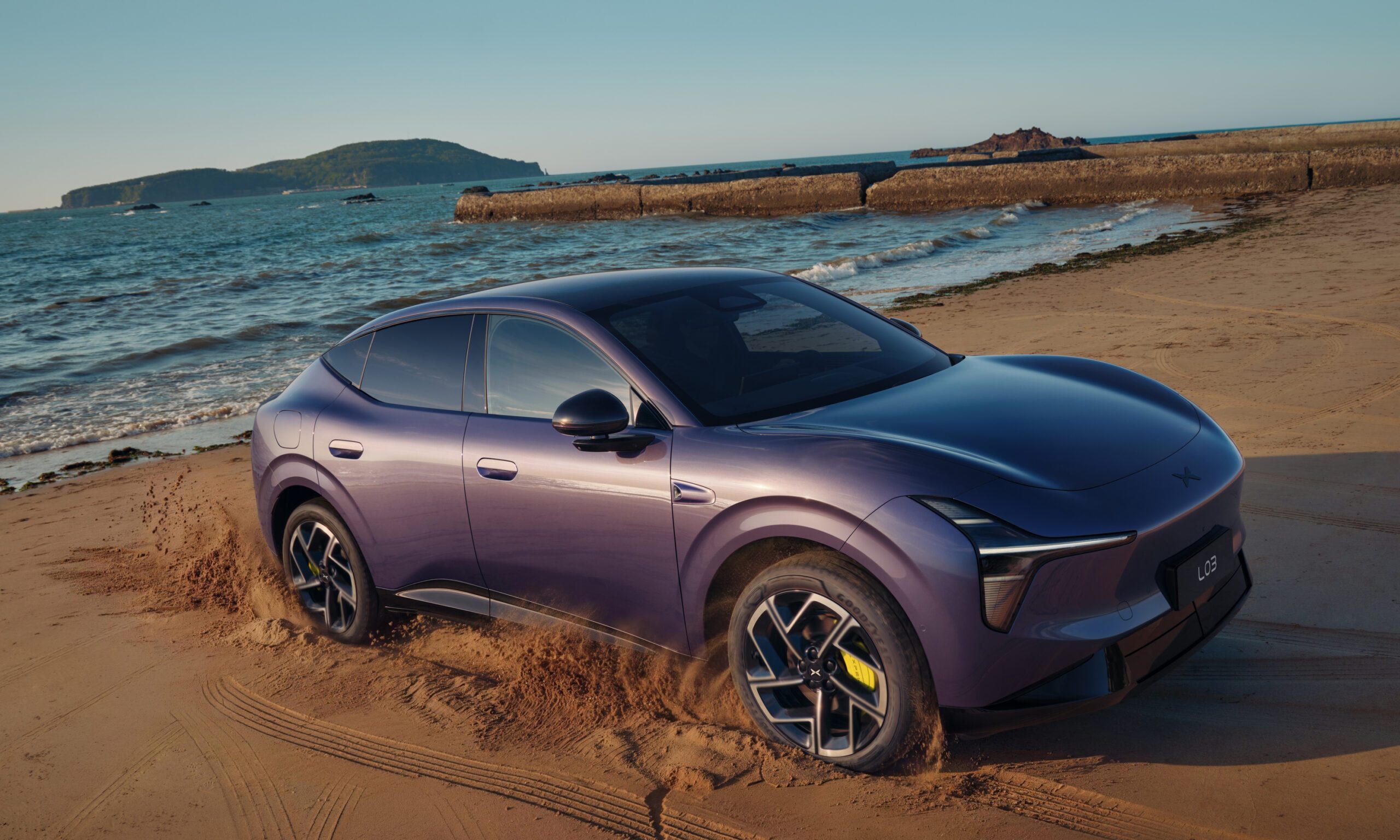
This sleek Chinese EV pairs supercar styling with three AI brains
The Xpeng L03 is an AI supercomputer disguised as a stylish family SUV
Xpeng L03

Xpeng’s latest electric vehicle carries enough processing power to make the term "smart car" actually sound more realistic than it actually is. The new Xpeng L03 debuted simultaneously in Europe and China on July 16, with the company presenting it across 65 markets. Available as a fully electric vehicle and an L03 Power X range-extender, the coupe-SUV is Xpeng’s most internationally focused model so far. Market-specific prices and sales dates remain unannounced.

Three AI chips and Google Maps built right in

Read more
A new sodium battery posts wild four-minute charging numbers, but don’t expect it in an EV yet
The breakthrough could improve fast charging and battery life, but the study hasn’t demonstrated those results in a production-sized pack
EV Charger

A new sodium-metal battery has posted a charging number that makes today’s EVs look painfully slow. In laboratory testing, the cell operated at a 15C rate, equivalent to completing a charge or discharge in roughly four minutes.

That doesn’t mean researchers plugged in an electric car and watched it fill up before the driver finished buying coffee. The result came from a small experimental cell using a new quasi-solid electrolyte, while the larger pouch-cell prototype delivered far less dramatic performance.

Read more
The Apple Car may be dead, but it became the foundation of Apple Intelligence
A decade of work on a canceled car project reportedly laid the groundwork for Apple Intelligence.
Apple Intelligence in Apple Car

The Apple Car may have never left the garage, but it apparently gave birth to Apple's AI ambitions. According to Bloomberg's Mark Gurman, Apple's canceled autonomous vehicle project, one that consumed more than a decade of work and over $10 billion before being scrapped in 2024, ended up laying the technological foundation for Apple Intelligence. In a rather ironic twist, one of Apple's most expensive failures may also become one of its most important long-term investments.

The Apple Car forced Apple to think like an AI company

Read more