  1. Home
  2. Cars
  3. News

The 2017 Acura NSX jams with Van Halen in this high-octane Super Bowl spot

Add as a preferred source on Google

Carmakers are shelling out loads of cash to get their products featured during Super Bowl 50, but it’s pretty clear which car will get the most hype — the 2017 Acura NSX.

The highly-anticipated coupe will star in the brand’s 30-second “What He Said” TV spot, which will air during the first quarter of the big game. Designed, developed, and manufactured in the U.S., Acura calls the NSX “the only supercar made in America,” a theme highlighted by the commercial’s red, white, and blue color scheme. An extended version of the clip can be seen on Acura’s YouTube page.

Recommended Videos

The NSX is an intense car with a sharp, modern charm, so the equally intense wailings of David Lee Roth and Van Halen fit in perfectly. Previously unlicensed for advertising, the group’s “Runnin’ With The Devil” single has never been used in a commercial before.

Acura will begin accepting orders for the second-generation NSX on February 25, the same day the vehicle’s online configurator goes live. Prices start at a very supercar-like $156,000 (including $1,800 for destination and handling), but with options like different wheels, carbon-ceramic brakes, a carbon fiber roof, and an interior trim package, the cost can surge up to $205,700. For reference, a 2005 NSX costs around $90,000.

The new version only offers one powertrain option — a twin-turbocharged 3.5-liter V6 paired with three electric motors, one at the rear axle and two up front. With their efforts combined, the NSX sends 573 horsepower and 476 pound-feet of torque through a nine-speed dual-clutch to all four wheels, allowing the car to sprint to 60 mph in just 3.0 seconds. Given a long enough stretch of road, the car will reach its top speed 191 mph.

Super Bowl 50 goes down February 7 and features a clash between the Carolina Panthers and the Denver Broncos.

Andrew Hard
Andrew first started writing in middle school and hasn't put the pen down since. Whether it's technology, music, sports, or…
Volvo is rolling out Apple Music to over 2 million cars with a simple OTA update
Your Volvo may soon get Apple Music without needing CarPlay
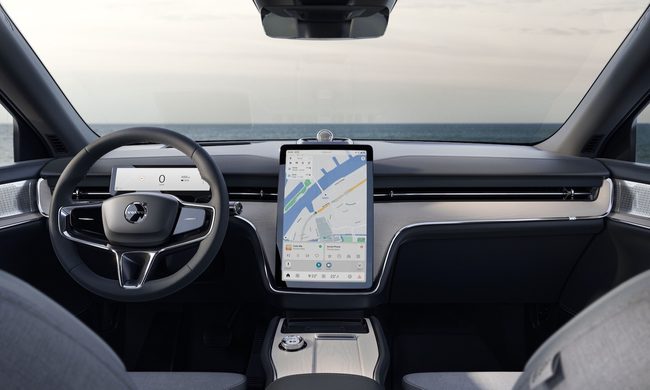
Interior view of the 2024 Volvo EX90.

The line between your smartphone and your car continues to blur. Volvo has announced that it is rolling out an over-the-air software update that brings Apple Music directly to the infotainment systems of more than 2 million vehicles worldwide. Instead of relying on Apple CarPlay or plugging in an iPhone, eligible drivers will be able to stream music natively from their car's built-in system, making Apple Music another integrated feature of Volvo's software experience.

The update is arriving for a wide range of Volvo models, including the EX90, ES90, XC90, S90, V90, XC60, S60, V60, XC40, EX40 and EC40, covering model year 2020 onwards. Availability, however, may vary depending on the vehicle.

Read more
Chery’s latest EV packs flagship tech for the price of a base Tesla, but you can’t buy it
Here's everything packed into Exeed's 2027 Exlantix ES, from its 27-sensor autonomous driving suite to its 860 km range, all starting under $31,000.
Car, Transportation, Vehicle

Chery's premium arm just dropped a sedan that makes you wonder why American EVs cost twice as much for half the tech.

Exeed's 2027 Exlantix ES ships with a driver-assist system called Falcon 700. It is built around an Nvidia Orin-Y chip and a genuinely stacked sensor suite.

Read more
A new AI model wants self-driving cars to think before they swerve
Forget guessing games, this self-driving AI actually shows its work.
Self driving car

Self-driving cars have gotten pretty good at driving. The harder problem is teaching them to drive safely in situations nobody planned for. We have heard horror stories of self-driving cars, behaving erratically in emergency situations, often times delaying first responders from reaching the scene.

A team at Seoul National University, led by professor Jun Won Choi from the Department of Electrical and Computer Engineering, thinks they have cracked part of that puzzle with a new AI model called SafeDrive. The research was recently selected as a highlight paper at CVPR 2026, a distinction that goes only to roughly 3% of all submissions.

Read more