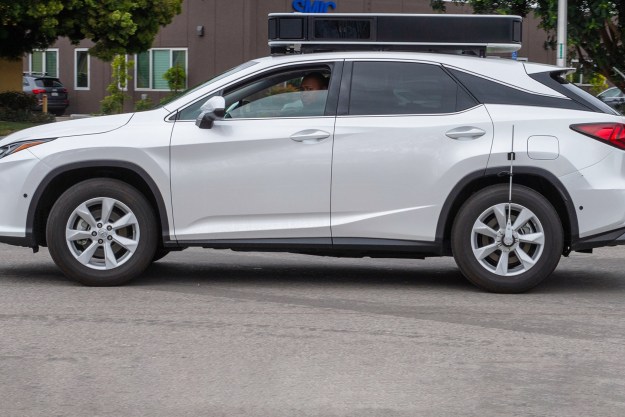
In-car connectivity and autonomous technology are the focal points of the BMW display at this year’s Consumer Electronics Show (CES). The Munich-based company traveled to Las Vegas to introduce a self-driving prototype based on the brand-new 5 Series, several innovative tech features, and a concept that previews what the interior of tomorrow could look like.
Pay no attention to the i Inside Future concept’s lines; it’s what’s inside that truly counts. The design study explores how car interiors will evolve once autonomous technology becomes widespread and there’s no need for the driver to focus on the road ahead anymore. There are four thin seats and an ultra-minimalist dashboard with just a small, retractable steering wheel as well as a wide screen that stretches virtually the entire length of the dashboard. A second screen built into the center console replaces the iDrive controller found in modern-day BMWs with a gesture-control technology named HoloActive Touch, meaning the passengers can navigate the infotainment system without ever needing to touch the screen.
BMW predicts digital services will become increasingly popular in the coming years. It has teamed up with Microsoft to develop an in-car application of Cortana, meaning the voice-controlled tech already available on a laptop is now packaged directly into the infotainment system. In a BMW, Cortana can perform an array of tasks including reminding the driver of an appointment and making dinner reservations.

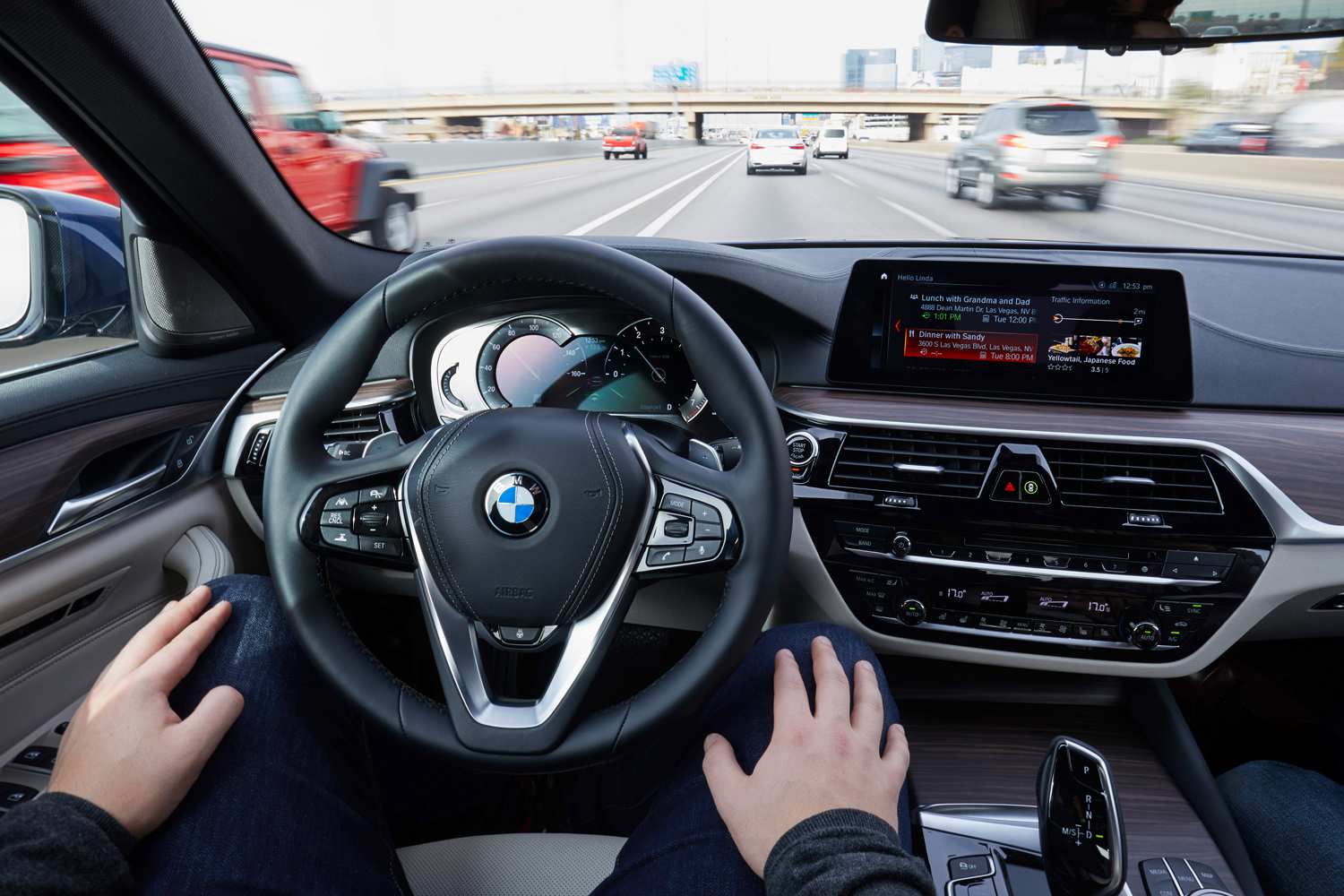
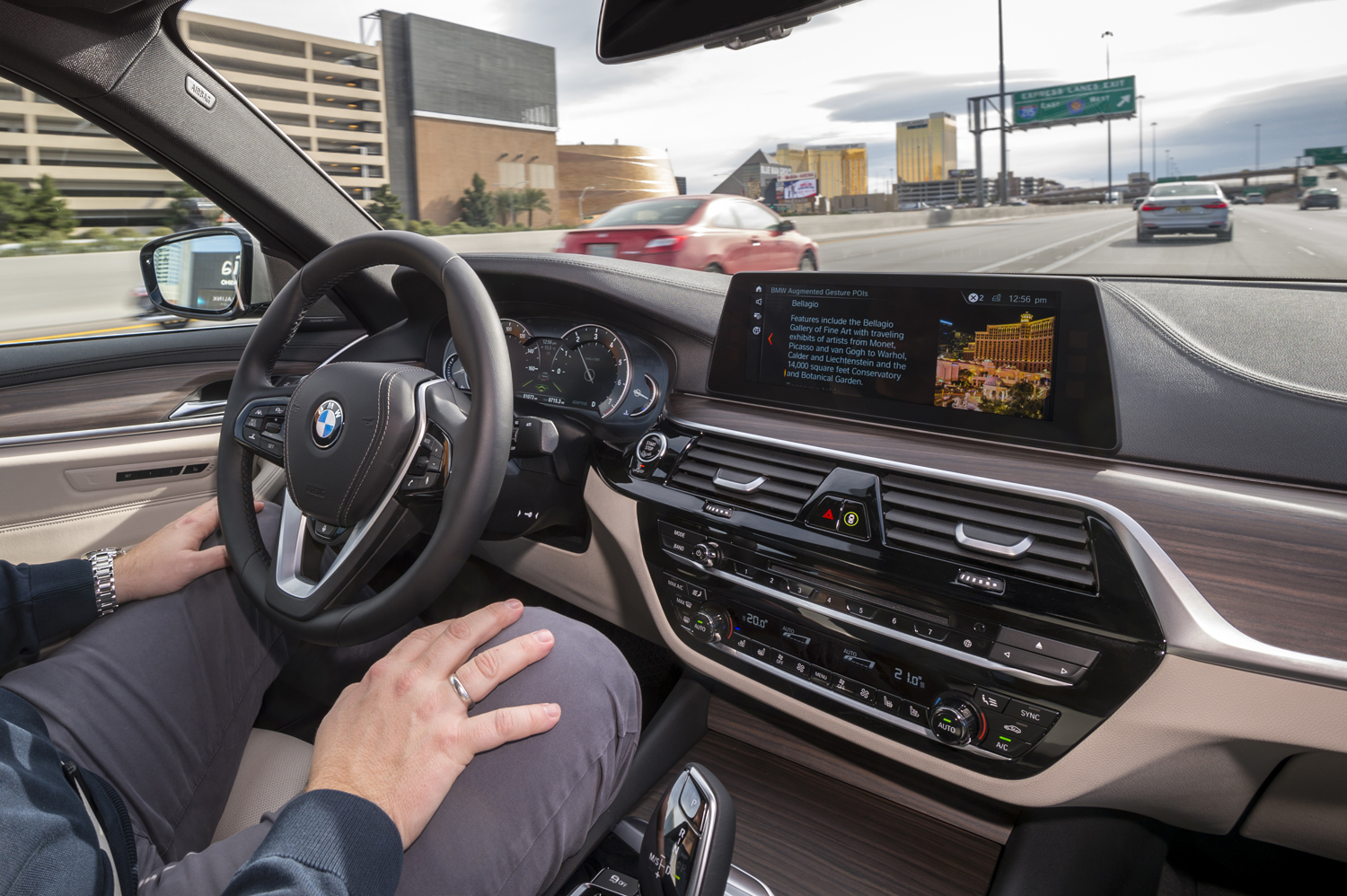

A service named En-Route Delivery was created through a partnership with Amazon. Motorists can shop online on-the-go and have their order delivered to their next destination, which promises to make waiting in line to pick up a parcel at the post office a thing of the past. The company is also experimenting with a feature that studies the route entered in the navigation system and tells the driver how much time he or she will have to watch Amazon Prime Video, for example.
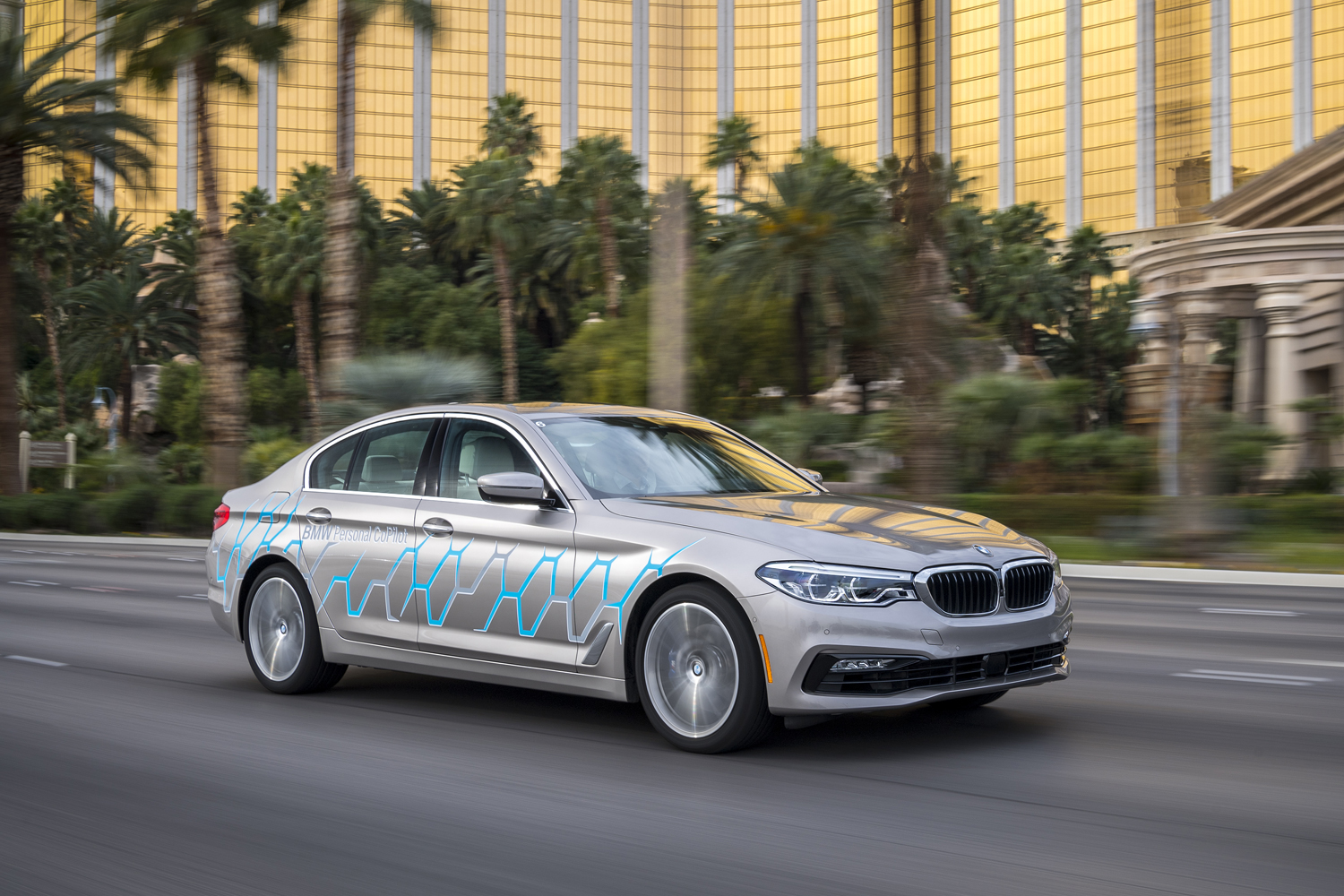
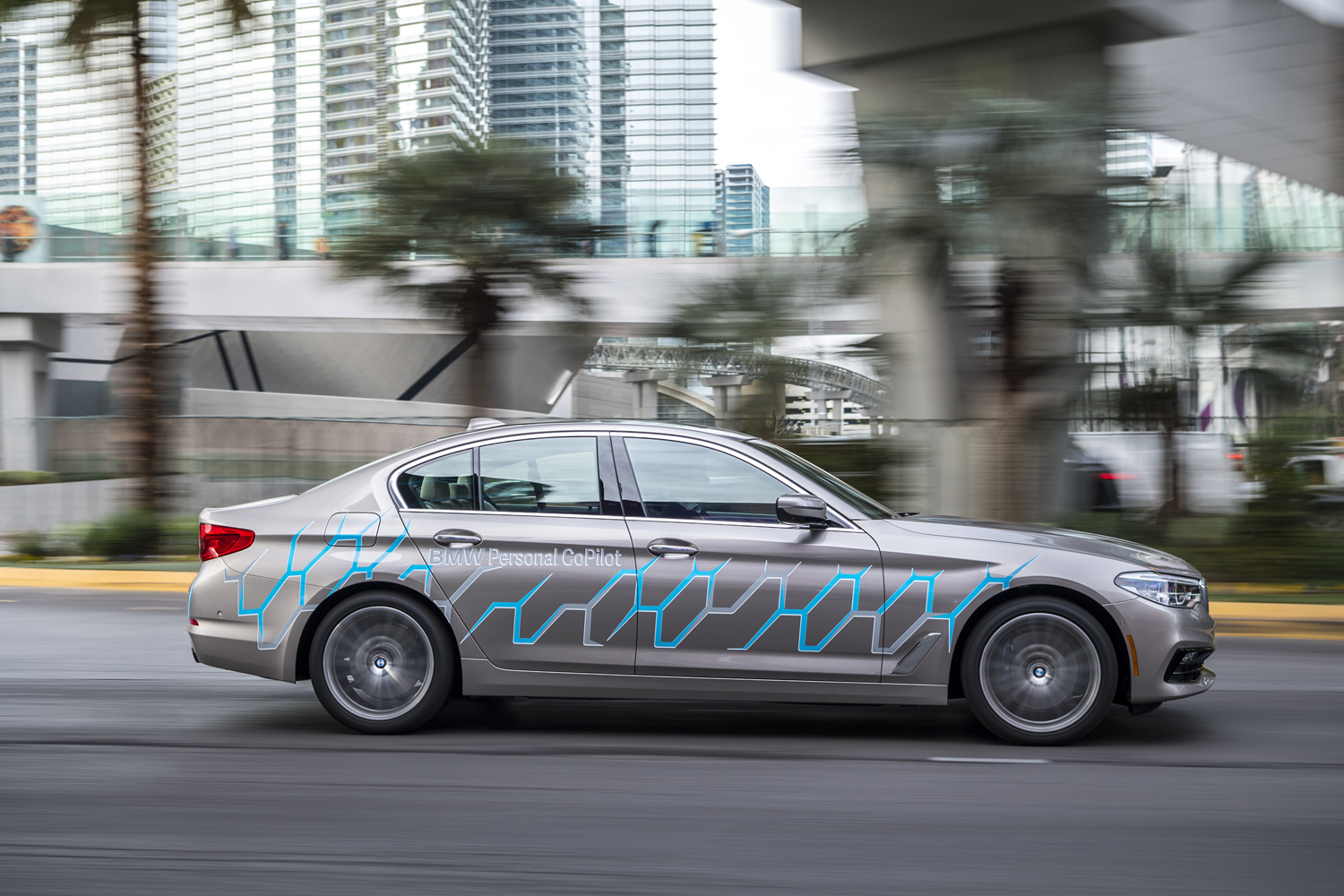
Finally, show-goers are given the chance to take a spin through Sin City in an experimental 5 Series (pictured above) that drives itself. The sedan operates along a pre-programmed route, and it handles virtually all aspects of driving without any human input. Drivers can consequently take their hands off the steering wheel for prolonged amounts of time. BMW points out most of the tech fitted to the prototype is already found in regular-production models, and it looks just like a standard 5 Series.
Editors' Recommendations
- How a big blue van from 1986 paved the way for self-driving cars
- Waymo’s self-driving cars can’t get enough of one dead-end street
- From Paris to NYC, Mobileye will bring self-driving cars to metropolises
- Why driverless cars are ugly, and how BMW plans to change that
- Waymo’s next-gen self-driving tech can see what’s happening 500 meters ahead