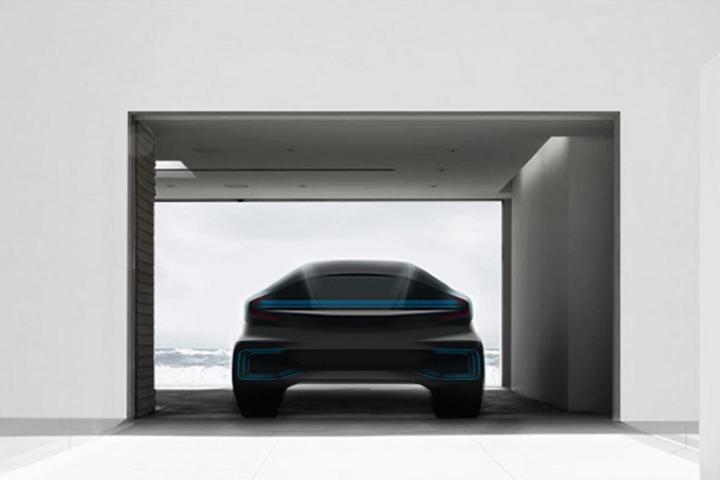
It was not hard to connect the dots to figure out Faraday Future’s intentions. Kirk Steudle, director of the Michigan Department of Transportation, said that Faraday Future inquired in January about testing self-driving cars in the state. The company has since paid the required registration fee for three manufacturer’s plates and shown proof of Michigan no-fault insurance. Faraday Future confirms it will test cars in Michigan, but has not confirmed the type of testing.
Faraday Future can generally be described as a secretive operation. It first revealed itself this year in public at the Las Vegas Consumer Electronics Show in January. At CES, the firm showed an all-electric concept vehicle called the FFZERO1, which it said commanded 1,000 horsepower and could go from zero to 60 in less than 3 seconds. The company also said the ZERO1 was capable of full autonomy.
Faraday Future is owned by Chinese billionaire Jia Yueting and has its headquarters in Los Angeles. It has 760 employees in the U.S. and 200 elsewhere, according to Electrek. The company broke ground in April on a 3-million-square-foot factory in Nevada.
Related: Faraday Future gets first U.S. patent
You won’t be blamed if you think of Tesla when you read about Faraday Future. The company is starting an electric car company from the ground up and building a huge factory in Nevada, and has developed a Variable Platform Architecture (VPA) concept on which it will design what it says will be diverse automotive styles.
The “variable” in VPA refers to the number of battery “strings” in the platform, arranged in what you can think of as rows and columns in a spreadsheet. So if you were looking at an FF vehicle from the back, the battery rows and columns would be between the front and rear axles. Shorter vehicles use the minimum four rows, while longer vehicles can accommodate five or six rows. Because the battery strings can be added in layers on top of columns and rows, the ability exists to formulate a broad range of vehicle sizes, weights, and performance figures.
Faraday Future will not comment on the specific vehicles it will introduce, but has said its goal is to shorten the typical four years it would take to roll out the first cars from the Nevada factory to just two years. Electrek reported that it’s expected the first Faraday Future vehicle will be a long-range, luxury, all-electric crossover. Looks like it could be autonomous as well.
Editors' Recommendations
- Volkswagen is launching its own self-driving car testing program in the U.S.
- Officers confused as they pull over an empty self-driving car
- We now know what the self-driving Apple Car might look like
- Watch San Franciscans take a ride in Waymo’s self-driving car
- The future of transportation: Self-driving cars? Try self-driving everything