
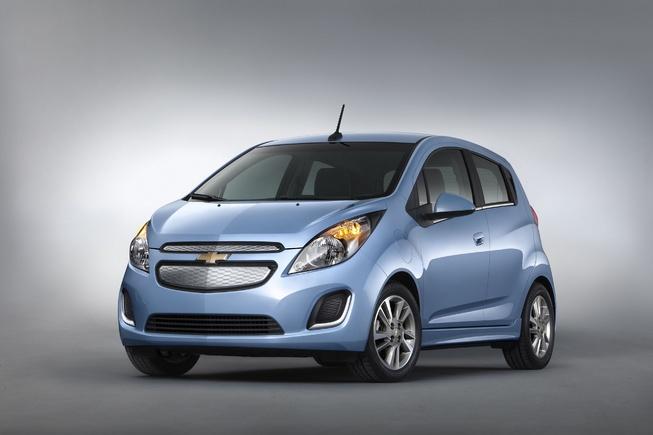
 General Motors and BMW are one step closer to being able to better sell potential car buyers on the idea of a Chevrolet Spark EV or BMW i3.
Following days of joint testing, the two automakers seem confident that DC (direct current) “Combo” Fast Charge stations from several suppliers will enable an EV to be charged 80 percent in about 20 minutes, according to an official GM press release.
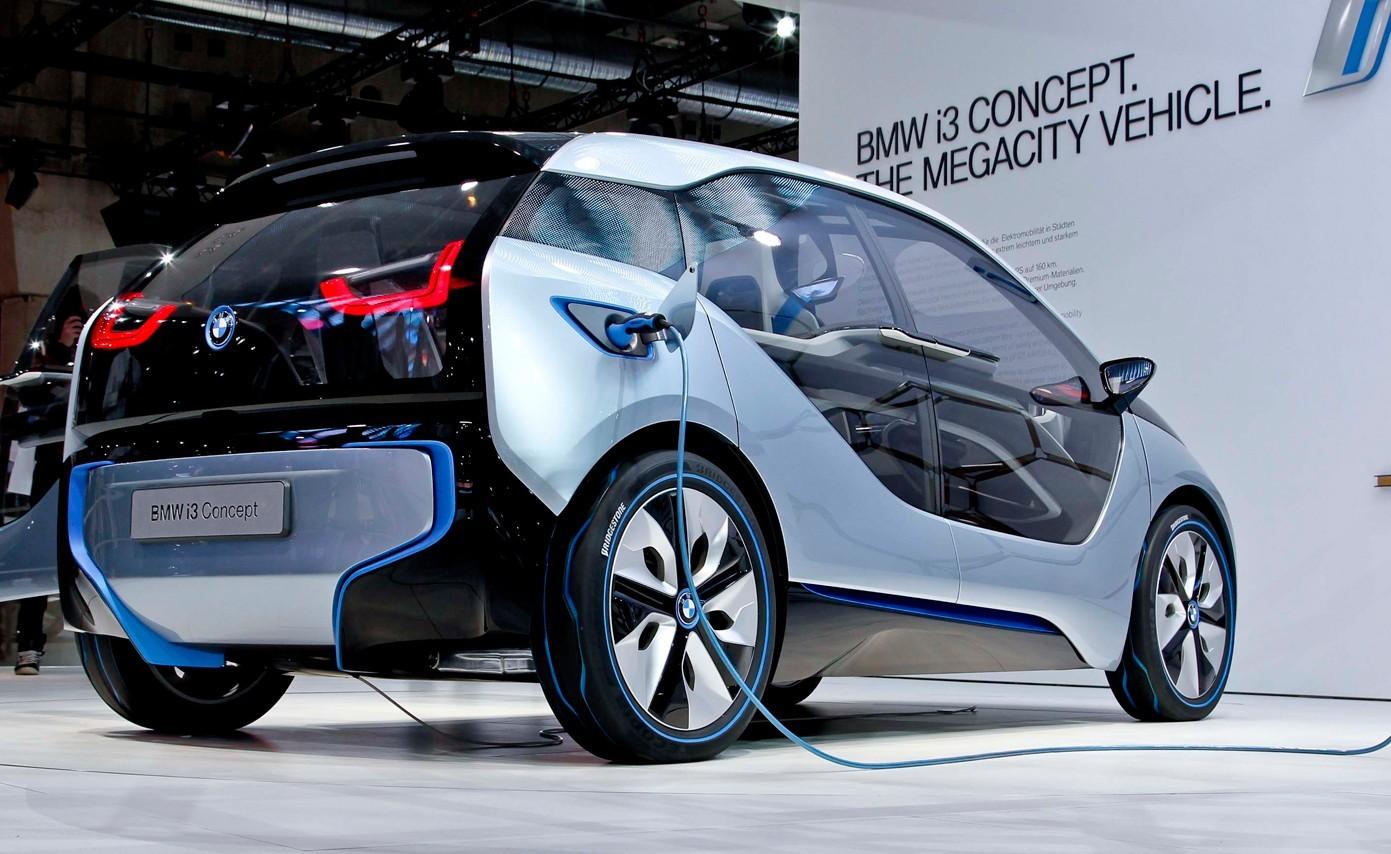
The Chevrolet Spark EV and the BMW i3 are expected to be the first electric vehicles to benefit from the Society of Automotive Engineers new industry standard for DC fast charging.
The GM release states that the collaborative effort with BMW should speed up the roll out of the SAE Combo DC Fast Charge infrastructure in the coming months. Participating suppliers in the testing included ABB, Aker Wade, Eaton and IES.
“This unprecedented cooperation among OEMs and equipment suppliers demonstrates the maturity of this important technology that will help speed the adoption of electric vehicles around the world,” said Britta Gross, GM’s director of Advanced Vehicle Commercialization Policy.
All in all, eight automakers including GM, Ford, Chrysler, BMW, Daimler, Volkswagen, Audi and Porsche have committed to adopting the SAE combo fast charge connector, which pretty much assures standardization of the technology.
“Our goal with this cooperation was to ensure that DC fast charging stations be available to provide BMW i3 customers the premium fast charging experience in time for the arrival of the BMW i3,” said Cliff Fietzek, manager connected e-Mobility at BMW of North America LLC, in a prepared statement. “We are pleased that we will meet our goal.”
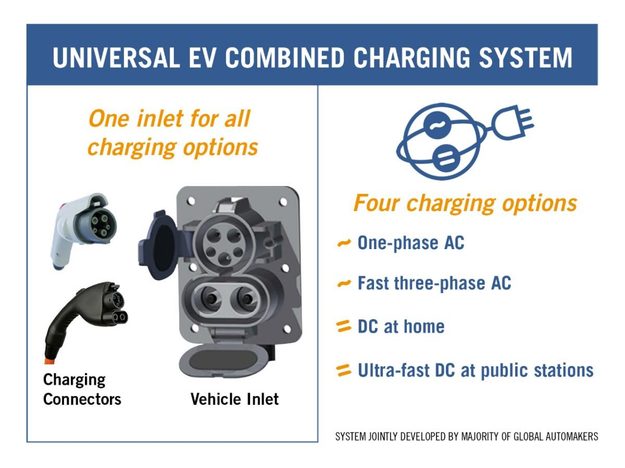
 This new combined AC and DC charging, or combo connector provides added ease of use for DC Fast Charging, including a single charge port on the vehicle, and allows electricity to flow at a faster rate.
“This successful testing is an important milestone that underscores our commitment to enable the next generation of electric vehicles,” said Cal Lankton, director of ABB’s EV Charging Infrastructure for North America. “By offering a broad charging portfolio, we can fully support the needs of all EV drivers and infrastructure providers.”
Expected a few months after the Spark EV launches in California and Oregon, the DC Fast Charge infrastructure could help to improve the appeal of EVs to those who might not have previously considered the technology.
While still a far stretch from the 5 minutes it takes to fill up at the pump, cutting the time down to 20 minutes from what previously could take up to eight hours makes electric vehicles a lot more appealing.
Couple that with the increasing extended range for EVs, and there’s still hope that the technology could one day reach everyone’s expectations.


