  1. Home
  2. Cars
  3. Legacy Archives

Iranian free trade zone is a haven for American trucks and muscle cars

Add as a preferred source on Google

What would Vanishing Point look like if it was filmed in Iran?

The United States and the Islamic Republic have their differences, but people in both countries share a love of big trucks and muscle cars from Detroit’s Big Three.

Recommended Videos

Despite trade restrictions, these vehicles are slipping into the Iranian city of Tabriz, thanks to a nearby free trade zone close to Armenia and Azerbaijan, Reuters reports.

Before the 1979 revolution and the subsequent severing of diplomatic relations between the two countries, Iran was a major market for American cars. And it looks like it could be again.

The Aras free trade zone began allowing car imports last year, creating a loophole for the importation of American cars. Sales of cars from the U.S. are banned in Iran, so they still have to be imported from a third country, such as the United Arab Emirates.

The third-party importers are not authorized to sell cars by the manufacturers, which are bound by U.S. trade sanctions.

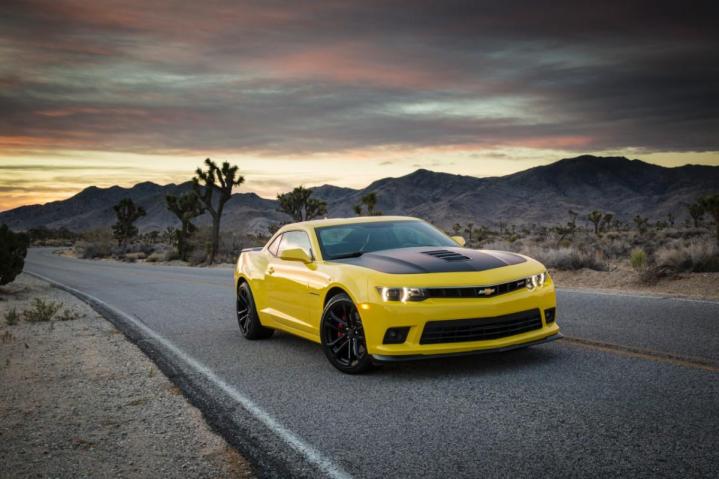
More than 1,500 vehicles have reportedly been sold in Aras, and half of them are American. The Chevrolet Camaro is reportedly one of the most popular nameplates.

Only residents or registered businesses within the free trade zone can buy cars there. The cars are unrestricted within the zone; owners can purchase a special blue license plate to drive in the rest of Iran for two months a year.

One Aras-based trading company is advertising its Chevys in Iranian media with the slogan “the return of a legend after 34 years.”

Before the revolution, American cars weren’t just available in Iran, they were popular.

The government of Shah Mohammed Reza Pahlavi was a staunch ally of the U.S., so in the 1960s and ’70s many young Iranians went abroad for college. Arriving in the U.S. at the height of the muscle car craze, they fell in love with the same Camaros and Mustangs as their American counterparts, a 2010 New York Times article on the Tehran Cafe Racers car club notes.

General Motors also partnered with an Iranian company to assemble cars in the country at one time. Renault and Peugeot currently import cars as kits and assemble them in-country. The Iran Khodro (IKCO, formerly Iran National) Samand, for example, is a re-badged Peugeot 405.

For years, the only car available to Iranians in large quantities was the Paykan (pie-kan), a copy of the British Hillman Hunter built by IKCO from 1966 to 2005.

Stephen Edelstein
Stephen is a freelance automotive journalist covering all things cars. He likes anything with four wheels, from classic cars…
A new AI model wants self-driving cars to think before they swerve
Forget guessing games, this self-driving AI actually shows its work.
Self driving car

Self-driving cars have gotten pretty good at driving. The harder problem is teaching them to drive safely in situations nobody planned for. We have heard horror stories of self-driving cars, behaving erratically in emergency situations, often times delaying first responders from reaching the scene.

A team at Seoul National University, led by professor Jun Won Choi from the Department of Electrical and Computer Engineering, thinks they have cracked part of that puzzle with a new AI model called SafeDrive. The research was recently selected as a highlight paper at CVPR 2026, a distinction that goes only to roughly 3% of all submissions.

Read more
Your next car’s software update could become its biggest security risk
Your next car could receive updates like your smartphone. That's also becoming a cybersecurity nightmare.
OTA technology allows manufacturers to remotely deliver software updates.

Modern cars are no longer machines that stay the same after they leave the showroom. Increasingly, they're becoming software-defined vehicles that receive new features, bug fixes, and security patches wirelessly, much like smartphones. But while over-the-air (OTA) updates have made vehicle maintenance easier and cheaper, cybersecurity experts are warning that the same technology could also become one of the automotive industry's biggest security challenges.

Researchers and policymakers are now calling for stronger oversight as connected vehicles become increasingly dependent on remote software updates. Their concern isn't just about hackers stealing personal data. It's about someone potentially interfering with the operation of a moving vehicle.

Read more
This sleek Chinese EV pairs supercar styling with three AI brains
The Xpeng L03 is an AI supercomputer disguised as a stylish family SUV
Xpeng L03

Xpeng’s latest electric vehicle carries enough processing power to make the term "smart car" actually sound more realistic than it actually is. The new Xpeng L03 debuted simultaneously in Europe and China on July 16, with the company presenting it across 65 markets. Available as a fully electric vehicle and an L03 Power X range-extender, the coupe-SUV is Xpeng’s most internationally focused model so far. Market-specific prices and sales dates remain unannounced.

Three AI chips and Google Maps built right in

Read more