  1. Home
  2. Cars
  3. News

The Lamborghini Asterion may never see production, but this video will give you hope

Add as a preferred source on Google

The Asterion concept, Lamborghini’s first plug-in hybrid, has all the makings of ‘the car that got away.’

The ‘hyper cruiser’ was first revealed at the 2014 Paris Motor Show, and it showcased a potent blend of high-revving gas engine, instant electrified torque, and surprising fuel economy. The finished product? A 5.2-liter V10 and three electric motors that produced 910 horsepower and a whopping 57.3 mpg.

Recommended Videos

Despite these impressive specs, the car fully known as the Asterion LPI 910-4 has a murky future when it comes to the production line. Lamborghini CEO Stephan Winkelmann told us in October that the car exists mainly to appease the 2021 European emissions standards.

The concept’s battery pack alone weighs 551 pounds, and necessary weight-saving measures would likely put the car “out of market” in terms of cost. What you’re left with is essentially a technological demonstrator, albeit a striking one. But even Lamborghini admits it prefers turbocharging to hybridization as a means to boost efficiency.

Lamborghini Asterion
Image used with permission by copyright holder

As a consequence, seeing the hybrid at a dealership near you is relatively unlikely. That’s not stopping the automaker from showing off the two-door’s futuristic lines, though, which is just what the brand did during the recent ‘Concorso d’Eleganza Villa d’Este’ event in Italy.

The lavish name translates to ‘Competition of Elegance of Villa d’Este’ in English by the way, which basically means none of us were invited.

You’ll find a behind-the-scenes video of the affair by Marchettino above, and it shows the rare vehicle on the move. It looks positively gorgeous as it meanders around the shorelines of Lake Como, punctuated by a meetup with a classic Miura for a striking past and future exhibition.

Will the Asterion ever see the showroom floor? Winkelmann’s comments render that unlikely, but recent sentiments by other executives tease the opposite. All we know is, we’ll be watching.

Andrew Hard
Andrew first started writing in middle school and hasn't put the pen down since. Whether it's technology, music, sports, or…
Volvo is rolling out Apple Music to over 2 million cars with a simple OTA update
Your Volvo may soon get Apple Music without needing CarPlay
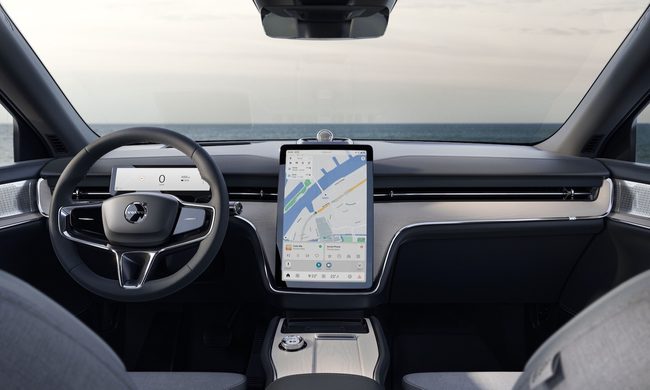
Interior view of the 2024 Volvo EX90.

The line between your smartphone and your car continues to blur. Volvo has announced that it is rolling out an over-the-air software update that brings Apple Music directly to the infotainment systems of more than 2 million vehicles worldwide. Instead of relying on Apple CarPlay or plugging in an iPhone, eligible drivers will be able to stream music natively from their car's built-in system, making Apple Music another integrated feature of Volvo's software experience.

The update is arriving for a wide range of Volvo models, including the EX90, ES90, XC90, S90, V90, XC60, S60, V60, XC40, EX40 and EC40, covering model year 2020 onwards. Availability, however, may vary depending on the vehicle.

Read more
Chery’s latest EV packs flagship tech for the price of a base Tesla, but you can’t buy it
Here's everything packed into Exeed's 2027 Exlantix ES, from its 27-sensor autonomous driving suite to its 860 km range, all starting under $31,000.
Car, Transportation, Vehicle

Chery's premium arm just dropped a sedan that makes you wonder why American EVs cost twice as much for half the tech.

Exeed's 2027 Exlantix ES ships with a driver-assist system called Falcon 700. It is built around an Nvidia Orin-Y chip and a genuinely stacked sensor suite.

Read more
A new AI model wants self-driving cars to think before they swerve
Forget guessing games, this self-driving AI actually shows its work.
Self driving car

Self-driving cars have gotten pretty good at driving. The harder problem is teaching them to drive safely in situations nobody planned for. We have heard horror stories of self-driving cars, behaving erratically in emergency situations, often times delaying first responders from reaching the scene.

A team at Seoul National University, led by professor Jun Won Choi from the Department of Electrical and Computer Engineering, thinks they have cracked part of that puzzle with a new AI model called SafeDrive. The research was recently selected as a highlight paper at CVPR 2026, a distinction that goes only to roughly 3% of all submissions.

Read more