  1. Home
  2. Cars
  3. News

Mini will kill off the quirky Paceman to make room for the new BMW 5 series

Add as a preferred source on Google

The Mini Paceman, a quirky three-door model that never quite hit its stride, will be axed at the end of this year, according to Autocar. In the same way that most vehicle discontinuations can be spotted well in advance, the Paceman’s lackluster sales and ultra-niche fit didn’t bode well for a production renewal.

Mini’s decision isn’t purely based on lineup refinement — BMW reportedly needs room to produce the next-generation 5 Series, meaning the Paceman weak link must be cut. The redesigned 5 Series sedan will roll out of BMW’s Graz, Austria, plant in 2017, and will take both the Paceman and Countryman’s assembly spots. The second-generation Countryman is due next year, and will be produced elsewhere.

Recommended Videos

The Paceman hasn’t had a terribly long run since its introduction in 2012, but was likely doomed by the success of the all-too-similar Countryman. It joins the Mini Cooper Coupe and Convertible (you remember those, uh, “special” models don’t you?) as models that failed within the last several years.

Mini is working on five distinct vehicle lines moving forward. The Cooper hatchback, Clubman compact, Cooper Convertible, and Countryman are the current lines, and a compact sedan will likely round out the pack. The latter will be marketed to the North American and Asian markets.

It may be news to many Mini shoppers, but the automaker has a history of making sedans with Riley Elf and Wolseley Hornet. “Customers may know of the strong heritage of the sedan concept, but it was never [sold in] big volumes,” noted Ralph Mahler, Mini’s head of product. It’s expected that the sedan will be based on the Clubman platform, and may help the brand crack half a million in global sales next year.

On the whole, Mini’s new lineup will be far less oddball/underdog than previous generation cars, which will invite new customers but may upset loyalists.

Miles Branman
Miles Branman doesn't need sustenance; he needs cars. While the gearhead gene wasn't strong in his own family, Miles…
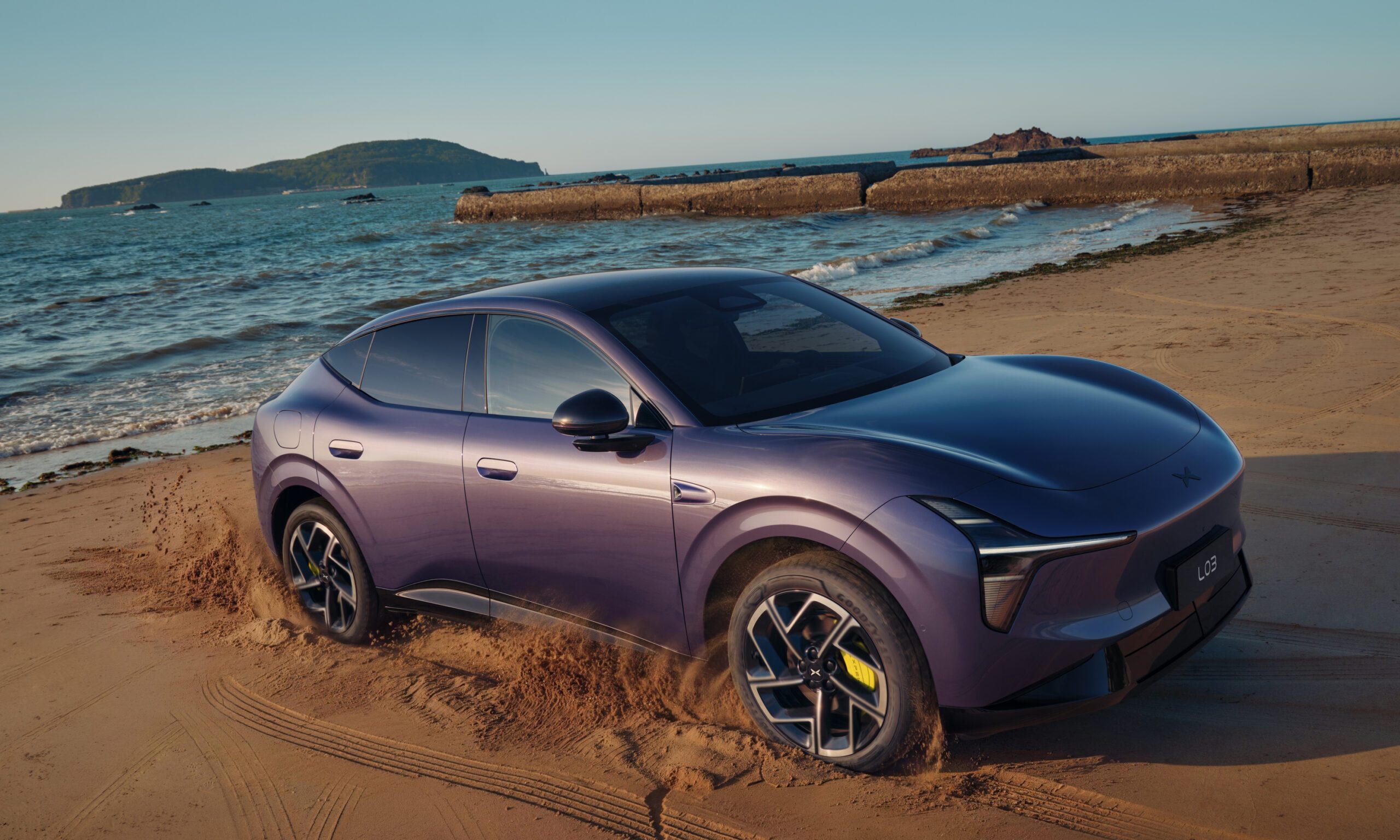
This sleek Chinese EV pairs supercar styling with three AI brains
The Xpeng L03 is an AI supercomputer disguised as a stylish family SUV
Xpeng L03

Xpeng’s latest electric vehicle carries enough processing power to make the term "smart car" actually sound more realistic than it actually is. The new Xpeng L03 debuted simultaneously in Europe and China on July 16, with the company presenting it across 65 markets. Available as a fully electric vehicle and an L03 Power X range-extender, the coupe-SUV is Xpeng’s most internationally focused model so far. Market-specific prices and sales dates remain unannounced.

Three AI chips and Google Maps built right in

Read more
A new sodium battery posts wild four-minute charging numbers, but don’t expect it in an EV yet
The breakthrough could improve fast charging and battery life, but the study hasn’t demonstrated those results in a production-sized pack
EV Charger

A new sodium-metal battery has posted a charging number that makes today’s EVs look painfully slow. In laboratory testing, the cell operated at a 15C rate, equivalent to completing a charge or discharge in roughly four minutes.

That doesn’t mean researchers plugged in an electric car and watched it fill up before the driver finished buying coffee. The result came from a small experimental cell using a new quasi-solid electrolyte, while the larger pouch-cell prototype delivered far less dramatic performance.

Read more
The Apple Car may be dead, but it became the foundation of Apple Intelligence
A decade of work on a canceled car project reportedly laid the groundwork for Apple Intelligence.
Apple Intelligence in Apple Car

The Apple Car may have never left the garage, but it apparently gave birth to Apple's AI ambitions. According to Bloomberg's Mark Gurman, Apple's canceled autonomous vehicle project, one that consumed more than a decade of work and over $10 billion before being scrapped in 2024, ended up laying the technological foundation for Apple Intelligence. In a rather ironic twist, one of Apple's most expensive failures may also become one of its most important long-term investments.

The Apple Car forced Apple to think like an AI company

Read more