1. Home
  2. Cars
  3. Legacy Archives

Nissan ratchets up its tech cred, opens new research lab in Silicon Valley

Add as a preferred source on Google
Nissan Sunnyvale R&D center
Image used with permission by copyright holder

In an effort to keep the cutting edge and steep itself in technology, Nissan has opened a new research center in middle of the Silicon Valley.  Located in Sunnyvale, Calif., the mission of the new R&D center is to develop new solutions for autonomous cars–cars that will drive themselves.  The center will work in partnership with Nissan’s offices in Japan, and is an expansion of the Renault-Nissan Alliance’s existing office in Mountain View.

Nissan isn’t the first to begin developing computer-driven cars; brands like Audi and Google are already years into the process.  That said, the center will focus on more than just how cars might drive themselves down the road.  The brand also plans to commit time toward the research of the “Human Machine Interface,” which is essentially the user experience of cars with technologies like internet connectivity.

Recommended Videos

We think placing an office in the heart of the Valley is a great plan for Nissan.  After all, BMW made a similar move, and was the first brand to integrate Apple products into its cars.  Since then, BMW’s California research center has led the development of iDrive and other in-car technologies.  With the right set of techno-wizards in the Nissan office, we’re hoping to see even cooler integrations from the Japanese.

“We hope to be an open center and have collaborations with the Silicon Valley attitude and with the Silicon Valley spirit.  Nissan is well positioned I think to take the next step and be a leader in autonomous driving and connected vehicles and that is very exciting,” said Research Director for Nissan Research Center Silicon Valley Dr. Maarten Sierhuis.

Here’s hoping for a some very cool new features in the cars of the future.  What sorts of technologies would you want to see in your “connected” car?  Let us know in the comments below.

Davis Adams
Former Contributor
Whether you're talking about gadgets or cars, Davis always seems to prefer "next year's models." He's a neophile to the core…
Volvo is rolling out Apple Music to over 2 million cars with a simple OTA update
Your Volvo may soon get Apple Music without needing CarPlay
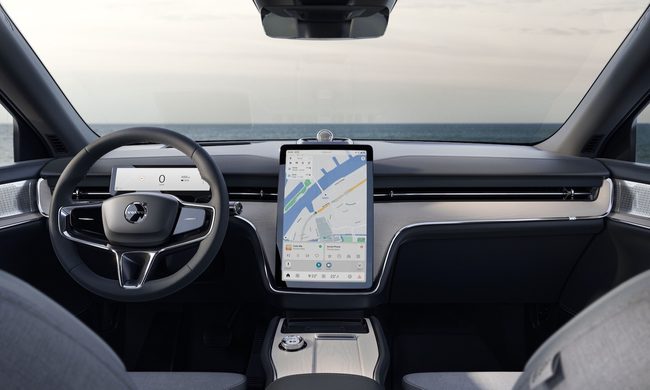
Interior view of the 2024 Volvo EX90.

The line between your smartphone and your car continues to blur. Volvo has announced that it is rolling out an over-the-air software update that brings Apple Music directly to the infotainment systems of more than 2 million vehicles worldwide. Instead of relying on Apple CarPlay or plugging in an iPhone, eligible drivers will be able to stream music natively from their car's built-in system, making Apple Music another integrated feature of Volvo's software experience.

The update is arriving for a wide range of Volvo models, including the EX90, ES90, XC90, S90, V90, XC60, S60, V60, XC40, EX40 and EC40, covering model year 2020 onwards. Availability, however, may vary depending on the vehicle.

Read more
Chery’s latest EV packs flagship tech for the price of a base Tesla, but you can’t buy it
Here's everything packed into Exeed's 2027 Exlantix ES, from its 27-sensor autonomous driving suite to its 860 km range, all starting under $31,000.
Car, Transportation, Vehicle

Chery's premium arm just dropped a sedan that makes you wonder why American EVs cost twice as much for half the tech.

Exeed's 2027 Exlantix ES ships with a driver-assist system called Falcon 700. It is built around an Nvidia Orin-Y chip and a genuinely stacked sensor suite.

Read more
A new AI model wants self-driving cars to think before they swerve
Forget guessing games, this self-driving AI actually shows its work.
Self driving car

Self-driving cars have gotten pretty good at driving. The harder problem is teaching them to drive safely in situations nobody planned for. We have heard horror stories of self-driving cars, behaving erratically in emergency situations, often times delaying first responders from reaching the scene.

A team at Seoul National University, led by professor Jun Won Choi from the Department of Electrical and Computer Engineering, thinks they have cracked part of that puzzle with a new AI model called SafeDrive. The research was recently selected as a highlight paper at CVPR 2026, a distinction that goes only to roughly 3% of all submissions.

Read more