1. Home
  2. Cars
  3. Legacy Archives

This one-off Ferrari F12 has KERS … and costs $4.2 million

Add as a preferred source on Google

If you’ve got the money, Ferrari’s got the time.

The Italian supercar manufacturer has something of a niche for creating one-off, special edition Ferraris for high-value customers, but only if they’ve got the pocketbook to back it up. 

Recommended Videos

There was Eric Clapton’s dazzling, $4.75 million SP12 EC, James Glickenhaus’ P4/5 racecar, and countless other rare Ferraris that you’ll probably never see unless you happen to strike oil in your backyard. These Ferrari’s are for the absolute top of the tax bracket, those who have no idea what the words “credit limit” mean.

A new addition to Ferrari’s exclusive one-off club is a special edition F12 Berlinetta, details of which have just surfaced online via GTSpirit.

The modified F12 looks to have a chopped top, a reworked front bumper, and black accents riddling the car’s body. The aft section is especially dramatic, with enormous air intakes replacing the standard F12’s sloping rear glass. 

Ferrari F12 TRS
Image used with permission by copyright holder

The tailor-made Ferrari is rumored to be called with F12 TRS, which makes sense as Ferrari just trademarked the F12 TRS symbol earlier this month. More exciting, however, are the rumors that the TRS has been fitted with an F1-inspired Kinetic Energy Recovery System (KERS), which recoups energy from the brakes and funnels it back into an electric drive system.

The standard Berlinetta is powered by a 730-horsepower, 6.3-liter V12, making it the most powerful road-going stallion outside of LaFerrari. It sprints from 0 to 60 mph in 3.1 seconds, so any extra power from the KERS should make this specially commissioned TRS ridiculously fast.

The asking price? A cool $4.2 million. That’ll get you a brand new McLaren P1, Porsche 918, and a LaFerrari with $800,000 leftover for gas and valet bills. So unless you’ve got a few platinum records lying around, you’d better start saving. 

(Photos via GTSpirit)

Andrew Hard
Andrew first started writing in middle school and hasn't put the pen down since. Whether it's technology, music, sports, or…
Volvo is rolling out Apple Music to over 2 million cars with a simple OTA update
Your Volvo may soon get Apple Music without needing CarPlay
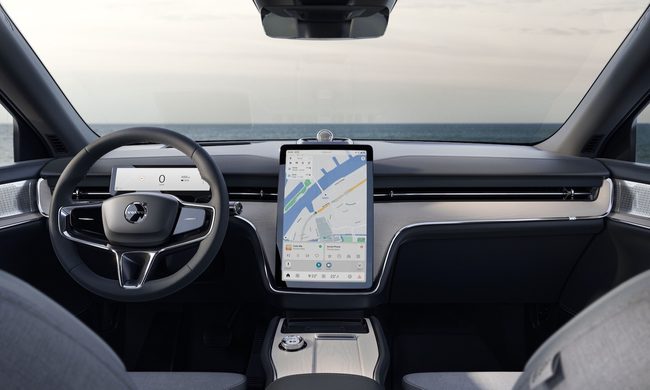
Interior view of the 2024 Volvo EX90.

The line between your smartphone and your car continues to blur. Volvo has announced that it is rolling out an over-the-air software update that brings Apple Music directly to the infotainment systems of more than 2 million vehicles worldwide. Instead of relying on Apple CarPlay or plugging in an iPhone, eligible drivers will be able to stream music natively from their car's built-in system, making Apple Music another integrated feature of Volvo's software experience.

The update is arriving for a wide range of Volvo models, including the EX90, ES90, XC90, S90, V90, XC60, S60, V60, XC40, EX40 and EC40, covering model year 2020 onwards. Availability, however, may vary depending on the vehicle.

Read more
Chery’s latest EV packs flagship tech for the price of a base Tesla, but you can’t buy it
Here's everything packed into Exeed's 2027 Exlantix ES, from its 27-sensor autonomous driving suite to its 860 km range, all starting under $31,000.
Car, Transportation, Vehicle

Chery's premium arm just dropped a sedan that makes you wonder why American EVs cost twice as much for half the tech.

Exeed's 2027 Exlantix ES ships with a driver-assist system called Falcon 700. It is built around an Nvidia Orin-Y chip and a genuinely stacked sensor suite.

Read more
A new AI model wants self-driving cars to think before they swerve
Forget guessing games, this self-driving AI actually shows its work.
Self driving car

Self-driving cars have gotten pretty good at driving. The harder problem is teaching them to drive safely in situations nobody planned for. We have heard horror stories of self-driving cars, behaving erratically in emergency situations, often times delaying first responders from reaching the scene.

A team at Seoul National University, led by professor Jun Won Choi from the Department of Electrical and Computer Engineering, thinks they have cracked part of that puzzle with a new AI model called SafeDrive. The research was recently selected as a highlight paper at CVPR 2026, a distinction that goes only to roughly 3% of all submissions.

Read more