  1. Home
  2. Cars
  3. Android
  4. Apple
  5. Mobile
  6. News

The Openbay mobile app brings you roadside assistance anywhere, anytime

Add as a preferred source on Google

There’s a pesky little adage out there known as Murphy’s law, and if you’ve ever suffered an inconvenient breakdown, you’re all too familiar with it. Cars always seem to go belly up in the worst places, and in those headache-inducing moments, we often rely on roadside assistance.

Not everyone has an AAA membership or comprehensive insurance plan though, but now there’s another option. Openbay, an online auto repair marketplace, has added on-demand roadside assistance to its mobile app.
Openbay
Image used with permission by copyright holder

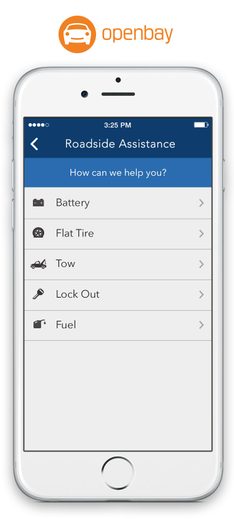
The Openbay app — available for Android and well as iOS devices — now connects drivers to a nationwide network of roadside service professionals on a pay-per-use basis. So whether it’s a flat tire, drained battery, empty gas tank, or four stubbornly locked doors, a little bad luck doesn’t have to mean the end of your day.

Recommended Videos

Read more: Dude, where’s my car? Check out the best Android apps for your daily driver

“Consumers are holding onto their vehicles a lot longer, thanks to higher quality parts and service,” said Rob Infantino, founder and CEO of Openbay. “Nearly 60 percent of the vehicles on the road are more than nine years old, and more likely to require roadside service than newer vehicles. Now, Openbay combines the convenience of on-demand roadside with our auto repair marketplace, delivering speed and removing hassle from car-care, and meeting the expectations consumers have with today’s online and on-demand services.”

On-demand roadside assistance works in concert with the GPS system on your mobile device, as the app locates the nearest authorized repair technician and allows you to request specific services. Flat-rate pricing starts at $64.95 for basic roadside assistance, and towing services start at $79.95 for up to five miles, with prices increasing from there on a tiered system. The best part? You can pay for the whole thing right from your phone.

Andrew Hard
Andrew first started writing in middle school and hasn't put the pen down since. Whether it's technology, music, sports, or…
Chery’s latest EV packs flagship tech for the price of a base Tesla, but you can’t buy it
Here's everything packed into Exeed's 2027 Exlantix ES, from its 27-sensor autonomous driving suite to its 860 km range, all starting under $31,000.
Car, Transportation, Vehicle

Chery's premium arm just dropped a sedan that makes you wonder why American EVs cost twice as much for half the tech.

Exeed's 2027 Exlantix ES ships with a driver-assist system called Falcon 700. It is built around an Nvidia Orin-Y chip and a genuinely stacked sensor suite.

Read more
A new AI model wants self-driving cars to think before they swerve
Forget guessing games, this self-driving AI actually shows its work.
Self driving car

Self-driving cars have gotten pretty good at driving. The harder problem is teaching them to drive safely in situations nobody planned for. We have heard horror stories of self-driving cars, behaving erratically in emergency situations, often times delaying first responders from reaching the scene.

A team at Seoul National University, led by professor Jun Won Choi from the Department of Electrical and Computer Engineering, thinks they have cracked part of that puzzle with a new AI model called SafeDrive. The research was recently selected as a highlight paper at CVPR 2026, a distinction that goes only to roughly 3% of all submissions.

Read more
Your next car’s software update could become its biggest security risk
Your next car could receive updates like your smartphone. That's also becoming a cybersecurity nightmare.
OTA technology allows manufacturers to remotely deliver software updates.

Modern cars are no longer machines that stay the same after they leave the showroom. Increasingly, they're becoming software-defined vehicles that receive new features, bug fixes, and security patches wirelessly, much like smartphones. But while over-the-air (OTA) updates have made vehicle maintenance easier and cheaper, cybersecurity experts are warning that the same technology could also become one of the automotive industry's biggest security challenges.

Researchers and policymakers are now calling for stronger oversight as connected vehicles become increasingly dependent on remote software updates. Their concern isn't just about hackers stealing personal data. It's about someone potentially interfering with the operation of a moving vehicle.

Read more