  1. Home
  2. Cars
  3. News

Porsche releases video demo of its rear axle steering system on the new 911 Carrera S

Add as a preferred source on Google
The new Porsche 911 Carrera – Rear-axle steering

Porsche has released a new video highlighting the rear axle steering system of the new 911 Carrera. For those of you “in the know,” Porsche’s rear-wheel steering technology is nothing new. However, it has been reserved for the highest performance versions (the GT3 and Turbo) of its 911 until now.

Recommended Videos

For 2016, Porsche offers the system on all 911 Carrera S models at each customer’s request. The German automaker states that the technology “enhances performance and everyday practicality in equal measure.”

The simple breakdown of the system is as follows: At low speeds (up to 31 mph), the rear wheels steer in opposing direction to the front wheels, which means easier maneuvering, parking, etc. At higher speeds (above 50 mph), the rear wheels steer in the same direction as the front wheels, resulting in a “virtual wheelbase extension” and increased stability. You might be asking what happens between 31 and 50 mph. According to Porsche, the car basically makes up its own mind within that speed window.

The system consists of two electromechanical actuators fitted on the rear axle instead of the conventional tie rod. This setup steers the rear wheels up to 2.8 degrees in the same or opposite direction as the steering angle on the front axle.

It might surprise some that four-wheel steering has been applied on production sports cars since the late 1980s. Honda led a wave of Japanese automakers that introduced the system on certain models. Due to engineering difficulties, the systems didn’t last long, but Porsche and Acura have been using the technology for the past couple years. Thanks to advances in technology, Porsche claims drivers won’t be able to notice the system in action.

There’s a fair chance this technology will work its way into lesser Porsche models in the near future. The next generations of Porsche’s Boxster and Cayman will likely adopt the mechanics on high performance models first, just as Porsche’s 911 Turbo and GT3 did before moving down to regular Carrera’s.

Miles Branman
Miles Branman doesn't need sustenance; he needs cars. While the gearhead gene wasn't strong in his own family, Miles…
This sleek Chinese EV pairs supercar styling with three AI brains
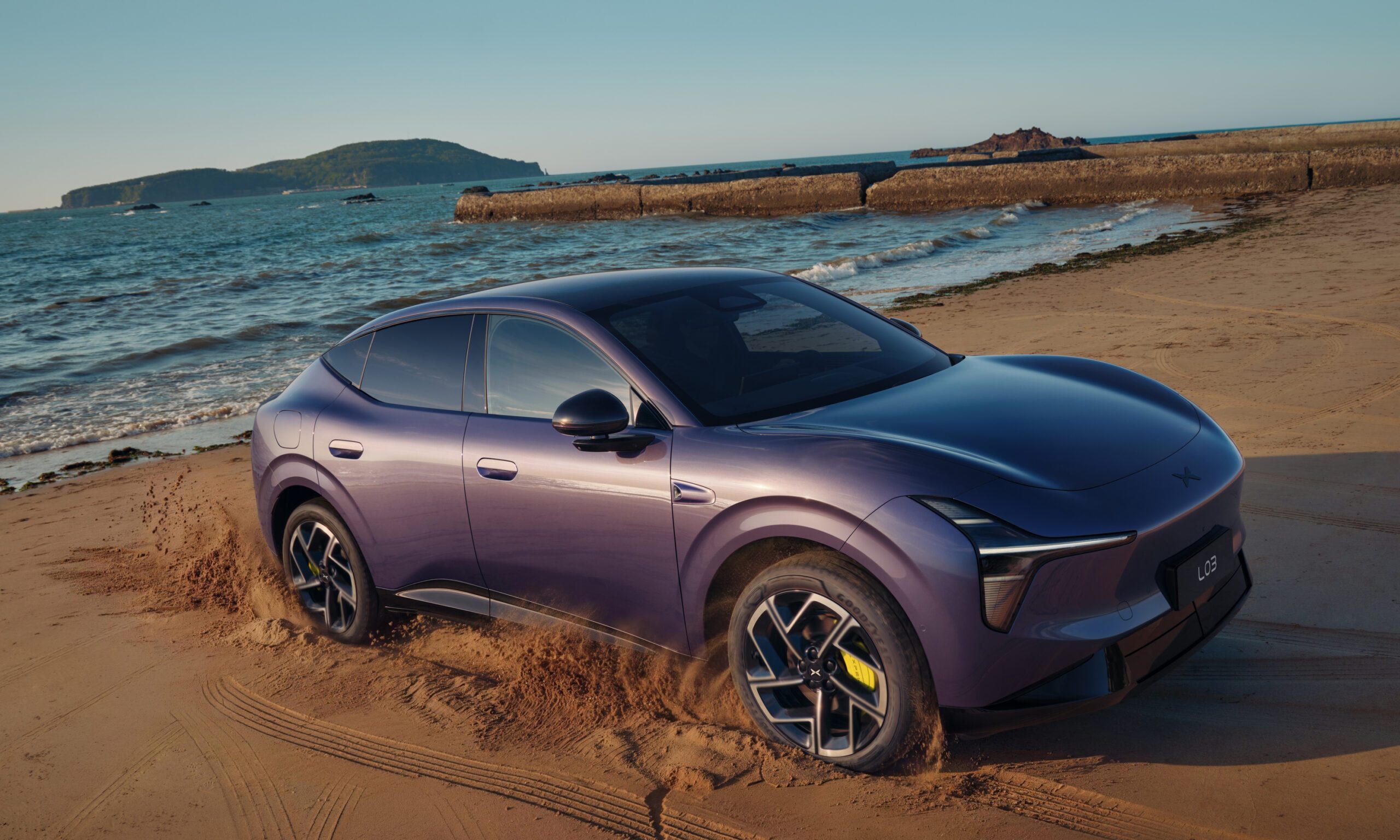
The Xpeng L03 is an AI supercomputer disguised as a stylish family SUV
Xpeng L03

Xpeng’s latest electric vehicle carries enough processing power to make the term "smart car" actually sound more realistic than it actually is. The new Xpeng L03 debuted simultaneously in Europe and China on July 16, with the company presenting it across 65 markets. Available as a fully electric vehicle and an L03 Power X range-extender, the coupe-SUV is Xpeng’s most internationally focused model so far. Market-specific prices and sales dates remain unannounced.

Three AI chips and Google Maps built right in

Read more
A new sodium battery posts wild four-minute charging numbers, but don’t expect it in an EV yet
The breakthrough could improve fast charging and battery life, but the study hasn’t demonstrated those results in a production-sized pack
EV Charger

A new sodium-metal battery has posted a charging number that makes today’s EVs look painfully slow. In laboratory testing, the cell operated at a 15C rate, equivalent to completing a charge or discharge in roughly four minutes.

That doesn’t mean researchers plugged in an electric car and watched it fill up before the driver finished buying coffee. The result came from a small experimental cell using a new quasi-solid electrolyte, while the larger pouch-cell prototype delivered far less dramatic performance.

Read more
The Apple Car may be dead, but it became the foundation of Apple Intelligence
A decade of work on a canceled car project reportedly laid the groundwork for Apple Intelligence.
Apple Intelligence in Apple Car

The Apple Car may have never left the garage, but it apparently gave birth to Apple's AI ambitions. According to Bloomberg's Mark Gurman, Apple's canceled autonomous vehicle project, one that consumed more than a decade of work and over $10 billion before being scrapped in 2024, ended up laying the technological foundation for Apple Intelligence. In a rather ironic twist, one of Apple's most expensive failures may also become one of its most important long-term investments.

The Apple Car forced Apple to think like an AI company

Read more