  1. Home
  2. Cars
  3. Photo Galleries
  4. News

Rinspeed’s Budii concept will drive itself, and wind your watch too

Add as a preferred source on Google

Swiss design firm Rinspeed always brings an outlandish concept car to the annual Geneva Motor Show, but lately it’s been channeling its wackiness into autonomous vehicles.

Following the Tesla Model S-based XchangE, Rinspeed will unveil a new concept called the Budii at the 2015 Geneva show.

Previewed back in December, the Budii is also based on a production electric car, in this case the BMW i3.

Described as a “friend on wheels” by its maker, the Budii features an array of sensors, vehicle-to-infrastructure connectivity, and a laser scanner that allows the car to pre-adjust its suspension based on the terrain ahead.

The Budii is designed to be driven either by a human or placed in “autopilot” mode. The steering wheel is mounted on a robotic arm, so it can be passed between the driver and front passenger, or stowed in the center of the console to free up space when the computer takes over.

Freed from the task of driving, occupants can enjoy the plethora of touch screens in the cabin, groove to some music from the Harman Kardon audio system, or enjoy the “wellness shower,” whatever that is.

Rinspeed says the infotainment system is designed to learn users’ preferences, so entering commands becomes faster and easier the more time people spend in the car.

Plenty of cars have infotainment systems, though. This is probably the only one with a built-in watch winder.

A Manero PowerReserve watch is mounted on the steering wheel, and when a built-in camera detects that the movement is slowing, a mechanism winds it. Now that’s automation.

As with Rinspeed’s other concepts, the Budii isn’t destined for production. Like the previous XchangE, it may not even be able to drive autonomously, despite all of the equipment listed in the spec sheet.

What the Budii can do is provide one version of what future car interiors built around automation could look like, and boggle minds until the next Rinspeed creation comes along.

Stephen Edelstein
Stephen is a freelance automotive journalist covering all things cars. He likes anything with four wheels, from classic cars…
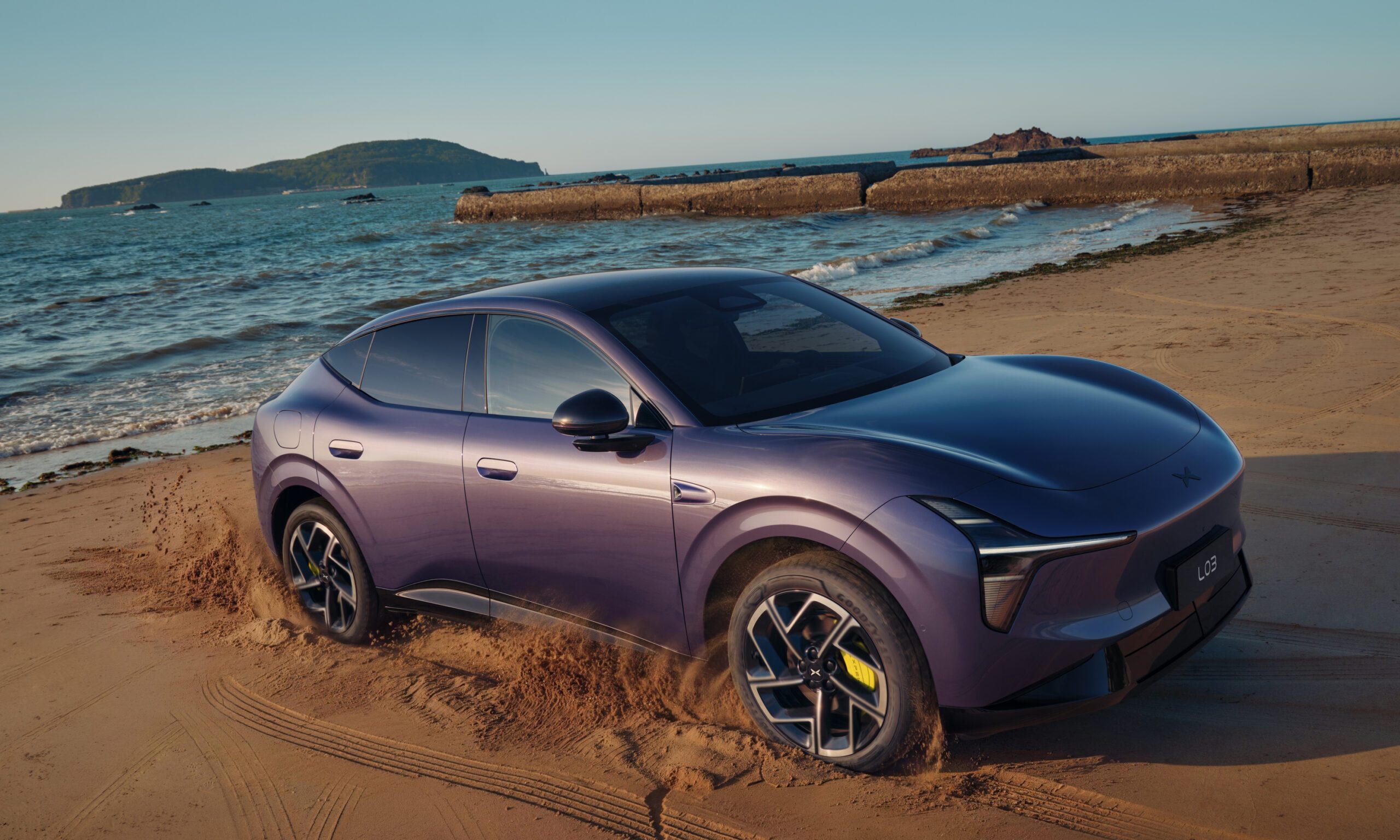
This sleek Chinese EV pairs supercar styling with three AI brains
The Xpeng L03 is an AI supercomputer disguised as a stylish family SUV
Xpeng L03

Xpeng’s latest electric vehicle carries enough processing power to make the term "smart car" actually sound more realistic than it actually is. The new Xpeng L03 debuted simultaneously in Europe and China on July 16, with the company presenting it across 65 markets. Available as a fully electric vehicle and an L03 Power X range-extender, the coupe-SUV is Xpeng’s most internationally focused model so far. Market-specific prices and sales dates remain unannounced.

Three AI chips and Google Maps built right in

Read more
A new sodium battery posts wild four-minute charging numbers, but don’t expect it in an EV yet
The breakthrough could improve fast charging and battery life, but the study hasn’t demonstrated those results in a production-sized pack
EV Charger

A new sodium-metal battery has posted a charging number that makes today’s EVs look painfully slow. In laboratory testing, the cell operated at a 15C rate, equivalent to completing a charge or discharge in roughly four minutes.

That doesn’t mean researchers plugged in an electric car and watched it fill up before the driver finished buying coffee. The result came from a small experimental cell using a new quasi-solid electrolyte, while the larger pouch-cell prototype delivered far less dramatic performance.

Read more
The Apple Car may be dead, but it became the foundation of Apple Intelligence
A decade of work on a canceled car project reportedly laid the groundwork for Apple Intelligence.
Apple Intelligence in Apple Car

The Apple Car may have never left the garage, but it apparently gave birth to Apple's AI ambitions. According to Bloomberg's Mark Gurman, Apple's canceled autonomous vehicle project, one that consumed more than a decade of work and over $10 billion before being scrapped in 2024, ended up laying the technological foundation for Apple Intelligence. In a rather ironic twist, one of Apple's most expensive failures may also become one of its most important long-term investments.

The Apple Car forced Apple to think like an AI company

Read more