1. Home
  2. Cars
  3. Photo Galleries
  4. Legacy Archives

ZiL’s fittingly frightening armored personnel concept could be Russia’s future Humvee

Add as a preferred source on Google

If this Russian Humvee concept looks like a futuristic tractor to you, you’re not far off.

ZiL, the manufacturer of the angular combat vehicle, got its start in 1916 building 1.5-ton Fiat trucks. In the years since, the Moscow-based automaker has produced agricultural vehicles, military transports, and even propeller-powered aerosani snowmobiles.

The aptly named EnglishRussia reports that the Humvee concept, which has yet to be named, could be headed for Russian military service as soon as next year.

Adventurous would be one way to describe the styling, with the aesthetics of a 1980’s science fiction prop and the silhouette to go with it. Of course, looks don’t matter on the battlefield, so what really matters is how it performs.

The concept is reportedly based on the U.S. Humvee chassis (although it features radically different design language), with an antiquated 4-cylinder Cummins diesel providing 185 horsepower. It carries 10, has six video cameras to eliminate blind spots, and can utilize its two rear seats as gunner platforms with a weapons hatch nearby.

Despite the space-age look, the 4.5-ton vehicle equips some serious outdated technology, such as large, exposed windows, drum brakes, and leaf springs. That’s not exactly Batmobile tech.

It does look pretty neat though, with the blast-deflecting armor looking mighty intimidating, albeit a bit thin, from some angles.

Clearly, this is only a prototype, so ZiL has plenty of time to get this beast combat ready. Plenty of the components could be switched out or upgraded by the time it gets its camo paint.

You may have heard the ZiL name before in reference to the brand’s position as Vladimir Putin’s personal transportation provider. His high-end limousines typically feature luxurious, Maybach-style cabins, armor plating, and are usually produced in extremely limited qualities.

And from the inside, it seems like the Cold War never ended.

(Photos via EnglishRussia)

Andrew Hard
Andrew first started writing in middle school and hasn't put the pen down since. Whether it's technology, music, sports, or…
Volvo is rolling out Apple Music to over 2 million cars with a simple OTA update
Your Volvo may soon get Apple Music without needing CarPlay
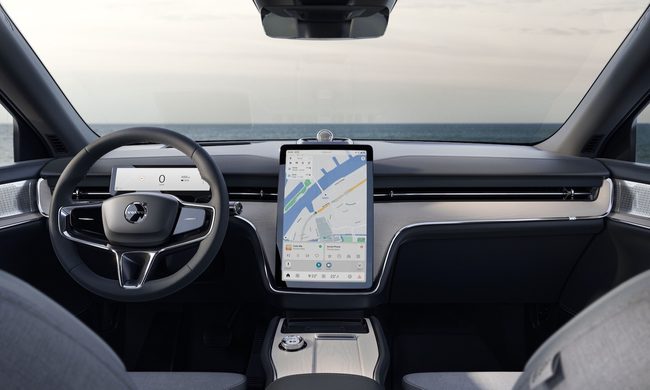
Interior view of the 2024 Volvo EX90.

The line between your smartphone and your car continues to blur. Volvo has announced that it is rolling out an over-the-air software update that brings Apple Music directly to the infotainment systems of more than 2 million vehicles worldwide. Instead of relying on Apple CarPlay or plugging in an iPhone, eligible drivers will be able to stream music natively from their car's built-in system, making Apple Music another integrated feature of Volvo's software experience.

The update is arriving for a wide range of Volvo models, including the EX90, ES90, XC90, S90, V90, XC60, S60, V60, XC40, EX40 and EC40, covering model year 2020 onwards. Availability, however, may vary depending on the vehicle.

Read more
Chery’s latest EV packs flagship tech for the price of a base Tesla, but you can’t buy it
Here's everything packed into Exeed's 2027 Exlantix ES, from its 27-sensor autonomous driving suite to its 860 km range, all starting under $31,000.
Car, Transportation, Vehicle

Chery's premium arm just dropped a sedan that makes you wonder why American EVs cost twice as much for half the tech.

Exeed's 2027 Exlantix ES ships with a driver-assist system called Falcon 700. It is built around an Nvidia Orin-Y chip and a genuinely stacked sensor suite.

Read more
A new AI model wants self-driving cars to think before they swerve
Forget guessing games, this self-driving AI actually shows its work.
Self driving car

Self-driving cars have gotten pretty good at driving. The harder problem is teaching them to drive safely in situations nobody planned for. We have heard horror stories of self-driving cars, behaving erratically in emergency situations, often times delaying first responders from reaching the scene.

A team at Seoul National University, led by professor Jun Won Choi from the Department of Electrical and Computer Engineering, thinks they have cracked part of that puzzle with a new AI model called SafeDrive. The research was recently selected as a highlight paper at CVPR 2026, a distinction that goes only to roughly 3% of all submissions.

Read more