  1. Home
  2. Cars
  3. Photo Galleries
  4. News

Love biking but hate pedaling? Terra Motors’ S750 e-bike can help with that

Add as a preferred source on Google

Cycling is hard. There’s a lot of pushing and pulling involved, which often leads to shortness of breath and even a few beads of sweat forming on your brow. That sounds dangerous. We love the outdoors as much as anybody, but does getting from A to B have to require such discomfort?

Not anymore. E-bikes, essentially bicycles with an electric motor bolted on, are becoming more and more popular every day. Feeling tired? Sit back and let the battery do the work. Want to get your heart rate up? Clamp down on those pedals and feel the burn.

Of course, motorized bicycles have been around since the late 19th century, but e-bikes are relatively new. Terra Motors, an electric vehicle manufacturer from Japan, says its upcoming S750 e-bike is the world’s first to be designed by a Japanese company.

Scheduled to be unveiled March 17th, the S750 is the successor to the brand’s smartphone-connected A4000i and entry-level A2000 e-scooters, which have no pedals at all.

Terra Motors S750
Image used with permission by copyright holder

Maximum speed on the S750 will be a hair-ruffling 24.8 mph, and the vehicle will be able to travel around 31 miles before recharging or switching to human power.

The S750 will debut in Vietnam first at the end of March for just under $1,000, where buyers will have the choice of white, blue, or red finishes. Terra Motors claims it will open 50 showrooms by the end of 2015, so this little thing might be popping up near you in no time.

The S750 may be the first e-bike to come out of Japan, but it’s certainly not the first. Earlier this month, Ford debuted the MoDe: Pro, a folding, 200-watt two-wheeler that can hit 15 mph.

Unlike other units that can power themselves for long amounts of time, Ford’s variant is designed to kick in when it senses you need the help. Using a heart rate sensor, the MoDe: Pro has got your back when you get a little winded.

Andrew Hard
Andrew first started writing in middle school and hasn't put the pen down since. Whether it's technology, music, sports, or…
Volvo is rolling out Apple Music to over 2 million cars with a simple OTA update
Your Volvo may soon get Apple Music without needing CarPlay
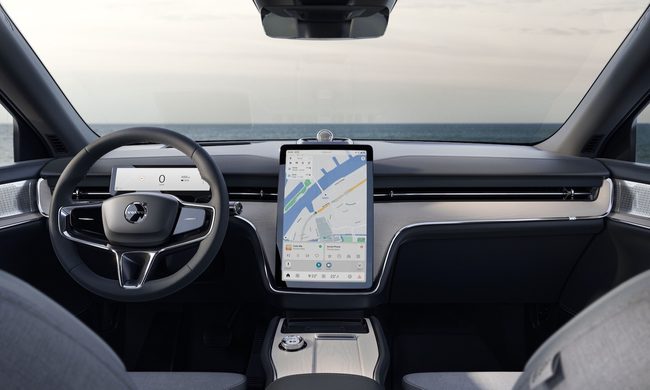
Interior view of the 2024 Volvo EX90.

The line between your smartphone and your car continues to blur. Volvo has announced that it is rolling out an over-the-air software update that brings Apple Music directly to the infotainment systems of more than 2 million vehicles worldwide. Instead of relying on Apple CarPlay or plugging in an iPhone, eligible drivers will be able to stream music natively from their car's built-in system, making Apple Music another integrated feature of Volvo's software experience.

The update is arriving for a wide range of Volvo models, including the EX90, ES90, XC90, S90, V90, XC60, S60, V60, XC40, EX40 and EC40, covering model year 2020 onwards. Availability, however, may vary depending on the vehicle.

Read more
Chery’s latest EV packs flagship tech for the price of a base Tesla, but you can’t buy it
Here's everything packed into Exeed's 2027 Exlantix ES, from its 27-sensor autonomous driving suite to its 860 km range, all starting under $31,000.
Car, Transportation, Vehicle

Chery's premium arm just dropped a sedan that makes you wonder why American EVs cost twice as much for half the tech.

Exeed's 2027 Exlantix ES ships with a driver-assist system called Falcon 700. It is built around an Nvidia Orin-Y chip and a genuinely stacked sensor suite.

Read more
A new AI model wants self-driving cars to think before they swerve
Forget guessing games, this self-driving AI actually shows its work.
Self driving car

Self-driving cars have gotten pretty good at driving. The harder problem is teaching them to drive safely in situations nobody planned for. We have heard horror stories of self-driving cars, behaving erratically in emergency situations, often times delaying first responders from reaching the scene.

A team at Seoul National University, led by professor Jun Won Choi from the Department of Electrical and Computer Engineering, thinks they have cracked part of that puzzle with a new AI model called SafeDrive. The research was recently selected as a highlight paper at CVPR 2026, a distinction that goes only to roughly 3% of all submissions.

Read more