  1. Home
  2. Cars
  3. News

Tesla Model 3 could have a HUD dashboard, a nice surprise for early depositors

Add as a preferred source on Google

While the hundreds of thousands of people who put down deposits have apparently seen enough, the Tesla Model 3 prototypes unveiled a few weeks ago do not represent 100 percent of what we’ll see on the production car. Tesla CEO Elon Musk has said there are still some things left to be revealed.

Many of those things likely pertain to the interior. The Model 3 prototypes had no instrumentation, save for one large landscape screen, which raised a few eyebrows. But what if that screen was just a placeholder for a comprehensive head-up display? Boy Genius Report believes that could be the case, mainly because of one recent Tesla hire.

Recommended Videos

The addition of Milan Kovac is an indication that Tesla is pursuing sophisticated HUD tech, the report claims. Kovac is the former principal engineer of Skully Systems, which developed a motorcycle helmet with an integrated HUD. Kovac also worked at Softkinetic, the Belgian company that developed gesture-control technology currently used in the BMW 7 Series.

Could a gesture-controlled HUD dashboard be the next piece of the Model 3 puzzle? A dashboard with essentially no physical instrumentation or switches would be an impressive technical achievement for any car, let alone one with a base price of $35,000. Whether this theory turns out to be true or not, we know the interior shown in the Model 3 prototypes is not what customers will get when production starts at the end of 2017.

Recent Elon Musk Twitter chatter indicates the Model 3 interior shown at the end of March isn’t the real one, says Jalopnik. In one tweet, Musk said the setup shown in the prototypes is “not the real steering system,” while in another he promised that the “real steering controls” will be “like a spaceship.” When asked flat out why the Model 3 appears to have display screen instead of a traditional gauge cluster, Musk said it will “make sense after part two” of the Model 3 reveal.

The Model 3 is one of the most anticipated new-car launches in recent memory, and Tesla wants to milk it for all it’s worth. Given Tesla’s past achievements, it’s not inconceivable that the Model 3 will get some kind of radical dashboard design. What’s still more surprising is that around 400,000 people were willing to put down $1,000 deposits having barely seen the car.

Stephen Edelstein
Stephen is a freelance automotive journalist covering all things cars. He likes anything with four wheels, from classic cars…
This sleek Chinese EV pairs supercar styling with three AI brains
The Xpeng L03 is an AI supercomputer disguised as a stylish family SUV
Xpeng L03

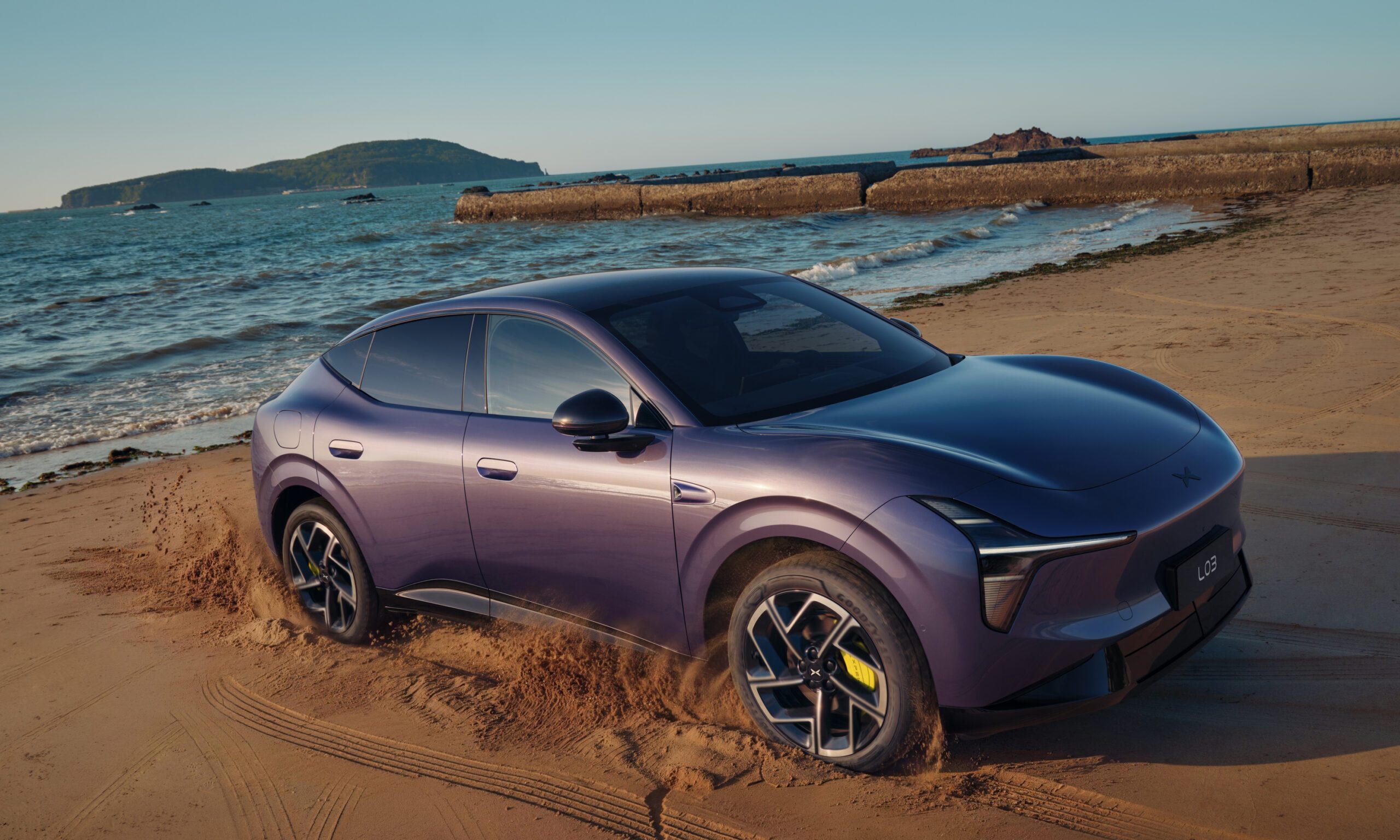
Xpeng’s latest electric vehicle carries enough processing power to make the term "smart car" actually sound more realistic than it actually is. The new Xpeng L03 debuted simultaneously in Europe and China on July 16, with the company presenting it across 65 markets. Available as a fully electric vehicle and an L03 Power X range-extender, the coupe-SUV is Xpeng’s most internationally focused model so far. Market-specific prices and sales dates remain unannounced.

Three AI chips and Google Maps built right in

Read more
A new sodium battery posts wild four-minute charging numbers, but don’t expect it in an EV yet
The breakthrough could improve fast charging and battery life, but the study hasn’t demonstrated those results in a production-sized pack
EV Charger

A new sodium-metal battery has posted a charging number that makes today’s EVs look painfully slow. In laboratory testing, the cell operated at a 15C rate, equivalent to completing a charge or discharge in roughly four minutes.

That doesn’t mean researchers plugged in an electric car and watched it fill up before the driver finished buying coffee. The result came from a small experimental cell using a new quasi-solid electrolyte, while the larger pouch-cell prototype delivered far less dramatic performance.

Read more
The Apple Car may be dead, but it became the foundation of Apple Intelligence
A decade of work on a canceled car project reportedly laid the groundwork for Apple Intelligence.
Apple Intelligence in Apple Car

The Apple Car may have never left the garage, but it apparently gave birth to Apple's AI ambitions. According to Bloomberg's Mark Gurman, Apple's canceled autonomous vehicle project, one that consumed more than a decade of work and over $10 billion before being scrapped in 2024, ended up laying the technological foundation for Apple Intelligence. In a rather ironic twist, one of Apple's most expensive failures may also become one of its most important long-term investments.

The Apple Car forced Apple to think like an AI company

Read more