1. Home
  2. Cars
  3. News

Digital Trends may earn a commission when you buy through links on our site. Why trust us?

How ‘The Grand Tour’ faked dropping a Prius into the Hollywood Walk of Fame

Add as a preferred source on Google

Jeremy Clarkson, James May, and Richard Hammond do not like the Toyota Prius. The trio constantly berated the vehicle during their stint on Top Gear, in fact Clarkson once said he’d rather gaze at the back of a baboon than look at the fuel-sipping hybrid again. Those aren’t exactly high marks.

The gang’s new show, The Grand Tour, premieres on Amazon Prime this Friday, but ahead of the first episode, the show’s producers have channeled the trio’s disdain for the car in an unusual way — they left wrecked Priuses all over the world. Three destroyed examples were placed in London, Berlin, and Los Angeles, but they weren’t simply crashed into walls and left there. Instead, the production team put the hybrids through an elaborate transformation process to make the scenes look real, and Digital Trends got an exclusive first look at how they did it.

Recommended Videos

As shown in the time lapse video above, the Los Angeles Prius had its front section completely lopped off, then the producers stood it on end to make it look like it’d driven off a building. After adding some rubble for good measure, they transported it to Hollywood Boulevard with a license plate that read “CL4RK50N” to make sure people made the connection. Clarkson may never get a star on the Hollywood Walk of Fame, but honestly, this is much more fitting for his personality.

As you might expect, not everyone was thrilled about the stunt. Gary Rae, Director of Communications and Campaigns for the road safety charity Brake, released the following statement to The Guardian. “This is a crass, insensitive and desperate stunt,” he said. “Though I’m not surprised, as this team has a track record of glorifying speed, and ignoring the devastating consequences of dangerous driving. Programs like Top Gear and its new rival, Grand Tour, need to recognize that car worship is dated and misplaced.”

As for us, we’ll be enjoying our favorite dated and misplaced pastime this Friday on Amazon Prime.

Watch on Amazon

Andrew Hard
Andrew first started writing in middle school and hasn't put the pen down since. Whether it's technology, music, sports, or…
Your next car’s software update could become its biggest security risk
Your next car could receive updates like your smartphone. That's also becoming a cybersecurity nightmare.
OTA technology allows manufacturers to remotely deliver software updates.

Modern cars are no longer machines that stay the same after they leave the showroom. Increasingly, they're becoming software-defined vehicles that receive new features, bug fixes, and security patches wirelessly, much like smartphones. But while over-the-air (OTA) updates have made vehicle maintenance easier and cheaper, cybersecurity experts are warning that the same technology could also become one of the automotive industry's biggest security challenges.

Researchers and policymakers are now calling for stronger oversight as connected vehicles become increasingly dependent on remote software updates. Their concern isn't just about hackers stealing personal data. It's about someone potentially interfering with the operation of a moving vehicle.

Read more
This sleek Chinese EV pairs supercar styling with three AI brains
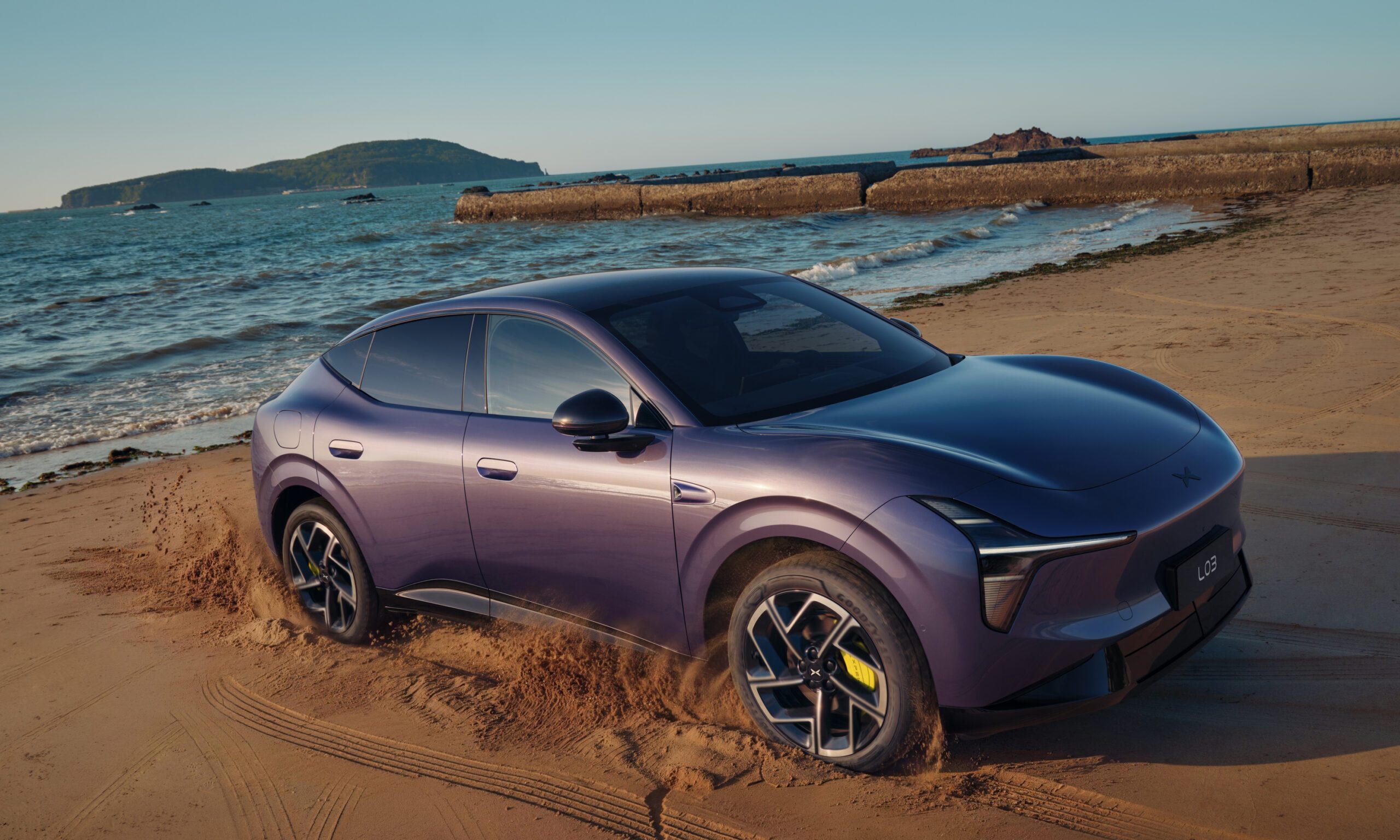
The Xpeng L03 is an AI supercomputer disguised as a stylish family SUV
Xpeng L03

Xpeng’s latest electric vehicle carries enough processing power to make the term "smart car" actually sound more realistic than it actually is. The new Xpeng L03 debuted simultaneously in Europe and China on July 16, with the company presenting it across 65 markets. Available as a fully electric vehicle and an L03 Power X range-extender, the coupe-SUV is Xpeng’s most internationally focused model so far. Market-specific prices and sales dates remain unannounced.

Three AI chips and Google Maps built right in

Read more
A new sodium battery posts wild four-minute charging numbers, but don’t expect it in an EV yet
The breakthrough could improve fast charging and battery life, but the study hasn’t demonstrated those results in a production-sized pack
EV Charger

A new sodium-metal battery has posted a charging number that makes today’s EVs look painfully slow. In laboratory testing, the cell operated at a 15C rate, equivalent to completing a charge or discharge in roughly four minutes.

That doesn’t mean researchers plugged in an electric car and watched it fill up before the driver finished buying coffee. The result came from a small experimental cell using a new quasi-solid electrolyte, while the larger pouch-cell prototype delivered far less dramatic performance.

Read more