1. Home
  2. Cars
  3. Health & Fitness
  4. Legacy Archives

Think cyclists are slow? Watch this French rocket bike do 207 mph

Think cyclists are slow? Watch this rocket bike do 207 mph on the track

Add as a preferred source on Google

A French man named Francois Gissy is now the world’s fastest cyclist.

Last week, at the Circuit Paul Richard in South France, Gissy rode his rocket-powered bicycle to an astonishing speed of 207 mph, a feat he accomplished in just 4.8 seconds.

Kids, don’t try this at home.

Recommended Videos

The rocket bike was built by French company and “lasers experiments” specialist Exotic Thermo Engineering, a firm that excels in chemically powered drag racers.

The bike was fitted with a hydrogen peroxide-fueled rocket with three individual thrusters and NASA-like grunt to match. The cycle’s apt name? Kamikaze.

You can see why the French firm gave the vehicle its calamitous designation once Gissy takes off, his body manipulated by a ridiculous amount of g-force and secured by nothing but his vice-like hands. The propulsion system measures 4.5 kN of thrust which equals 560 horsepower, but the amount of testicular fortitude required to pull of such a stunt simply defies measure.

Exotic Thermo Engineering Rocket Bike
Image used with permission by copyright holder

The rear-facing camera view of Gissy’s acceleration is the most astonishing, which comes in at around 40 seconds of the video. You can see the race team, safety crew, and fully-grown pine trees turn to ants in seconds. At other points, thoroughbred racehorses like the Ferrari 430 Scuderia and are simply left at the starting line like nothing.

Luckily, there was somebody with a video camera to document the whole thing.

The crazy cycle’s top speed of 207 mph is obviously impressive on its own, but the miniscule amount of time it takes to get there is almost comical. For reference, the record-breaking Hennessey Venom GT reaches 186.4 mph in 13.86 seconds, while Gissy rode over 20 mph faster in 9.09 seconds less.

And yes, he was wearing a helmet.

(Video hosted by Swiss Rocket Man)

Andrew Hard
Andrew first started writing in middle school and hasn't put the pen down since. Whether it's technology, music, sports, or…
Volvo is rolling out Apple Music to over 2 million cars with a simple OTA update
Your Volvo may soon get Apple Music without needing CarPlay
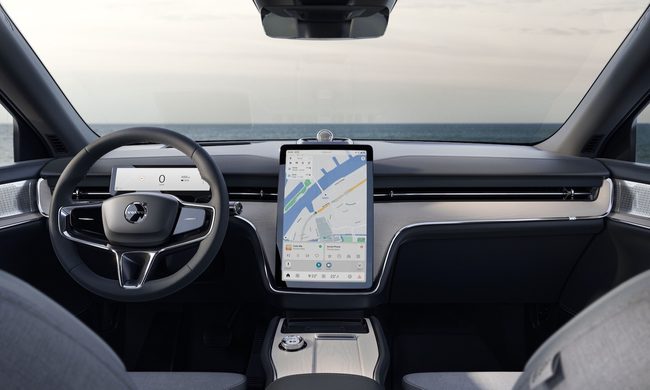
Interior view of the 2024 Volvo EX90.

The line between your smartphone and your car continues to blur. Volvo has announced that it is rolling out an over-the-air software update that brings Apple Music directly to the infotainment systems of more than 2 million vehicles worldwide. Instead of relying on Apple CarPlay or plugging in an iPhone, eligible drivers will be able to stream music natively from their car's built-in system, making Apple Music another integrated feature of Volvo's software experience.

The update is arriving for a wide range of Volvo models, including the EX90, ES90, XC90, S90, V90, XC60, S60, V60, XC40, EX40 and EC40, covering model year 2020 onwards. Availability, however, may vary depending on the vehicle.

Read more
Chery’s latest EV packs flagship tech for the price of a base Tesla, but you can’t buy it
Here's everything packed into Exeed's 2027 Exlantix ES, from its 27-sensor autonomous driving suite to its 860 km range, all starting under $31,000.
Car, Transportation, Vehicle

Chery's premium arm just dropped a sedan that makes you wonder why American EVs cost twice as much for half the tech.

Exeed's 2027 Exlantix ES ships with a driver-assist system called Falcon 700. It is built around an Nvidia Orin-Y chip and a genuinely stacked sensor suite.

Read more
A new AI model wants self-driving cars to think before they swerve
Forget guessing games, this self-driving AI actually shows its work.
Self driving car

Self-driving cars have gotten pretty good at driving. The harder problem is teaching them to drive safely in situations nobody planned for. We have heard horror stories of self-driving cars, behaving erratically in emergency situations, often times delaying first responders from reaching the scene.

A team at Seoul National University, led by professor Jun Won Choi from the Department of Electrical and Computer Engineering, thinks they have cracked part of that puzzle with a new AI model called SafeDrive. The research was recently selected as a highlight paper at CVPR 2026, a distinction that goes only to roughly 3% of all submissions.

Read more