  1. Home
  2. Cars
  3. News

Polish game developer Techland has designed a Twitter-powered slot car

Add as a preferred source on Google

We’re deep into the Internet of Things era, in which you can control home, office, and other devices from your mobile device, so news of the a Twitter-powered car seems like par for the course.

Polish video game developer, Techland, has revealed a promotion for its upcoming game, Dying Light: The Following, that uses tweets with the hashtag #TweetForSpeed to send a physical slot car around a track at the gamemaker’s headquarters.

Recommended Videos

So how does it work? Basically, the track has been fitted with a Belkin WeBo device that kicks the power on and off whenever Techland’s algorithm recognizes a tweet with the aforementioned hashtag.

Techland touts that something like this has never been done before, and indeed it’s an interesting interaction for fans all over the globe. There’s a live stream of the slot car in action, which states that over 5,000 tweets have already been submitted. Don’t expect to see the slot car whizzing around the track all day, but you can check in on its status from time to time.

Of course the concept is pretty straightforward, but my brain immediately jumps to bigger and better applications. Drivers in full-size cars that can only be motivated with tweets? Sounds like a one heck of a game show to me. The closest parallels to this concept are shows where audience engagement reveals clues or perks for certain teams.

Somewhat related, vehicular connectivity is one of the hottest topics these days, as CES proved earlier this month. It seems every automaker is in a mad race to expand social media and car-to-car connectivity features as drivers expect to be “plugged in” during all parts of their day. While remote hacking is an ever-present concern, the safety and convenience benefits outweigh the risks in most consumers’ eyes.

Miles Branman
Miles Branman doesn't need sustenance; he needs cars. While the gearhead gene wasn't strong in his own family, Miles…
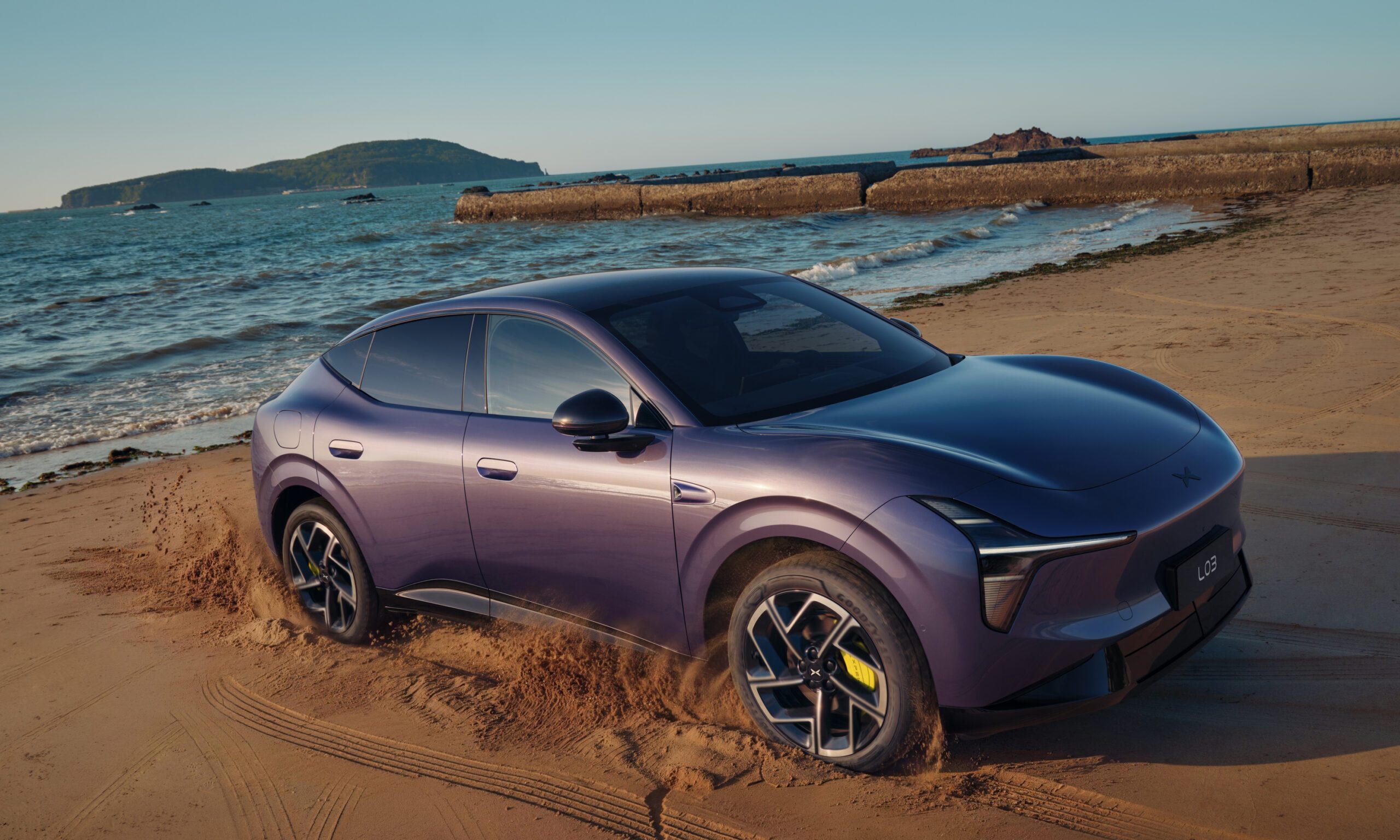
This sleek Chinese EV pairs supercar styling with three AI brains
The Xpeng L03 is an AI supercomputer disguised as a stylish family SUV
Xpeng L03

Xpeng’s latest electric vehicle carries enough processing power to make the term "smart car" actually sound more realistic than it actually is. The new Xpeng L03 debuted simultaneously in Europe and China on July 16, with the company presenting it across 65 markets. Available as a fully electric vehicle and an L03 Power X range-extender, the coupe-SUV is Xpeng’s most internationally focused model so far. Market-specific prices and sales dates remain unannounced.

Three AI chips and Google Maps built right in

Read more
A new sodium battery posts wild four-minute charging numbers, but don’t expect it in an EV yet
The breakthrough could improve fast charging and battery life, but the study hasn’t demonstrated those results in a production-sized pack
EV Charger

A new sodium-metal battery has posted a charging number that makes today’s EVs look painfully slow. In laboratory testing, the cell operated at a 15C rate, equivalent to completing a charge or discharge in roughly four minutes.

That doesn’t mean researchers plugged in an electric car and watched it fill up before the driver finished buying coffee. The result came from a small experimental cell using a new quasi-solid electrolyte, while the larger pouch-cell prototype delivered far less dramatic performance.

Read more
The Apple Car may be dead, but it became the foundation of Apple Intelligence
A decade of work on a canceled car project reportedly laid the groundwork for Apple Intelligence.
Apple Intelligence in Apple Car

The Apple Car may have never left the garage, but it apparently gave birth to Apple's AI ambitions. According to Bloomberg's Mark Gurman, Apple's canceled autonomous vehicle project, one that consumed more than a decade of work and over $10 billion before being scrapped in 2024, ended up laying the technological foundation for Apple Intelligence. In a rather ironic twist, one of Apple's most expensive failures may also become one of its most important long-term investments.

The Apple Car forced Apple to think like an AI company

Read more