  1. Home
  2. Cars
  3. News

Germany investigates Volkswagen for tax evasion related to CO2 understatement

Add as a preferred source on Google

Volkswagen is under investigation in Germany for tax evasion related to inaccurate claims of emissions levels from both gasoline and diesel cars. Because taxes in Germany are tied to rated carbon-dioxide (CO2) emissions levels, authorities believe VW’s underreporting could have prevented the government from receiving its proper share.

The investigation focuses on five unnamed Volkswagen employees, according to Automotive News Europe (subscription required). It’s being conducted by prosecutors in Brunswick, near VW headquarters in Wolfsburg. Prosecutors are primarily looking into tax evasion, but the investigation could also involve fraud, a spokesperson for the prosecutor’s office said.

Recommended Videos

The damage caused by tax evasion is “not insignificant,” according to a member of the prosecutor’s office. Allegations stem from Volkswagen’s announcement earlier this month that it understated CO2 emissions levels for about 800,000 cars. The reporting error includes both gasoline and diesel cars from VW, and its component brands. The company expects to spend 2 billion euros (about $2.1 billion) dealing with the issue.

Volkswagen has said that no recall will be necessary to address the problem, indicating that it is only a reporting issue, and not one that affects the performance of the vehicles themselves, like the ongoing “dieselgate” scandal. The costs estimated by VW likely include compensation payments to customers and fines that may result from prosecution.

The same Brunswick prosecutors are also looking into the diesel-emissions scandal. Last month, they raided VW’s headquarters as part of the probe. Volkswagen has admitted to installing “defeat device” software on 11 million cars worldwide, which allows cars to detect the conditions of an emissions test and alter performance.

Volkswagen has only admitted that the software allowed cars to cheat on U.S. emissions tests, nit European tests. It’s set aside $7.3 billion to deal with the entirety of the scandal, and drastically cut investments and research projects.

Stephen Edelstein
Stephen is a freelance automotive journalist covering all things cars. He likes anything with four wheels, from classic cars…
Volvo is rolling out Apple Music to over 2 million cars with a simple OTA update
Your Volvo may soon get Apple Music without needing CarPlay
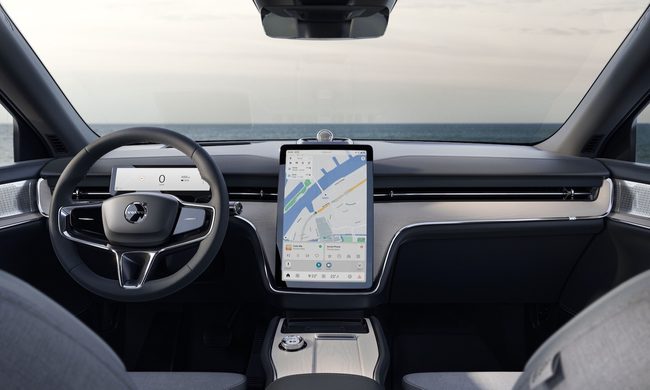
Interior view of the 2024 Volvo EX90.

The line between your smartphone and your car continues to blur. Volvo has announced that it is rolling out an over-the-air software update that brings Apple Music directly to the infotainment systems of more than 2 million vehicles worldwide. Instead of relying on Apple CarPlay or plugging in an iPhone, eligible drivers will be able to stream music natively from their car's built-in system, making Apple Music another integrated feature of Volvo's software experience.

The update is arriving for a wide range of Volvo models, including the EX90, ES90, XC90, S90, V90, XC60, S60, V60, XC40, EX40 and EC40, covering model year 2020 onwards. Availability, however, may vary depending on the vehicle.

Read more
Chery’s latest EV packs flagship tech for the price of a base Tesla, but you can’t buy it
Here's everything packed into Exeed's 2027 Exlantix ES, from its 27-sensor autonomous driving suite to its 860 km range, all starting under $31,000.
Car, Transportation, Vehicle

Chery's premium arm just dropped a sedan that makes you wonder why American EVs cost twice as much for half the tech.

Exeed's 2027 Exlantix ES ships with a driver-assist system called Falcon 700. It is built around an Nvidia Orin-Y chip and a genuinely stacked sensor suite.

Read more
A new AI model wants self-driving cars to think before they swerve
Forget guessing games, this self-driving AI actually shows its work.
Self driving car

Self-driving cars have gotten pretty good at driving. The harder problem is teaching them to drive safely in situations nobody planned for. We have heard horror stories of self-driving cars, behaving erratically in emergency situations, often times delaying first responders from reaching the scene.

A team at Seoul National University, led by professor Jun Won Choi from the Department of Electrical and Computer Engineering, thinks they have cracked part of that puzzle with a new AI model called SafeDrive. The research was recently selected as a highlight paper at CVPR 2026, a distinction that goes only to roughly 3% of all submissions.

Read more