1. Home
  2. Cars
  3. News

Volkswagen will continue to sell diesels, but not in large numbers

Add as a preferred source on Google

Volkswagen is done promoting diesels as a central part of its brand identity in the U.S. The embattled German carmaker isn’t finished selling diesels here, but it won’t bring them back in large numbers anytime soon.

That’s according to Volkswagen Group of America CEO Hinrich Woebcken, who told Automotive News (subscription required) that VW won’t relaunch the diesel push that ended when it was discovered that the company cheated on emissions tests. Prior to the emissions scandal, Volkswagen dominated sales of diesel cars in the U.S.

Recommended Videos

“We are not stopping diesel,” Woebcken said, “But in reality, we have to accept that the high percentage of diesels that we had before will not come back again.” Diesels are part of VW’s plans for 2017 through 2019, assuming regulatory approval. Yet it’s unlikely that volumes will return to pre-scandal levels, where diesels accounted for more than 20 percent of Volkswagen’s U.S. sales.

Read more: Regulators nix modification plan for VW 3.0-liter diesels

Volkswagen stopped sales of its 2015-model diesels in September 2015, when news of the scandal broke. At the time, it thought it could get the EPA to certify 2016 models for sale, but that quickly proved unrealistic. The company hasn’t asked permission to start selling new diesels again, so it’s unclear when new Volkswagen diesels will actually go on sale here.

Fallout from the emissions scandal may be part of the reason for VW’s decision to ditch most of its diesels, but stricter regulations are a factor as well. Woebcken said that U.S. regulations set to take effect in 2019 are so tough that “we would have had to find an alternative to a certain extent anyhow,” and that the scandal just forced Volkswagen to think about it earlier.

VW will focus more on electric cars and the crossovers Americans can’t get enough of. It plans to launch a new seven-seat midsize crossover, a redesigned version of the compact Tiguan, and the Golf Alltrack, an SUV-ified Golf wagon that copies the Subaru XV Crosstrek and Outback formula.

Stephen Edelstein
Stephen is a freelance automotive journalist covering all things cars. He likes anything with four wheels, from classic cars…
Volvo is rolling out Apple Music to over 2 million cars with a simple OTA update
Your Volvo may soon get Apple Music without needing CarPlay
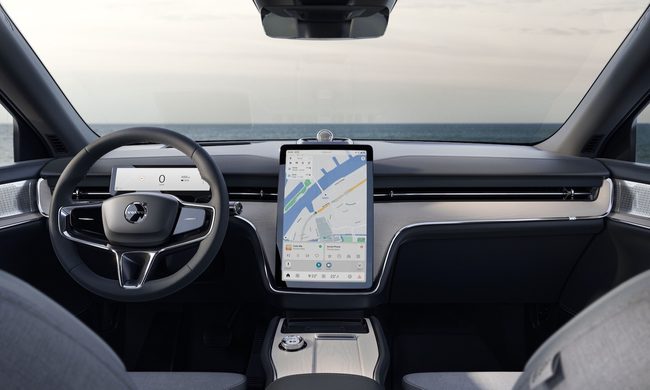
Interior view of the 2024 Volvo EX90.

The line between your smartphone and your car continues to blur. Volvo has announced that it is rolling out an over-the-air software update that brings Apple Music directly to the infotainment systems of more than 2 million vehicles worldwide. Instead of relying on Apple CarPlay or plugging in an iPhone, eligible drivers will be able to stream music natively from their car's built-in system, making Apple Music another integrated feature of Volvo's software experience.

The update is arriving for a wide range of Volvo models, including the EX90, ES90, XC90, S90, V90, XC60, S60, V60, XC40, EX40 and EC40, covering model year 2020 onwards. Availability, however, may vary depending on the vehicle.

Read more
Chery’s latest EV packs flagship tech for the price of a base Tesla, but you can’t buy it
Here's everything packed into Exeed's 2027 Exlantix ES, from its 27-sensor autonomous driving suite to its 860 km range, all starting under $31,000.
Car, Transportation, Vehicle

Chery's premium arm just dropped a sedan that makes you wonder why American EVs cost twice as much for half the tech.

Exeed's 2027 Exlantix ES ships with a driver-assist system called Falcon 700. It is built around an Nvidia Orin-Y chip and a genuinely stacked sensor suite.

Read more
A new AI model wants self-driving cars to think before they swerve
Forget guessing games, this self-driving AI actually shows its work.
Self driving car

Self-driving cars have gotten pretty good at driving. The harder problem is teaching them to drive safely in situations nobody planned for. We have heard horror stories of self-driving cars, behaving erratically in emergency situations, often times delaying first responders from reaching the scene.

A team at Seoul National University, led by professor Jun Won Choi from the Department of Electrical and Computer Engineering, thinks they have cracked part of that puzzle with a new AI model called SafeDrive. The research was recently selected as a highlight paper at CVPR 2026, a distinction that goes only to roughly 3% of all submissions.

Read more