1. Home
  2. Cars
  3. Photo Galleries
  4. Legacy Archives

Born from the fuel-sipping XL1, Volkswagen’s XL Sport has the heart of a raging Ducati

Add as a preferred source on Google

When Volkswagen’s revolutionary 1.0-liter prototype was first shown in 2002, it came with some bold claims: a 0.159 drag coefficient (Cd), 285 miles per gallon, and a 404-mile driving range on one tank of fuel.

Over the years, the car evolved in both looks and design, and was eventually released as a limited production vehicle in 2013. It may not have been as eco-friendly as we originally thought, but the futuristic XL1 was still a marvel in many ways.

Somewhere along the line, however, a Volkswagen engineer had the novel idea that the XL1’s extreme aerodynamics could benefit much more than just fuel economy. Thus, the XL Sport was born.

Related: How VW milks 261 miles from a single gallon of gas with the record-breaking XL1

The XL Sport combines the slipstream silhouette that helped the XK1 reach 261 mpg (give or take 100) with the heart of a furious Italian sport bike, and the result is absolutely phenomenal.

The XL borrows the 197-horsepower V-Twin engine from the Ducati 1199, and with that comes the Superleggera’s 11,000-rpm redline and surprisingly guttural soundtrack. Despite having a motorbike powerplant powering the rear wheels, the XL Sport’s 1,962-pound curb weight allows it to hit 60 mph in 5.7 seconds. Top speed is a similarly impressive 168 mph.

VW Ducati XL Sport 10
Image used with permission by copyright holder

The new car isn’t a slippery as its gas-sipping cousin (Cd is now 0.258), as VW has removed the enclosed wheel wells of the XL1 and added aggressive venting throughout. The XL1 always had a subtly aggressive front fascia, but now the dagger-like headlight undercuts have bolder, sharper lines to play off of. It looks impressive.

With the XL Sport, Volkswagen has mated “the most fuel-efficient production car of all time” with a bike that has “the best power-to-weight ratio of any production motorcycle in history.” If the offspring is anything less than a prodigy, I’d be very surprised.

The XL Sport will be showcased in its entirety at the 2014 Paris Motor Show.

Andrew Hard
Andrew first started writing in middle school and hasn't put the pen down since. Whether it's technology, music, sports, or…
Volvo is rolling out Apple Music to over 2 million cars with a simple OTA update
Your Volvo may soon get Apple Music without needing CarPlay
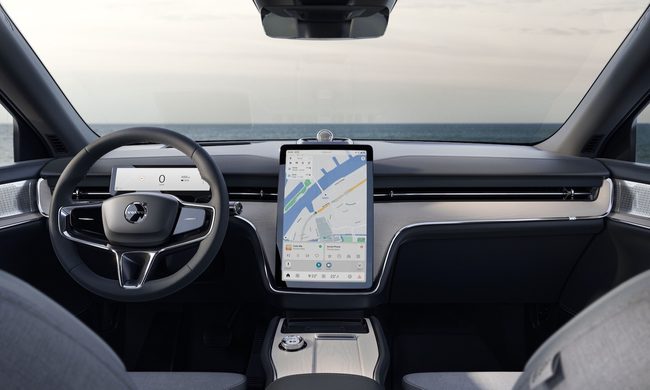
Interior view of the 2024 Volvo EX90.

The line between your smartphone and your car continues to blur. Volvo has announced that it is rolling out an over-the-air software update that brings Apple Music directly to the infotainment systems of more than 2 million vehicles worldwide. Instead of relying on Apple CarPlay or plugging in an iPhone, eligible drivers will be able to stream music natively from their car's built-in system, making Apple Music another integrated feature of Volvo's software experience.

The update is arriving for a wide range of Volvo models, including the EX90, ES90, XC90, S90, V90, XC60, S60, V60, XC40, EX40 and EC40, covering model year 2020 onwards. Availability, however, may vary depending on the vehicle.

Read more
Chery’s latest EV packs flagship tech for the price of a base Tesla, but you can’t buy it
Here's everything packed into Exeed's 2027 Exlantix ES, from its 27-sensor autonomous driving suite to its 860 km range, all starting under $31,000.
Car, Transportation, Vehicle

Chery's premium arm just dropped a sedan that makes you wonder why American EVs cost twice as much for half the tech.

Exeed's 2027 Exlantix ES ships with a driver-assist system called Falcon 700. It is built around an Nvidia Orin-Y chip and a genuinely stacked sensor suite.

Read more
A new AI model wants self-driving cars to think before they swerve
Forget guessing games, this self-driving AI actually shows its work.
Self driving car

Self-driving cars have gotten pretty good at driving. The harder problem is teaching them to drive safely in situations nobody planned for. We have heard horror stories of self-driving cars, behaving erratically in emergency situations, often times delaying first responders from reaching the scene.

A team at Seoul National University, led by professor Jun Won Choi from the Department of Electrical and Computer Engineering, thinks they have cracked part of that puzzle with a new AI model called SafeDrive. The research was recently selected as a highlight paper at CVPR 2026, a distinction that goes only to roughly 3% of all submissions.

Read more