1. Home
  2. Cars
  3. Emerging Tech
  4. Legacy Archives

VW’s XL1 hypermiler went to Italy and brought back a souvenir … from Ducati

Add as a preferred source on Google

The Volkswagen XL1 is back in the news, and this time it’s brought a friend: the Ferrari of the motorcycle world, Ducati.

The XL1 was originally designed as the ultimate eco car, with initial reports claiming 261 mpg. This unbelievable claim turned out to be just that, because in initial testing it only managed 160 mpg. That said, being able to get from Digital Trends headquarters in Portland to Seattle’s Space Needle on $5 of gas is still pretty impressive. I am glad, however, VW has decided to see how fast it can make the XL1 get there.

Recommended Videos

As part of the VW Group’s campaign to purchase every other company that makes vehicles, it acquired Ducati in April of 2012. This stupendously complicated series of transactions that technically made the Italian superbike maker a subsidiary of Audi is starting to bear fruit.

VW XL1 with Ducati engine cropped
Image used with permission by copyright holder

The German tabloid Die Bild-Zeitung recently released news that VW designed a performance version of the XL1 called the ‘XL1 Sport,’ fitted with the 190-horsepower 1.2 liter two-cylinder engine from its amazing Panigale sport bike. That may not sound like that much but remember the XL1 only weighs 1750 pounds. To put that in perspective, it’s just slightly less than the starting line of my beloved Seattle Seahawks.

What’s more; the XL1 is reputedly the slipperiest production car ever made with a drag coefficient of only 0.19. That’s less drag than you find on most fish, and certainly a lot less than all those linemen.

With this kind of power, aerodynamics, and lightweight bodywork, the XL1 could very easily be a baby supercar that still gets 60 plus mpg. Besides it looks like what you would expect an Audi R8 to give birth to if it made love to a light cycle from Tron.

Personally, I really hope the folks at Volkswagen make this happen. How often do you get the technical brilliance a German hypermiler married to passion and danger of a fire-spitting Italian superbike?

Let’s just hope VW Chairman Ferdinand Piech is a Digital Trends reader.

Top image courtesy of Die Bild-Zeitung

Peter Braun
Former Digital Trends Contributor
Peter is a freelance contributor to Digital Trends and almost a lawyer. He has loved thinking, writing and talking about cars…
Volvo is rolling out Apple Music to over 2 million cars with a simple OTA update
Your Volvo may soon get Apple Music without needing CarPlay
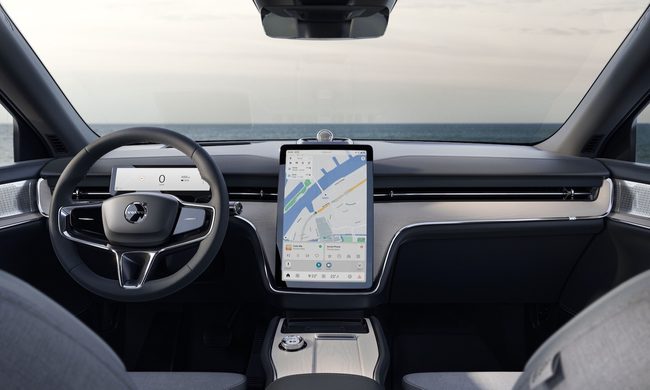
Interior view of the 2024 Volvo EX90.

The line between your smartphone and your car continues to blur. Volvo has announced that it is rolling out an over-the-air software update that brings Apple Music directly to the infotainment systems of more than 2 million vehicles worldwide. Instead of relying on Apple CarPlay or plugging in an iPhone, eligible drivers will be able to stream music natively from their car's built-in system, making Apple Music another integrated feature of Volvo's software experience.

The update is arriving for a wide range of Volvo models, including the EX90, ES90, XC90, S90, V90, XC60, S60, V60, XC40, EX40 and EC40, covering model year 2020 onwards. Availability, however, may vary depending on the vehicle.

Read more
Chery’s latest EV packs flagship tech for the price of a base Tesla, but you can’t buy it
Here's everything packed into Exeed's 2027 Exlantix ES, from its 27-sensor autonomous driving suite to its 860 km range, all starting under $31,000.
Car, Transportation, Vehicle

Chery's premium arm just dropped a sedan that makes you wonder why American EVs cost twice as much for half the tech.

Exeed's 2027 Exlantix ES ships with a driver-assist system called Falcon 700. It is built around an Nvidia Orin-Y chip and a genuinely stacked sensor suite.

Read more
A new AI model wants self-driving cars to think before they swerve
Forget guessing games, this self-driving AI actually shows its work.
Self driving car

Self-driving cars have gotten pretty good at driving. The harder problem is teaching them to drive safely in situations nobody planned for. We have heard horror stories of self-driving cars, behaving erratically in emergency situations, often times delaying first responders from reaching the scene.

A team at Seoul National University, led by professor Jun Won Choi from the Department of Electrical and Computer Engineering, thinks they have cracked part of that puzzle with a new AI model called SafeDrive. The research was recently selected as a highlight paper at CVPR 2026, a distinction that goes only to roughly 3% of all submissions.

Read more