  1. Home
  2. Cars
  3. News

FBI reportedly arrests U.S. VW exec on dieselgate fraud conspiracy charges

Add as a preferred source on Google

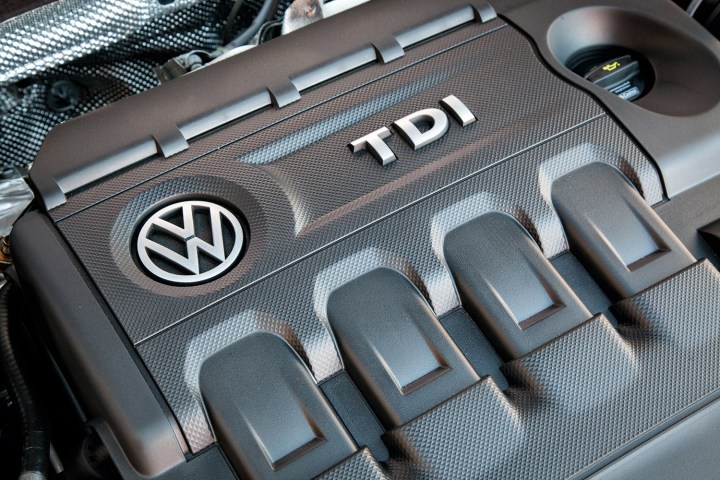
Timing can be crucial in business and politics — and in criminal negotiations. All three interests could be involved in the reported arrest of a top VW executive on January 7. Volkswagen’s former U.S. regulations compliance executive, Oliver Schmidt, has reportedly been arrested on charges of conspiracy to defraud the United States,  according to The New York Times.

The reported arrest comes as the U.S Justice Department and Volkswagen are getting ready to finalize a deal in which some part of VW would plead guilty to emissions cheating and pay more than $2 billion to end the investigation. The New York Times wrote that the Volkswagen group “has been eager to put the Justice Department investigation behind it before President-elect Donald J. Trump is sworn in on Jan. 20.”

Recommended Videos

Schmidt was in charge of VW’s U.S. regulatory compliance office from 2014 to March 2015. He and other VW officials claimed VW wasn’t cheating and provided data supporting the claim that technical issues were the cause of the excess emissions. According to The New York Times, California Air Resources Board (CARB) officials said much of the data presented by Volkswagen was fabricated.

After VW’s admission of cheating last September, Schmidt represented the company when he told a British Parliament committee that what VW did was not illegal in Europe.

Reporting that Schmidt was arrested in Florida on Saturday and is expected to be arraigned in Detroit on Monday, the New York Times cited two unnamed people, a law enforcement official and someone with knowledge of the arrest. Neither VW nor the U.S. Justice Department commented on the alleged arrest, The New York Times reports.

The reported arrest of the VW executive this past weekend takes the investigation into the executive level following a September 2016 guilty plea to conspiracy to defraud the U.S. government by James Liang, a former VW engineer in California. Liang also pleaded guilty to violating the Clean Air Act. VW diesel cars on the road could have been emitting nitrogen oxide at levels up to 40 times those allowed under that act.

Bruce Brown
Bruce Brown Contributing Editor   As a Contributing Editor to the Auto teams at Digital Trends and TheManual.com, Bruce…
This sleek Chinese EV pairs supercar styling with three AI brains
The Xpeng L03 is an AI supercomputer disguised as a stylish family SUV
Xpeng L03

Xpeng’s latest electric vehicle carries enough processing power to make the term "smart car" actually sound more realistic than it actually is. The new Xpeng L03 debuted simultaneously in Europe and China on July 16, with the company presenting it across 65 markets. Available as a fully electric vehicle and an L03 Power X range-extender, the coupe-SUV is Xpeng’s most internationally focused model so far. Market-specific prices and sales dates remain unannounced.

Three AI chips and Google Maps built right in

Read more
A new sodium battery posts wild four-minute charging numbers, but don’t expect it in an EV yet
The breakthrough could improve fast charging and battery life, but the study hasn’t demonstrated those results in a production-sized pack
EV Charger

A new sodium-metal battery has posted a charging number that makes today’s EVs look painfully slow. In laboratory testing, the cell operated at a 15C rate, equivalent to completing a charge or discharge in roughly four minutes.

That doesn’t mean researchers plugged in an electric car and watched it fill up before the driver finished buying coffee. The result came from a small experimental cell using a new quasi-solid electrolyte, while the larger pouch-cell prototype delivered far less dramatic performance.

Read more
The Apple Car may be dead, but it became the foundation of Apple Intelligence
A decade of work on a canceled car project reportedly laid the groundwork for Apple Intelligence.
Apple Intelligence in Apple Car

The Apple Car may have never left the garage, but it apparently gave birth to Apple's AI ambitions. According to Bloomberg's Mark Gurman, Apple's canceled autonomous vehicle project, one that consumed more than a decade of work and over $10 billion before being scrapped in 2024, ended up laying the technological foundation for Apple Intelligence. In a rather ironic twist, one of Apple's most expensive failures may also become one of its most important long-term investments.

The Apple Car forced Apple to think like an AI company

Read more