1. Home
  2. Cars
  3. Photo Galleries
  4. Legacy Archives

Windshield included, the Pininfarina Sergio is finally headed for (limited) production

Add as a preferred source on Google

In 2013, Italian design house Pininfarina stripped a Ferrari 458 down to its guts and built something called the Pininfarina Sergio.

As with all Pininfarina Ferraris, the Sergio had a rare design flair that can only accompany a custom-built design, and it oozed a distinct appeal that you just can’t put your finger on. Pininfarina’s never look quite real, as if their brilliance is too radical, too futuristic to exist in our universe.

The Sergio was no exception to that rule, because as a concept car, it would likely never see a mass production line. After all, it had no windows or windscreen, just a couple crash helmets and an unlimited supply of rarified air.

But now, according to Autoblog, the impossible may be happening, windscreen included.

Ferrari has confirmed an extremely-limited production run of 6 units for the Sergio, so don’t expect to see the disorienting, shark-like supercar in your local car park anytime soon.

“This extreme limited and exclusive series celebrates 60 years of collaboration between Ferrari and Pininfarina,” said company spokesman Matteo Torre.

Related: Record-breaking Ferrari 250 GTO sells for $38 million at Pebble Beach

There are more changes to the Sergio besides some added glass. The headlight strip, which nearly spans the entire front fascia, has been bumped farther up the hood. According to the Ferrari source, the deep side air intakes are less expressive on the production version, with vents on the B-pillar stretching in response.

Unverified photos posted by The Supercar Kids show an even more dramatic departure from the Sergio concept. The car almost looks like a stretched Toyota MR2 from the side, which is not an ugly car by any means, but it doesn’t exactly fit with the ethos of Pininfarina Ferrari. Let’s hope the production version stays a bit closer to the original concept.

Watch the concept unveiling video by Pininfarina Official here.

Andrew Hard
Andrew first started writing in middle school and hasn't put the pen down since. Whether it's technology, music, sports, or…
Volvo is rolling out Apple Music to over 2 million cars with a simple OTA update
Your Volvo may soon get Apple Music without needing CarPlay
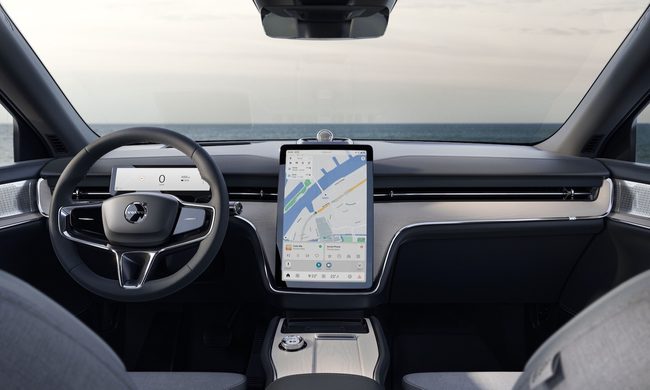
Interior view of the 2024 Volvo EX90.

The line between your smartphone and your car continues to blur. Volvo has announced that it is rolling out an over-the-air software update that brings Apple Music directly to the infotainment systems of more than 2 million vehicles worldwide. Instead of relying on Apple CarPlay or plugging in an iPhone, eligible drivers will be able to stream music natively from their car's built-in system, making Apple Music another integrated feature of Volvo's software experience.

The update is arriving for a wide range of Volvo models, including the EX90, ES90, XC90, S90, V90, XC60, S60, V60, XC40, EX40 and EC40, covering model year 2020 onwards. Availability, however, may vary depending on the vehicle.

Read more
Chery’s latest EV packs flagship tech for the price of a base Tesla, but you can’t buy it
Here's everything packed into Exeed's 2027 Exlantix ES, from its 27-sensor autonomous driving suite to its 860 km range, all starting under $31,000.
Car, Transportation, Vehicle

Chery's premium arm just dropped a sedan that makes you wonder why American EVs cost twice as much for half the tech.

Exeed's 2027 Exlantix ES ships with a driver-assist system called Falcon 700. It is built around an Nvidia Orin-Y chip and a genuinely stacked sensor suite.

Read more
A new AI model wants self-driving cars to think before they swerve
Forget guessing games, this self-driving AI actually shows its work.
Self driving car

Self-driving cars have gotten pretty good at driving. The harder problem is teaching them to drive safely in situations nobody planned for. We have heard horror stories of self-driving cars, behaving erratically in emergency situations, often times delaying first responders from reaching the scene.

A team at Seoul National University, led by professor Jun Won Choi from the Department of Electrical and Computer Engineering, thinks they have cracked part of that puzzle with a new AI model called SafeDrive. The research was recently selected as a highlight paper at CVPR 2026, a distinction that goes only to roughly 3% of all submissions.

Read more