
Whether you’re punching up an email or crafting the next great American novel, a solid keyboard is a must-have if you spend a lot of time writing. Having a great keyboard for writing will improve your typing speed and accuracy, which means you will spend less time correcting errors and writing more.
Here are the best keyboards for writing and typing, including options for Mac users and those on a budget.


The best overall keyboard for typing
NuPhy Air75
- Low profile
- Hot-swappable
- Pretty affordable
- Extra low-profile switches aren't common
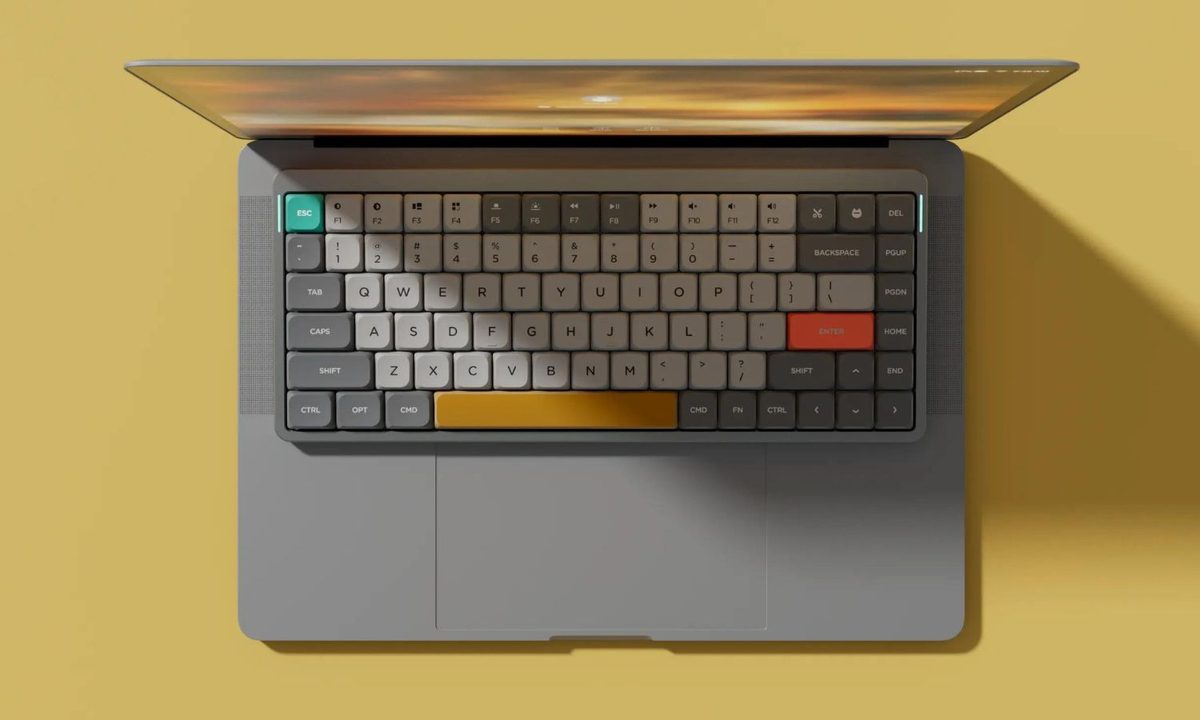
If you’re looking for the best overall typing experience for Windows and Mac devices, look no further than the NuPhy Air75. The Air75 is the thinnest mechanical keyboard in the world, and it comes with all the bells and whistles to make it the best typing experience regardless of what you are looking for.
The biggest selling point of the Air75 is its low profile. At its shortest point, the Air75 measures only 16mm tall. This insanely low profile makes it incredibly comfortable to type on for long periods of time. Wrist strain is a common issue for mechanical keyboards because of their taller profiles, but that won’t be an issue at all on the Air75 because of its thin keys and low-profile switches.
The Air75 can be configured with Gatereon low-profile linear reds, tactile browns, or clicky blue switches. Linear and tactile are obviously the best options for typing and writing, but the options let you choose whichever is best for you. The keyboard is also hot-swappable, so you can always switch them out later.
Designed to work with Windows and Mac, the NuPhy Air75 is hands down the best keyboard for typing. It's not too expensive, either.

Best non-mechanical keyboard
MX Keys
- Grooved keys
- Awesome battery life
- Smart backlight system
- Expensive
It’s impossible to write a keyboard list without mentioning a product from Logitech. It makes a ton of products that appeal to office workers and gamers alike, including the MX Keys.
The MX Keys is the best non-mechanical keyboard you can get for writing. For one, it’s remarkably thin, but it remains sturdy because of its unibody aluminum chassis. The keys are grooved so your finger can effortlessly travel from key to key.
The MX Keys can connect to up to three devices, making it an excellent multitasking and productivity device. Its smart illumination setting will also adjust the keys’ backlighting to the ambient room brightness, saving you battery life. You can expect at least 10 days on a full charge. If you turn backlighting off, the MX Keys can last up to five months. That makes the MX Keys a great option if you’re looking for a low-maintenance wireless solution.
The MX Keys is compatible with Windows and MacOS out of the box, so it’s a great option regardless of what your office setup is. It’s a bit expensive at $119, but it’s what you expect for such a premium build quality and typing experience. If you like the idea of the MX Keys but still want a mechanical board, Logitech recently came out with a mechanical version.

The best tenkeyless board
Ducky One 3 TKL
- Excellent sound dampening
- Hot-swappable
- Three tilt angles
- No wireless or Bluetooth connections
Ducky has an excellent reputation in the enthusiast keyboard space, and the Ducky One 3 is the best rendition of its signature keyboard yet. The Ducky One 3 could take any spot on this list, but we think the tenkeyless (TKL) version is the most appealing to consumers.
Ducky puts a lot of effort into meticulously crafting its keyboards. The keycaps are all double-shot PBT, and they are specially coated to be shine- and stain-resistant so they maintain their original color for years.
The dual-layer PCB is supported by a layer of EVA foam to help reduce noise, and the chassis is carefully designed to prevent the keyboard from flexing or moving as you type. The keys are also hot-swappable for a customizable experience.
The only real downside of the Ducky One 3 is it only has a wired connection. That’s not a huge deal, but it does make the keyboard less portable. However, with its outstanding build quality and typing experience, the Ducky One 3 is a keyboard that knows what it is and does it exceedingly well.

Work and play
Razer Pro Type Ultra
- Included wrist rest
- A gaming keyboard with no RGB
- Near-silent switches
- Pricey
If you’re looking for an excellent typing keyboard that blends into a work or home office environment and doubles as a gaming keyboard, the Razer Pro Type Ultra will be the best choice for you. Razer makes a wide array of RGB-packed gaming mechanical keyboards, so the Pro Type Ultra is comparatively understated. It still has bright white LEDs for backlighting the keys, but the keyboard is perhaps Razer’s subtlest product.
Whereas Razer’s other keyboards can also be pretty loud, the Pro Type Ultra is remarkably quiet. The silent mechanical keys are also cushioned with noise-dampening foam, and the built-in wrist rest makes the Pro Type Ultra comfortable to type on for extended periods.
The Pro Type Ultra has three connection modes: wired, 2.4GHz wireless, and Bluetooth. You can connect up to four devices via Bluetooth and seamlessly switch between them without having to pair and re-pair. The Pro Type Ultra also has over 200 hours of battery life in Bluetooth and wireless mode, so it will more than last you through a week of work.
If you’re looking for something you can comfortably game and type on, the Pro Type Ultra is an excellent option.

Keychron K3 V2
Keychron K3 V2
- Affordable
- Low profile
- Extra keys for Windows and Mac
- Only connects via Bluetooth
If you’re looking for something a bit different from the Apple Magic Keyboard but want something that’s natively compatible with MacOS, the Keychron K3 V2 is the best option for you. The updated version has a sturdier frame and adjustable rubber feet to make the typing experience as comfortable as possible.
The Keychron K3 V2 features a low-profile design that utilizes low-profile Gatereon or optical switches for a comfortable typing experience. It also has extra keys to swap out for MacOS to tailor it to Apple’s operating system.
The Keychron K3 V2 only connects via Bluetooth, which isn’t as stable or reliable for gaming. However, for typing on a Mac, it’s more than enough, and you can connect to three devices.
The K3 V2 has a standard white backlight version or a RGB one. The RGB model comes with 18 color modes, so you can match the K3 to whatever RGB setup you have at home. Because of its thin frame and 75% profile, the K3 V2 is also highly portable, making it a great companion for MacBooks and iPads alike.

The best budget keyboard
Logitech G613 Lightspeed
- Very good battery life
- Media controls
- Usually on sale for a good discount
- Not as customizable
If you’re looking for a solid but affordable mechanical keyboard for writing, the Logitech G613 Lightspeed is an excellent option. This board retailed for $120 when it was released, but you can regularly find it on sale for as low as $60. While it’s branded as a gaming keyboard, its understated design and ergonomic features make it an excellent keyboard for typing.
The keyboard utilizes Logitech’s Lightspeed wireless technology, which creates a lag-free wireless experience. Input lag can annoying on Bluetooth keyboards, especially if you type quickly and have to wait on the latency to catch up with you. However, that isn’t really an issue on the G613. The keyboard also features Bluetooth, so you can pair multiple devices, and its long battery guarantees 18 months of use without a charge.
Combine all that with Logitech’s Romer G switches, onboard media controls, and programmable macro keys, and the G613 is a versatile board that you can use for just about anything. It isn’t as customizable as some of the boards on this list, but at its lower price, it doesn’t have to be.
Frequently Asked Questions
There are plenty of great membrane keyboards that offer an excellent typing experience (there’s even one on the list). For typing, comfort is just as important as feedback, and it’s easier to find a comfortable membrane keyboard that is also satisfying to type on. However, a solid low-profile mechanical keyboard will deliver the most satisfying and comfortable typing experience and will likely even make you a faster typer due to how responsive the keys are.
Which switch is best depends on the kind of typing experience you want to have. Linear and tactile switches will offer the smoothest typing experience. Linears are great for speedy typing with no feedback, while tactile switches give a satisfying bump to indicate when you actuated the switch.
Clicky switches are a fan favorite with some typists, but they are loud and are not for everyone, especially those in communal office spaces. You will annoy other people with clicky switches.
A wrist rest isn’t necessary, but it is going to make typing for extended periods of time more comfortable. That’s doubly true if you are using a mechanical keyboard with a tall profile. Low-profile keyboards reduce the need for a wrist rest, but they certainly don’t hurt in any situation.


