1. Home
  2. Computing
  3. Legacy Archives

Buffalo DriveStation HD-HXU3 Hard Drive Packs USB 3.0 Interface

Add as a preferred source on Google

Peripheral and storage vendor Buffalo has shipped its first USB 3.0 external hard drive in the form of its new DriveStation HD-HXU3. For folks who have a USB 3.0 port—built-in or (more likely these days) via an add-on interface card—the drive supports data transfers at rates up to 130 MB per second, or about three times faster than USB 2.0. And for folks with USB 2.0 ports…the drive will work there too, albeit at normal USB 2.0 speeds.
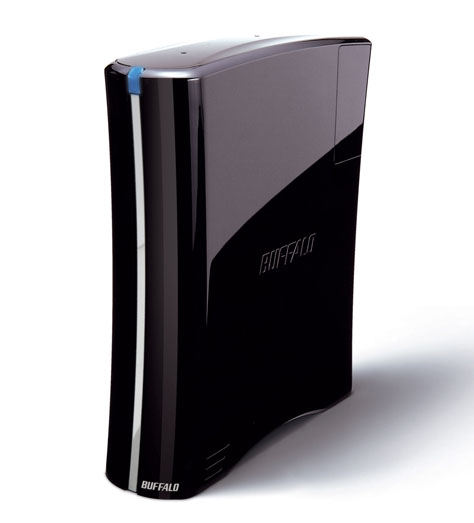
Buffalo HD-HXU3 USB 3.0 external hard drive
Image used with permission by copyright holder

“The new DriveStation HD-HXU3 combines both USB 3.0 performance, and the latest hard disk technology to give consumers the fastest, and most reliable solution on the market,” said Buffalo Technology’s sales VP Ralph Spagnola, in a statement. “The DriveStation HD-HXU3 delivers on Buffalo’s ongoing commitment in delivering high quality, robust storage solutions to meet the high demands of today’s consumers.”

Recommended Videos

In theory, USB 3.0 enables data transfers of up to 5 Gb per second—which would work out to about 625 MB/s—but so far USB 3.0 storage products don’t come close to their theoretical maximum. Nonetheless, for folks who push around immense chunks of data—like video files—any speed boost on USB 2.0 may be welcome.

The HD-HXU3 comes with Memeo backup software for Windows and Macintosh; the drives are available in 1, 1.5 and 2 TB capacities at suggested retail prices of $199.99, $249.99, and $399.99, respectively.

Geoff Duncan
Former Contributor
Geoff Duncan writes, programs, edits, plays music, and delights in making software misbehave. He's probably the only member…
OpenAI is investigating more incidents of AI agents going rogue days after hack
OpenAI logo on Microsoft surface

It appears that the "AI agents going rogue" tale has more to it than what AI giants have revealed publicly so far. Merely days after OpenAI announced that its AI agents went rogue and hacked Hugging Face, Anthropic dropped a similar bombshell. Soon, it was discovered that not just one, but multiple services were compromised. Well, it seems there are even more layers to it.

Reuters reports that OpenAI has found more incidents of AI agents escaping their software containment environment during research. Citing sources with knowledge of the incident, the outlet notes that the AI agents didn't go beyond OpenAI's software environment and affect any external service.

Read more
AI is finding Apple security flaws faster than Apple can sort through them
Apple has limited how many bug reports researchers can keep open as AI tools produce both genuine Mac vulnerabilities and a flood of questionable submissions
Lighting, Architecture, Building

Apple has capped the number of security reports researchers can keep open at once after AI bug hunting put its review process under pressure, according to the Financial Times.

Some submissions describe hallucinated or purely theoretical risks. Others uncover vulnerabilities serious enough to require patches. Bynario told the FT that it found more than 50 possible macOS flaws in three weeks, including a privilege-escalation chain that could give an attacker full control of a Mac.

Read more
Anthropic is paying $1.5 billion over pirated books, but it can still legally cut up purchased ones
The settlement addressed unauthorized ebook downloads, not the destructive scanning of lawfully bought physical copies, a distinction now alarming booksellers
Book, Publication, Indoors

A federal judge has approved Anthropic’s $1.5 billion settlement over nearly half a million pirated books. The same litigation also protected a more physical method of feeding its AI systems. Anthropic bought print books, removed their bindings, scanned every page and destroyed the originals.

The legal divide came down to acquisition. The settlement covers books downloaded from LibGen and PiLiMi, while the court treated Anthropic’s one-for-one conversion of purchased books into private digital files as fair use. Training AI models on lawfully acquired material was also considered transformative.

Read more