Maybe the big screen adaptation of Facebook’s beginnings as told in the movie The Social Network has started a trend. Or maybe people just want to watch movies about the formation of some of the biggest, and most influential companies on the planet. Either way, the story of Google’s rise is potentially next to receive the Hollywood treatment.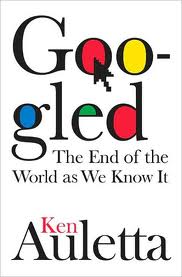
Michael London’s Groundswell Productions and producer John Morris have purchased the rights to Ken Auletta’s book on the history of Google, and its founders Larry Page and Sergey Brin. The book, Googled: The End of the World as We Know It, tracks Brin and Page through their early days as Ph.D. candidates at Stanford, through the rise of Google into the most trafficked website on the planet.
Despite its massive influence on the world, not many know the history of the company. Google first began in 1996 after Brin and Page met at Stanford while both were candidates for doctorates in computer science. The pair became friends and began Google as a research project designed to better optimize the way search engines worked.
By 1997, Brin and Page had a working model operating under the Stanford servers, that they named “Google”, which originated from a misspelling of the word “googol”, which is the number one followed by one hundred zeroes.
In 1998, the duo registered the domain “Google.com”, and began the company out of a friend’s garage in Menlo Park, CA. What happened next might not be the fodder that drama hungry movie goers crave, but it did become the stuff of business legend.
Before Brin and Page even had a Google bank account, Sun Microssystems’ co-founder Andy Bechtolsheim contributed $100,000 to the startup. By 1999, while still students, Brin and Page decided that the search engine was taking up too much of their time, so the pair tried to sell. They approached the CEO of Excite, George Bell, and offered to sell him Google for $1 million. Bell rejected. Vinod Khosla, a co-founder of Sun Microsystems, who was a venture capitalist with Excite at the time, negotiated Brin and Page down to $750,000 and went back to Bell, who promptly threw him out of his office. Khosla went on to become one of the most successful venture capitalists and is worth over $1 billion, Bechtolsheim’s initial $100,000 investment is now worth $1.5 billion, and George Bell will forever be remembered for what many consider as one of the worst business decisions in history.
By 1999, Google had received $25 million in funding from various investors, including several venture capitalist groups. By 2004, the company had gone public with an initial public offering of $85 per share. To find out what happened next, just google it.
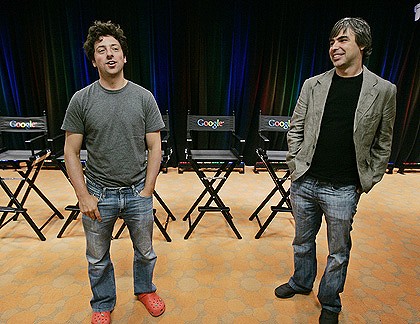 Unlike The Social Network, which does have a bit of a dramatic history to draw from- albeit a drastically Hollywood-ized version of that history- the origins of Google are slightly more tame, and will likely focus on the days when Google began to expand from just another search engine to a dominant force in the world.
“It’s about these two young guys who created a company that changed the world, and how the world in turn changed them,” London told Deadline. “The heart of the movie is their wonderful edict, don’t be evil. At a certain point in the evolution of a company so big and powerful, there are a million challenges to that mandate. Can you stay true to principles like that as you become as rich and powerful as that company has become? The intention is to be sympathetic to Sergey and Larry, and hopefully the film will be as interesting as the company they created.”
The movie is still a long way away from reality. Ironically, the future of this project might rest with how the movie about Facebook- Google’s closest business rival and sometimes enemy- does at the box office.