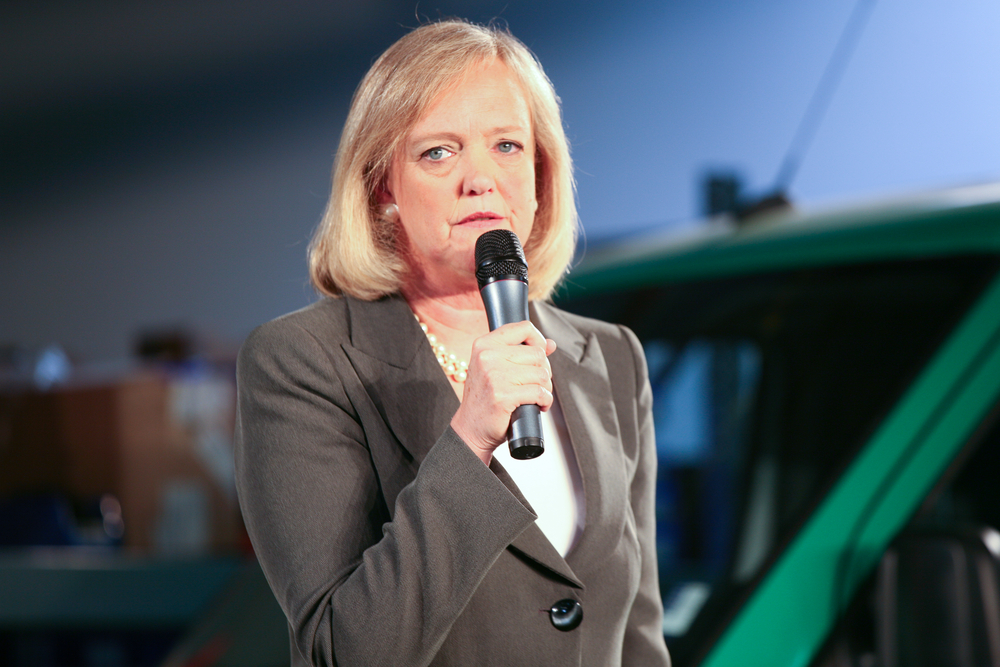
Hewlett-Packard’s newly crowned chief executive Meg Whitman announced today that the company will continue to produce PCs.
Prior to his ousting, former CEO Leo Apotheker said he planned to eliminate production of the webOS-based TouchPad tablet, and was considering selling or spinning off HP’s Personal Systems Group (PSG) to focus on other areas of business. Following Whitman’s appointment as CEO in September, she said during a press conference that she would make a decisions about PSG in a month’s time.
“It’s clear after our analysis that keeping PSG within HP is right for customers and partners, right for shareholders, and right for employees,” said Whitman in the official announcement.
Obviously, this leaves many questions to be answered, specifically about HP’s webOS business, which it more or less liquidated after slashing the price of the TouchPad down to as little as $99. It would seem certain, however, that such a deal won’t be had again from HP anytime soon.
This story is developing. Check back with DT for the latest on HP. And read the full press release below:
HP today announced that it has completed its evaluation of strategic alternatives for its Personal Systems Group (PSG) and has decided the unit will remain part of the company.
“HP objectively evaluated the strategic, financial and operational impact of spinning off PSG. It’s clear after our analysis that keeping PSG within HP is right for customers and partners, right for shareholders, and right for employees,” said Meg Whitman, HP president and chief executive officer. “HP is committed to PSG, and together we are stronger.”
The strategic review involved subject matter experts from across the businesses and functions. The data-driven evaluation revealed the depth of the integration that has occurred across key operations such as supply chain, IT and procurement. It also detailed the significant extent to which PSG contributes to HP’s solutions portfolio and overall brand value. Finally, it also showed that the cost to recreate these in a standalone company outweighed any benefits of separation.
The outcome of this exercise reaffirms HP’s model and the value for its customers and shareholders. PSG is a key component of HP’s strategy to deliver higher value, lasting relationships with consumers, small- and medium-sized businesses and enterprise customers. The HP board of directors is confident that PSG can drive profitable growth as part of the larger entity and accelerate solutions from other parts of HP’s business.
PSG has a history of innovation and technological leadership as well as an established record of industry-leading profitability. It is the No. 1 manufacturer of personal computers in the world with revenues totaling $40.7 billion for fiscal year 2010.
“As part of HP, PSG will continue to give customers and partners the advantages of product innovation and global scale across the industry’s broadest portfolio of PCs, workstations and more,” said Todd Bradley, executive vice president, Personal Systems Group, HP. “We intend to make the leading PC business in the world even better.”