  1. Home
  2. Computing
  3. News

Leak reveals Intel’s 9th-generation laptop processors could be coming soon

Add as a preferred source on Google
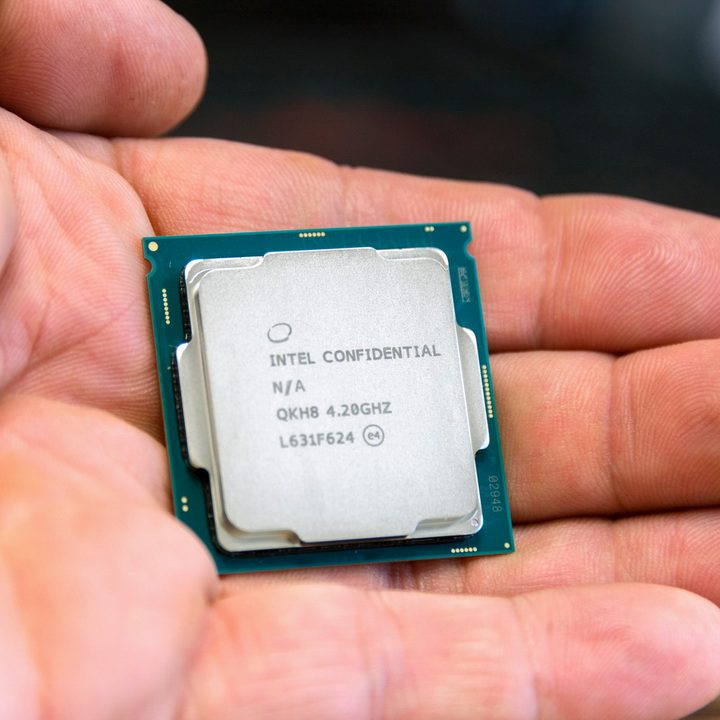
Intel Core i7 8th Gen hand scale
Image used with permission by copyright holder

Intel recently refreshed its lineup with 9th-generation desktop processors, led by the flagship Core i9-9900K, but new mobile CPUs for laptops and other 2-in-1s were noticeably absent. A refresh could be coming soon though, as leaked Lenovo documentation now points to a new series of low-powered Intel mobile processors, according to a report from WCCFtech.

The leaked Lenovo documentation (via wccftech) WCCFTech/Lenovo

Specifications or pricing are not available or official as of yet, but the leaked documentation for a Lenovo Ideapad S530 points to three new Intel chipsets. Still falling under the U-series, the new mobile processors include the Core i7-9550U, Core i5-9250U, Core i3-9130U. These would be replacing the Core i7-8565U, Core i5-8265U, and the Core i3-8145U, which are still listed as configuration options for the yet to be announced Lenovo device.

Recommended Videos

Unlike the 9th-generation desktop processors, these new mobile CPUs could likely come with faster clock speeds and just a slight jump in performance and power efficiency. Considering Intel’s delays, the chipsets are also likely to still be built on the existing 14nm++ processes without an overall increase in core or thread counts.

You can instead expect for the  i7-8565U and Core i5-8265U processors to come in quad-core and Hyper-Threading configurations, and the Core i3 series coming in a dual-core variety. As for cache levels, WCCFtech reports the Core i7 could come with 8 MB of L3 cache, the Core i5 6 MB of L3 cache, and the Core i3 4 MB of L3 cache.

Nothing is official due to these leaks, but since the chipsets are listed on Lenovo’s documentation, it does hint that the release of 9th-generation mobile processors could be right around the corner. Intel also recently launched a new line of 8th-gen mobile chips at IFA 2018 in August, and their release timeline has been inherently confusing and vague.

CES 2019 is also coming up, and this could be the right time for a new reveal. It would pair up nicely alongside new laptops from leading manufacturers such as HP, Dell, Lenovo, and Samsung. Hopefully, the release will be controversy-free once these new chipsets become public. Intel recently stood by benchmarks on its new desktop processors, after benchmarking company Principle Technologies was accused of skewing certain technical testing results.

Arif Bacchus
Arif Bacchus is a native New Yorker and a fan of all things technology. Arif works as a freelance writer at Digital Trends…
What’s the Right Laptop for a Student on a $1,000 Budget?
The best college laptop isn't the one with the longest spec sheet. It's the one that fits your budget and the way you'll actually use it.
Dell XPS 14 Review: Sticker

This post is brought to you in paid partnership with Dell

Buying a laptop for college isn't a decision made in isolation. Tuition, textbooks, housing, meal plans, transportation, and course materials all compete for the same budget, leaving most families with one question before the semester begins: how much is enough to spend on a laptop without paying for features that may never get used?

Read more
Siri is about to hear everything you say, but Apple’s privacy approach has me cautiously on board
Apple's new Audio Intelligence features want to hear almost everything you say. A privacy document released alongside them explains why I am mostly okay with that.
Apple Watch Audio Intelligence features

Apple used its September 2026 launch event to enter a feature category it has mostly avoided until now: ambient listening. Siri Recap, Live Rewind, Music Recognition with Shazam, and Sound Recognition all landed on the Apple Watch Series 12 and Apple Watch Ultra 4. All four depend on the watch microphone picking up sound around you far more often than any previous Apple product has.

Siri Recap listens for conversations throughout your day and turns them into short AI summaries you can check later. Live Rewind is smaller in scope but arguably more useful day-to-day. It transcribes the last 15 seconds of whatever was just said with a double-press of the crown. This is perfect for catching a name, a book title, or directions you missed the first time. Music Recognition uses Shazam to identify songs playing nearby without you lifting a finger, much like Now Playing on Google's Pixel devices. Sound Recognition is a useful accessibility feature that listens for sirens, doorbells, and alarms to alert users who have a hearing impairment.

Read more
Can You Turn a Mini PC Into a Local AI Agent?
Furniture, Table, Computer

This post is brought to you in paid partnership with MSI

Not every AI task needs the scale of the cloud. An employee searching company documents, a retail kiosk answering product questions, or a digital sign reacting to customer behavior all need fast responses, but they don't necessarily need to send every prompt to a remote data center. Running those workloads locally reduces latency, keeps sensitive information closer to where it's generated, and can lower the ongoing cost of AI deployments. As a result, many organizations are moving toward hybrid AI architectures that handle routine requests on-device while reserving cloud models for tasks that genuinely need more processing power.

Read more