  1. Home
  2. Computing
  3. Apple
  4. News

Failure rate of MacBook Pro ‘butterfly’ keyboards is double that of older models

Add as a preferred source on Google
Image used with permission by copyright holder

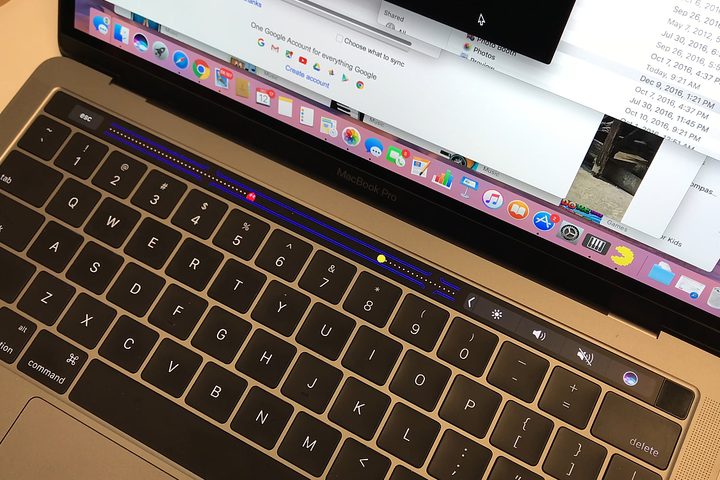
MacBook Pro keyboards with butterfly key-switches can fail if there’s dirt or debris lodged under the keys, according to widespread reports on forums and Apple’s support site — and we now have statistics on how often that happens.

Apple switched to the new butterfly key-switch with the slim keyboard on the MacBook, and the MacBook Pro followed suit in 2016. It wasn’t a good move. According to data collected by Apple Insider from Apple Genius Bar repairs and Apple-authorized third-party repair shops, the failure rate on MacBook Pros with butterfly-switch keyboards is double that of older MacBook Pro models with standard keyboards.

Recommended Videos

The 2014 MacBook Pro model saw 2,120 service events that were reported on, according to Apple Insider, with 118 keyboard-related problems. Similarly, in 2015, there were 1,904 service events implicating 114 keyboard-related issues. When Apple switched to the butterfly keyboard in 2016, there were 1,402 warranty events with 165 issues related to the keyboard, excluding any problems with the Touch Bar. This means 5.6 percent of warranty issues in 2014 and 6.0 percent in 2015 were caused by keyboard problems, a number that jumped to 11.8 percent in 2016. The 2017 numbers aren’t complete yet, but the first half of the year saw 1,161 service events with 94 keyboard-related issues.

On its own, a twofold increase in keyboard-related issues may be cause enough for concern, but the increase in the recidivism rate shows that the design may play a large part in why the new keyboards are failing. Of the 118 keyboard repairs on the 2014 model, eight were brought back for secondary service within 90 days. On the 2015 model, six returned for secondary repair. A third repair was not necessary for both model years.

After the redesign in 2016, 51 secondary repair jobs were required, of which ten needed a third repair in the 90-day period. The 2017 model saw 17 secondary repairs and three requiring a third repair.

And because of how the keyboard mechanism is designed on the 2016 and 2017 models, repairs are costly. If the keys are damaged in any way, the whole assembly needs to be replaced, including the keyboard, battery, upper casing, and the Thunderbolt 3 ports, Apple Insider noted. If you’re out of warranty, a simple keyboard repair job could cost more than $700. Apple-authorized repairs for the 2014 and 2015 models cost $400.

“We don’t know for sure how many GPU failures in the 2011 through 2013 MacBook Pro line caused Apple to act, nor do we know what triggered the display coating repair extension program,” Apple Insider said. “But, the near-doubled failure rate of the keyboard in the first year on the 2016 MacBook Pro is a ticking time bomb for users, and it doesn’t matter why.”

Given that the new butterfly switch keyboards are more prone to failure and costly to repair, it may be wise to consider MacBook alternatives to the MacBook and MacBook Pro if you’re shopping for one of the best laptops.

Chuong Nguyen
Silicon Valley-based technology reporter and Giants baseball fan who splits his time between Northern California and Southern…
What’s next for humanoid robots? Groping and sexual assault, apparently
German police investigate robot over alleged sexual harassment of teenage girl
Humanoid Robot

German authorities have launched an investigation after a robot allegedly touched a 16-year-old girl inappropriately and made sexual gestures on a street in Cologne. Police have seized the robot and the mobile phones of two young men suspected of controlling it, as investigators try to establish whether its movements were programmed in advance or directed in real time.

The incident raises unusual questions about accountability when robots are used to harass people in public. The suspected owner, aged 16, and his 19-year-old companion have not been charged, but police are investigating possible sexual harassment. Authorities say they are unfamiliar with a case of this kind, making it an unusual challenge for law enforcement.

Read more
US banks want to block AI agents from moving your money. Well, at least that’s one good move.
Letting a chatbot handle your finances sounds convenient until someone asks who pays for its mistakes.
ai-agents-on-phone

AI agents want to handle more of your life, including your money, but US banks are drawing a line when these AI assistants try to move funds on your behalf. Charles Schwab and JPMorgan Chase are now restricting outside AI agents from taking financial actions, citing security risks and unanswered questions about who takes responsibility when things go wrong.

Charles Schwab CEO Rick Wurster told Bloomberg that Schwab is actively blocking unauthorized AI agents, including Meta's Muse, from moving client money. JPMorgan Chase CEO Jamie Dimon made a similar call this week, so this isn't just one bank being cautious.

Read more
MapQuest can now show you the cameras keeping an eye on your commute
MapQuest is back, and now it’s exposing who’s watching your neighbourhood
Surveillance cameras

MapQuest has introduced a new surveillance layer that lets users see the reported locations of outdoor surveillance cameras and automated licence plate readers, including those operated by Flock Safety. The feature gives drivers and residents a clearer picture of the surveillance infrastructure around their neighbourhoods, at a time when law enforcement's use of these cameras is under growing scrutiny.

The new layer can be enabled through MapQuest’s Map Options menu, alongside existing options for traffic and incidents. It covers cameras from multiple manufacturers, including Motorola Solutions, Genetec, Axis Communications, Axon, Leonardo, Neology, Rekor, PlateSmart, Ubicquia and Verkada. The company has promoted the feature with the tagline “The Roads Have Eyes!”

Read more