  1. Home
  2. Computing
  3. Entertainment
  4. News

Netflix doubles down on its AI stance, but should actors worry?

Netflix chief hints at the technology's rising role in TV and movie production.

Add as a preferred source on Google
A close-up of the Netflix app icon n an Apple TV.
Derek Malcolm / Digital Trends

With OpenAI’s recent release of the Sora 2 video generation tool, it’s easy to see how content creators are increasingly tempted to utilize generative-AI technology in their work.

Netflix said earlier this year that it’s excited by the technology, and in a letter sent to investors on Tuesday as part of its latest earnings report the company confirmed its intent to utilize it for its original productions, saying that it was “very well positioned to effectively leverage ongoing advances in AI.”

Recommended Videos

But in an earnings call on the same day, Netflix boss Ted Sarandos also acknowledged that “it takes a great artist to make something great … AI can give creatives better tools to enhance their overall TV and movie experience for our members, but it doesn’t automatically make you a great storyteller if you’re not.”

Over the summer, Sarandos said that Netflix is of the view that AI represents “an incredible opportunity to help creators make films and series better, not just cheaper. So this is real people doing real work with better tools. Our creators are already seeing the benefits in production through pre-visualization and shot planning work, and certainly visual effects.”

Earlier in the year, in April, Netflix revealed that it had used AI in The Eternaut (featured in our list of this month’s best Netflix shows), an Argentine sci-fi drama based on the comic by Héctor Germán Oesterheld and Francisco Solano López.

Visual effects artists on The Eternaut worked with Netflix to depict a building collapse in Buenos Aires, marking the first time for an AI-generated sequence to appear in a Netflix original series or movie.

Sarandos described the incorporated footage as “amazing,” adding that the sequence was completed 10 times faster than it would’ve been if traditional VFX tools and workflows had been used.

While AI technology for video creation and special effects is highly impressive and improving all the time, actors, voice artists, and others in the TV and movie industry are becoming increasingly concerned about the growing potential for AI to take away their work. Netflix is currently talking more about using it for special effects and other parts of the creative process, but some believe there’s an air of inevitability about the technology being increasingly deployed throughout a production, at the extreme end even replacing actors with digital replicas or AI-generated performances.

Sarandos hasn’t explicitly rejected the idea, and so as AI’s capabilities advance, it’s hard to see Netflix and other content producers ignoring its potential to reshape a much larger part of the production process.

Trevor Mogg
Contributing Editor
Not so many moons ago, Trevor moved from one tea-loving island nation that drives on the left (Britain) to another (Japan)…
Google Earth’s AI misadventure lasted only a day. It was a tale of dangerous ignorance.
Nuclear reactors, tanks, and historical destruction on a life-like satellite map? Yeah, that's bad.
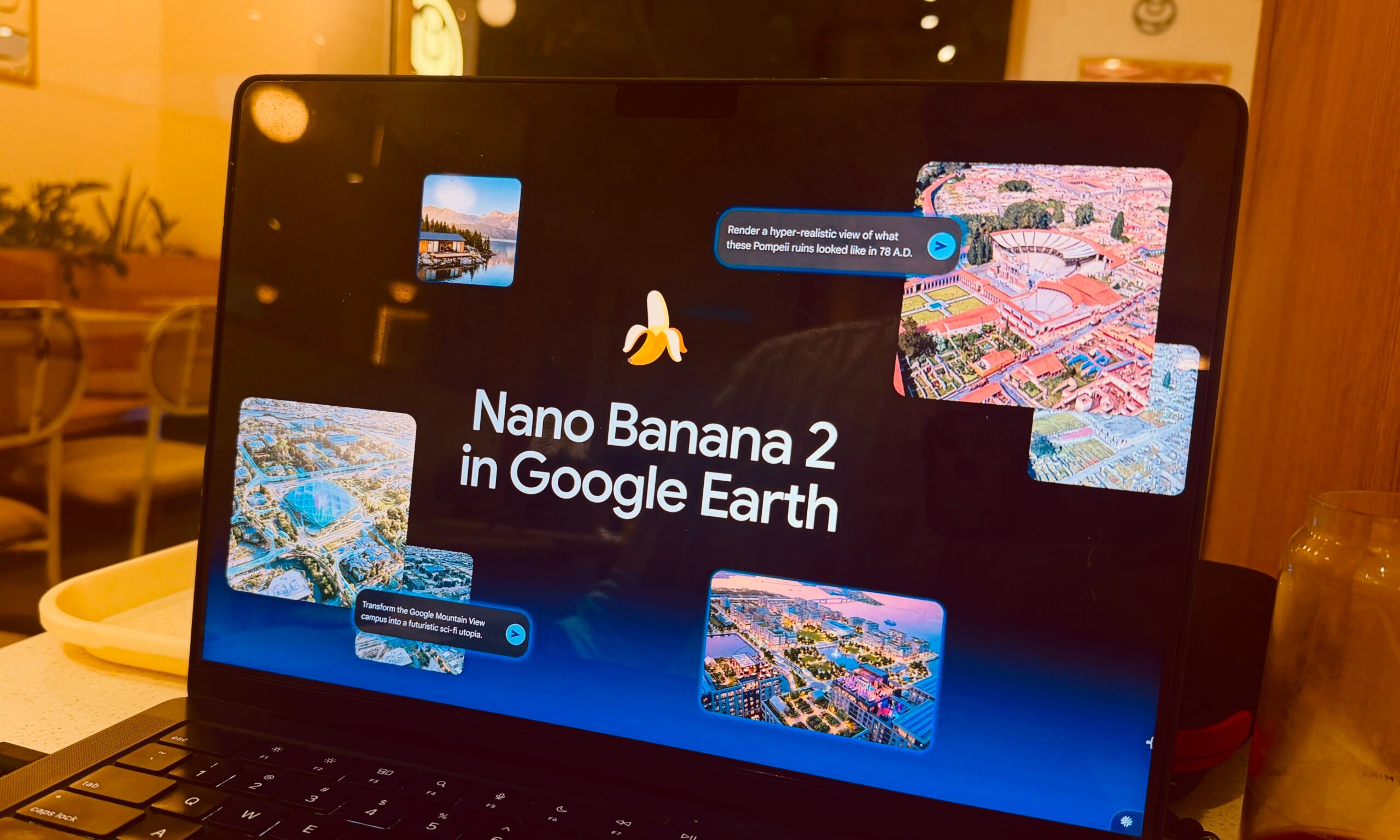
Nano Banana AI image generator representation.

Technology behemoths are clearly not reading the room, or they are just moving faster than they should when it comes to AI deployment. Google has already stuffed its Gemini AI in every corner of its software stack, from Android to daily productivity tools like Gmail that are used by hundreds of millions of users every day. AI is everywhere. Not all of it is bad, mind you. But in a few places, it just feels forced.

In its latest AI-fication experiment, the company targeted Google Earth. The idea was to let the audience use its Nano Banana 2 AI image generator and make images that can be placed on the map view. On paper, it's a cool idea. What would the Colosseum of Rome look like in your urban neighborhood? Yeah, fun stuff like that.

Read more
AMD is apparently gearing up to raise GPU prices right after Nvidia’s steep hike
AMD has reportedly told AIB partners about a price hike that goes into effect in. August.
AMD RX 7800

AMD is next in line to raise the asking price of its Radeon GPUs, merely days after the news of a similar hike coming for Nvidia graphics cards started making waves. As per ChannelGate on Weibo (h/t VideoCardz), AMD has informed its board partners that the price of GPU and memory bundles will go up by at least 10% in August.

Is a similar price hike coming for standalone graphics cards? I won't be surprised if that happens. The situation is so bad that AMD is planning to bring back graphics cards with 4GB of onboard memory. AMD just introduced the RX 9050 GPU, which costs $279. Notably, it's just $20 less than the RX 9060 XT that offers double the graphics memory.

Read more
Microsoft will make Windows work well with just 8GB RAM. We desperately need it
The dream of a reliable and affordable Windows laptop hinges on the next milestone at Microsoft.
Surface laptop on wooden table

The year 2026 has marked a huge course correction for Microsoft after years of frustrating users with plenty of confusing processes, unoptimized UI elements, and just the generous bloatware that can bring any Windows system to a crawl. Microsoft has finally shifted into a new phase. From fixing the right-click behavior to speeding up the Search system, the company has fixed plenty of papercuts.

The next major milestone is making Windows 11 run smoothly on Windows PCs with just 8GB of RAM. That directly means entry-level and budget laptops will at least get the basics right, even if that means sacrificing the on-device AI bells and whistles. Let's face it. The increasingly AI-first approach to computing on a Windows 11 machine is a little too taxing on the hardware at hand.

Read more