
  1. Home
  2. Computing
  3. Legacy Archives

Panasonic Toughbook H1 Field Tablet Computer Gets a Grip

Add as a preferred source on Google

Panasonic is known for making some serious rugged computers for use outdoors, in the field, and plenty of places normal electronics fear to go: now the company has rolled out its Toughbook H1 Field tablet computer, offering a sunlight-readable 10.4-inch touchscreen display, dual battery compartments for long periods of use, and options like an integrated GPS and Gobi2000 technology for multi-carrier wireless deployments. And, it’s certified to meet IP6* and MIL-STD-810G ruggedness standards, meaning the unit can handle a six-foot fall.
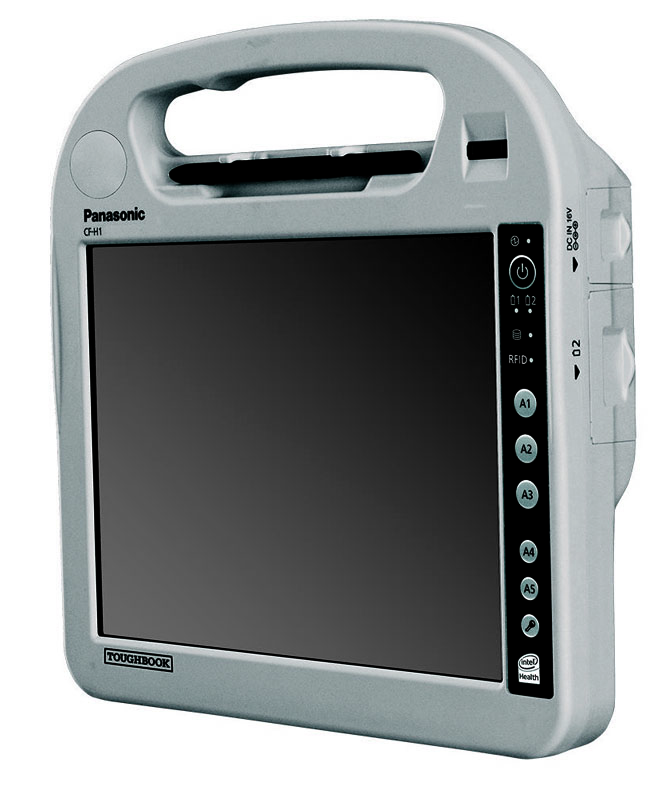
Panasonic Toughbook H1 Field
Image used with permission by copyright holder

“As workforces become more mobile, it’s critical to empower them with the right tools,” said Panasonic Computer Solutions Company director of product management Kyp Walls, in a statement. “The Toughbook H1 Field was designed based on extensive customer input to ensure it had the right mix of form factor, features, and durability to maximize worker productivity and value.”

Recommended Videos

Although under the hood the T1 Field doesn’t pack a tremendous amount of horsepower—it rattles along on an Intel Z540 Atom processor running at 1.86 GHz, it does sport 2 GB of RAM, a 64 GB SSD drive, twin hot-swappable batteries for up to six hours of use in the field, and that 500-nit 10.4 XGA sunlight-viewable dual-touch LCD display. The unit also sports 802.11a/b/g/n Wi-Fi and Bluetooth wireless networking, along with Qualcomm’s Gobi2000 technology for multi-carrier mobile data support—and an integrated GPS is available as an option. (SmartCard, RFID, and barcode readers are also available as options.) The H1 Field also features an ergonomic design with a balanced center of gravity and an integrated handle, and weighs just 3.4 pounds. It ships with Windows 7, but Windows XP Tablet Edition is available as a downgrade option.

Although the Toughbook H1 Field is not for everyone, folks who spend a lot of time in the field, at construction sites, in the middle of nowhere, in service professions, or any number of other things often find tablet computers useful. The Toughbook H1 Field should be available in March with prices starting at $3,379—yes, durability comes with a price.
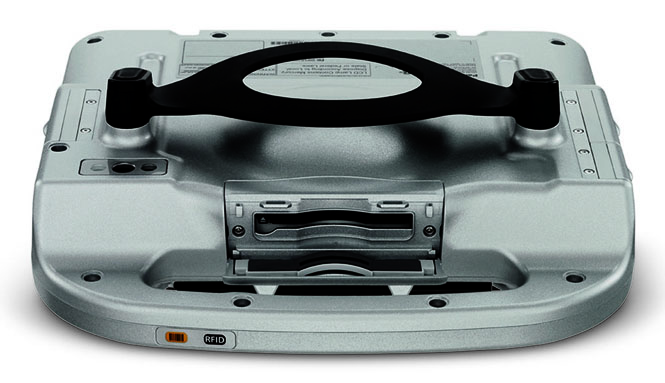
Panasonic Toughbook H1 Field  (bottom, card reader open)
Image used with permission by copyright holder
Geoff Duncan
Former Contributor
Geoff Duncan writes, programs, edits, plays music, and delights in making software misbehave. He's probably the only member…
AI is finding Apple security flaws faster than Apple can sort through them
Apple has limited how many bug reports researchers can keep open as AI tools produce both genuine Mac vulnerabilities and a flood of questionable submissions
Lighting, Architecture, Building

Apple has capped the number of security reports researchers can keep open at once after AI bug hunting put its review process under pressure, according to the Financial Times.

Some submissions describe hallucinated or purely theoretical risks. Others uncover vulnerabilities serious enough to require patches. Bynario told the FT that it found more than 50 possible macOS flaws in three weeks, including a privilege-escalation chain that could give an attacker full control of a Mac.

Read more
Anthropic is paying $1.5 billion over pirated books, but it can still legally cut up purchased ones
The settlement addressed unauthorized ebook downloads, not the destructive scanning of lawfully bought physical copies, a distinction now alarming booksellers
Book, Publication, Indoors

A federal judge has approved Anthropic’s $1.5 billion settlement over nearly half a million pirated books. The same litigation also protected a more physical method of feeding its AI systems. Anthropic bought print books, removed their bindings, scanned every page and destroyed the originals.

The legal divide came down to acquisition. The settlement covers books downloaded from LibGen and PiLiMi, while the court treated Anthropic’s one-for-one conversion of purchased books into private digital files as fair use. Training AI models on lawfully acquired material was also considered transformative.

Read more
Google Earth’s AI misadventure lasted only a day. It was a tale of dangerous ignorance.
Nuclear reactors, tanks, and historical destruction on a life-like satellite map? Yeah, that's bad.
Nano Banana AI image generator representation.

Technology behemoths are clearly not reading the room, or they are just moving faster than they should when it comes to AI deployment. Google has already stuffed its Gemini AI in every corner of its software stack, from Android to daily productivity tools like Gmail that are used by hundreds of millions of users every day. AI is everywhere. Not all of it is bad, mind you. But in a few places, it just feels forced.

In its latest AI-fication experiment, the company targeted Google Earth. The idea was to let the audience use its Nano Banana 2 AI image generator and make images that can be placed on the map view. On paper, it's a cool idea. What would the Colosseum of Rome look like in your urban neighborhood? Yeah, fun stuff like that.

Read more