
When it comes to PC gaming, I’m the type who likes a big, full-size keyboard with a numpad. Extra buttons are a bonus. That’s why Razer’s new Hunstman Mini, the company’s first 60% keyboard, didn’t fit my preferences at first blush.
The Hunstman Mini isn’t just a tenkeyless keyboard, which lacks a numpad. Razer’s Hunstman Tournament Edition has that covered. The Hunstman Mini takes things a step further by hacking off a number of keys you might consider essential, such as the home, delete, and arrow keys, and your entire function row.
That all sounded like too many compromises. But after spending some time with it, the Hunstman Mini just may have converted me.
Compact gaming
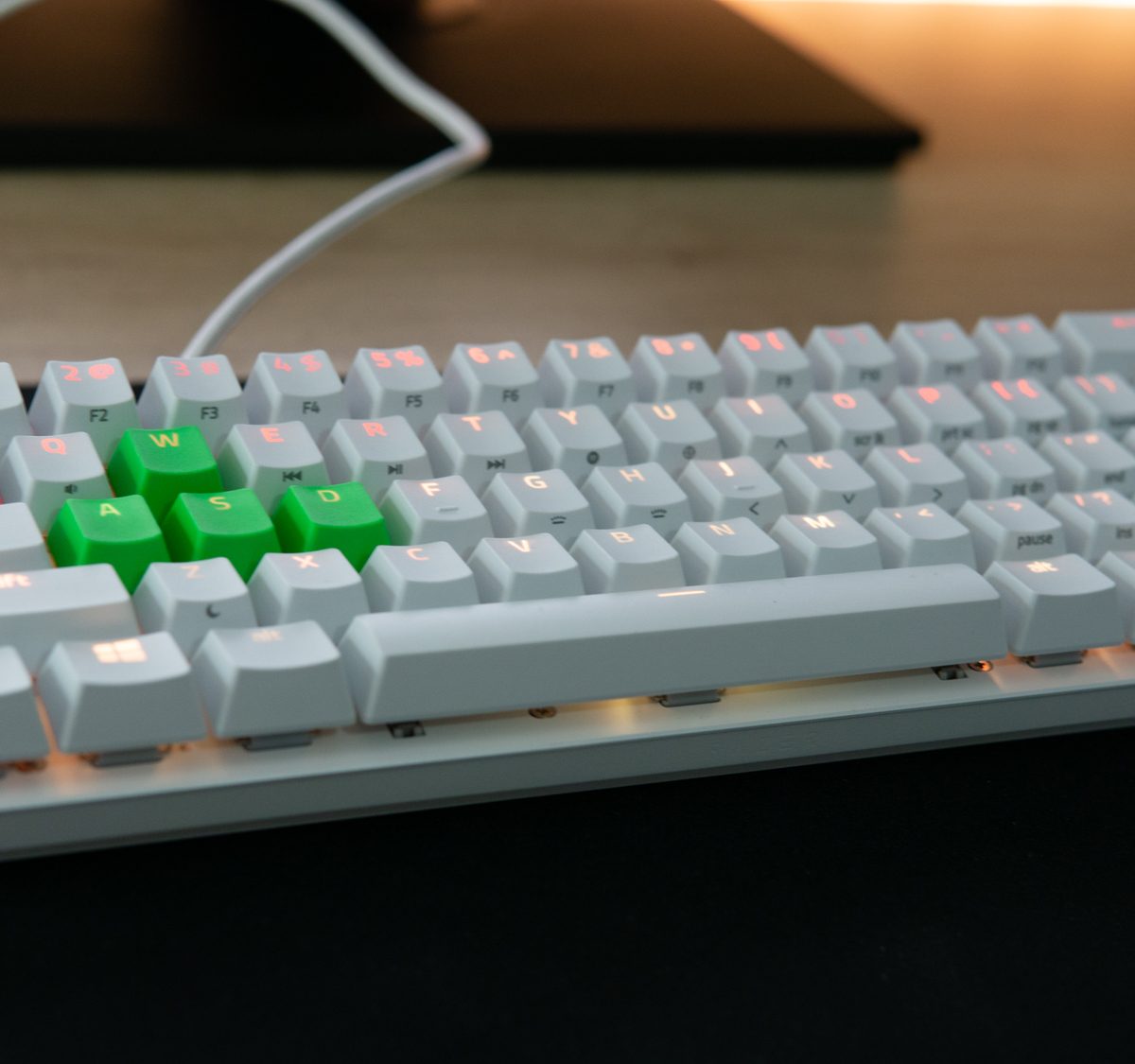
After waiting for what felt like days for it to arrive, I finally got the chance to plug the 60% keyboard in and have a good gaming session. It’s so small, I nearly mistook the box for a children’s toy. At just one pound, 11.5-inches wide, and 4.1 inches tall, it is a truly compact keyboard.
But the Huntsman Mini isn’t small just to be small. It provides more space for the full motion of your mouse — the keyboard being small is just the necessary sacrifice, a logical consequence.
Here’s an example of what I mean. I’ve recently dove back into Destiny 2, and a friend tipped me to off start playing with a lower DPI setting on my mouse to increase my accuracy. To give credit where it is due, it worked like a charm. But my longer swipes left me severely restricted for space, and lest I recall incorrectly, gaming is not supposed to be a contact sport between your mouse and keyboard.
The Huntsman Mini solved that exact conundrum.
The increase in comfort just from switching to the Hunstman Mini was very real.
Due to its small format, my mouse and keyboard lined up exactly with where my hands naturally wanted to be, and I immediately figured out what I had been missing out on all these years. In fact, not long into the session, something brilliant happened: I forgot about the keyboard. It took me a while to notice, but I got very into the game and became a bullet-spraying machine unlike ever before.
My usual plank, the Logitech G915, pushed my arms out far apart from one another, and regularly had close encounters with my mouse in all its desk-hogging glory. The increase in comfort just from switching to the Hunstman Mini was very real.
Even my friends in Destiny 2 noticed that I was doing very well that particular evening, asking “what’s up with you today? You’re on fire!” Of course, because the keyboard was still under embargo, I couldn’t tell them my secret. But they could hear it, even if they didn’t know it yet.
2nd-generation optical switches
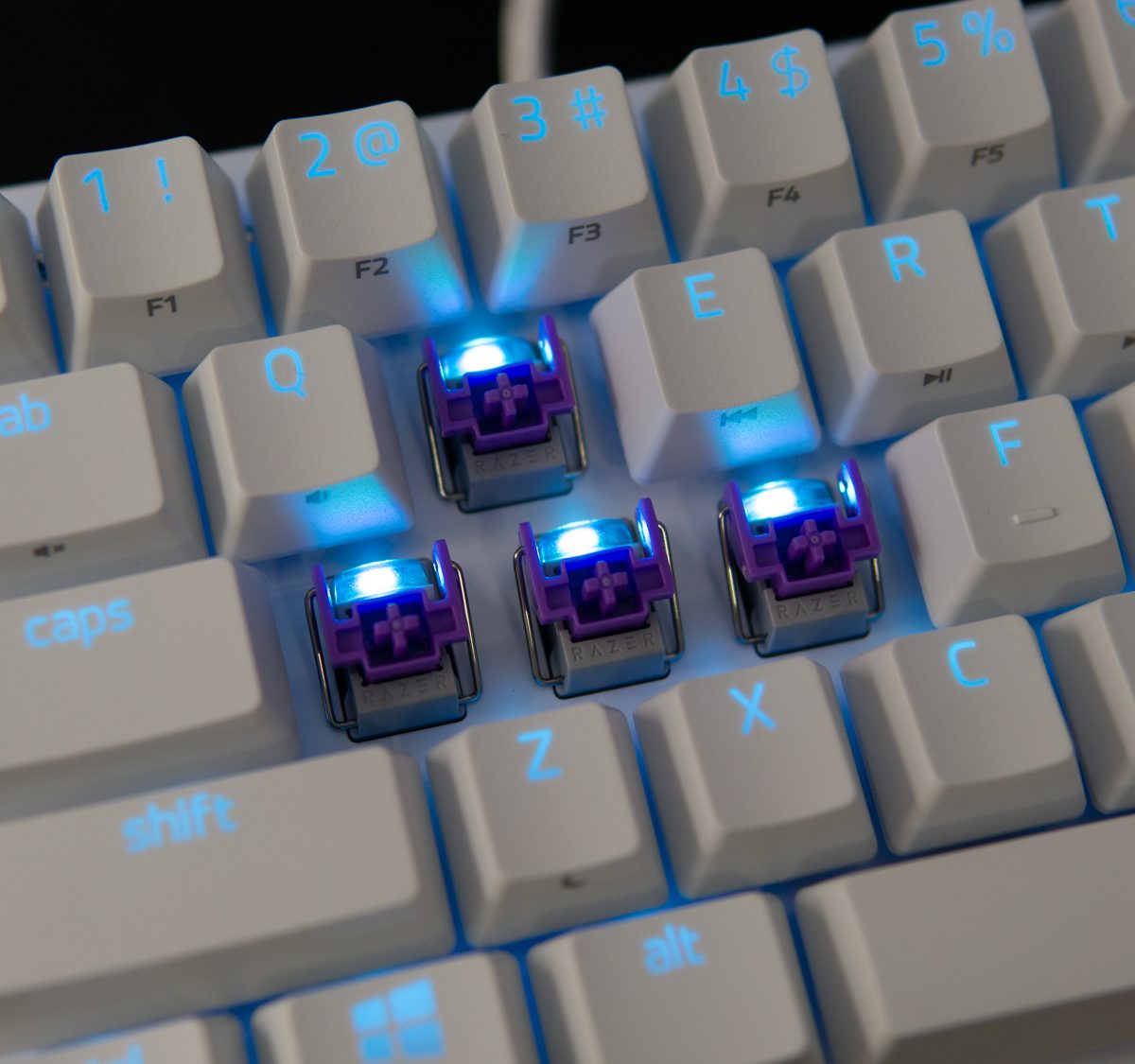
Alongside the release of the Huntsman Mini, Razer is also coming out with its new, 2nd-generation optical linear switches. I was excited to try them out, but Razer experienced some delay in manufacturing. They sent me the clicky switches instead, which have a tactile bump in their travel and a distinct “click” halfway down each keystroke.
These clicky switches are great to type long articles on, actuating at 1.5mm down each keystroke. It’s what a lot of gamers expect in their mechanical keyboards. They aren’t quiet, though.. They’ll be a bit of a nuisance to housemates, especially late at night, and aren’t likely to be best buds with your friends at the other end of the Discord channel either.
The 2nd-generation optical linear switches are also actuated through optics, but come with a faster (and shorter) 1mm of travel. They lack the audible and tactile click, making them more gaming-focused. They also pack silicon dampers to become practically inaudible. I haven’t tried them, but I expect them to be my first choice when they ship in August.
Sacrificing work practicality
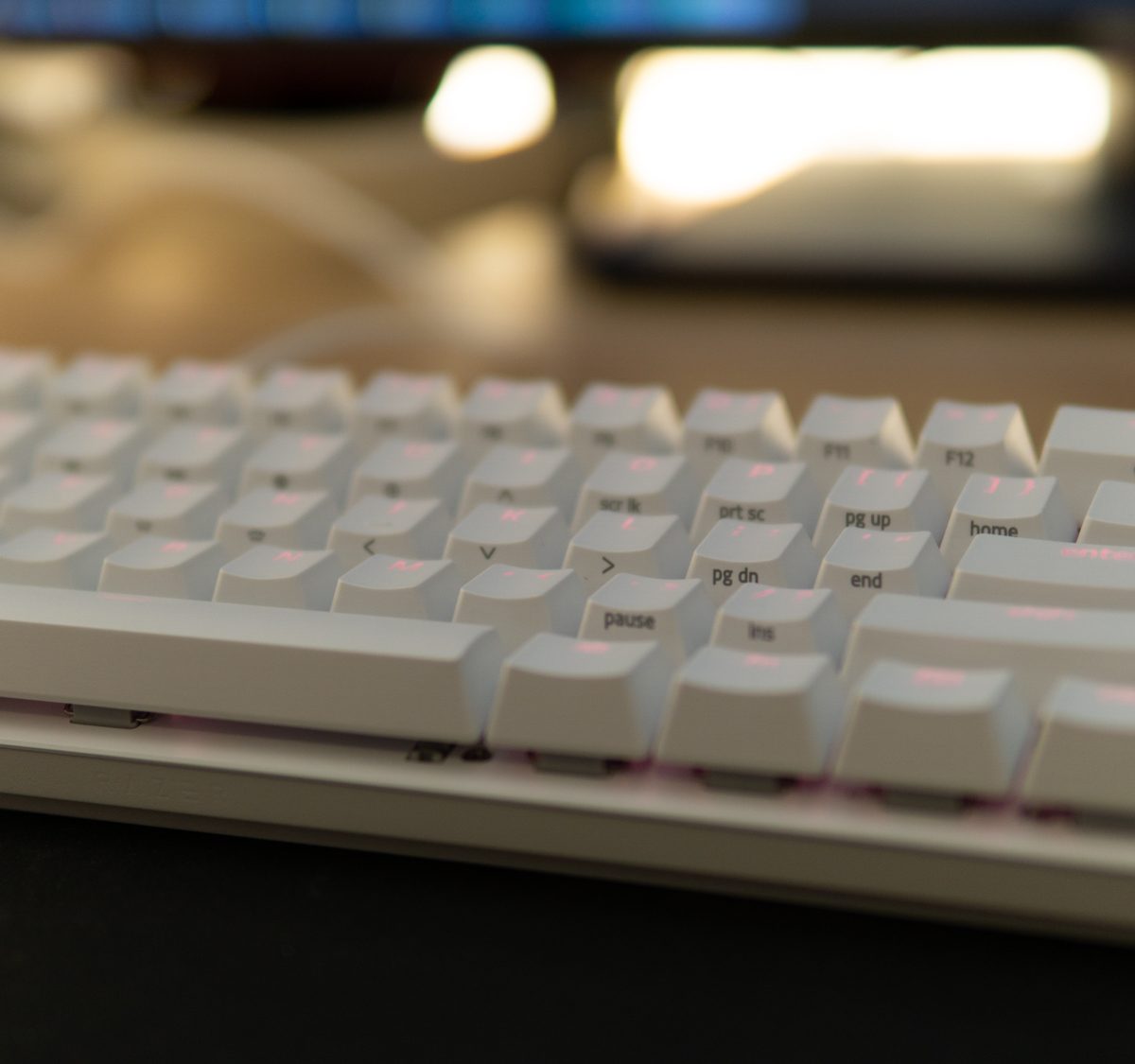
As soon as I was done with Destiny and went back to work the next morning, I did feel quite handicapped with the small keyboard layout. I need my arrow keys to make corrections as I’m navigating text, my delete key, and my numpad for when I’m working in spreadsheets. It wasn’t a problem when gaming, but the lack of a wrist rest also got old very fast when typing.
Of course, the Razer Huntsman Mini doesn’t have a numpad, but it does have replacements for all the other keys. Press the FN key right of the space-bar, and you’ll have immediate access to the full row of F-keys, media keys, arrow keys, and more – so they’re there if you need them. Pressing FN even toggles the lighting to only illuminate the keys with secondary functions, briefly disabling the oh, so pretty, per-key customizable RGB effects. These effects are otherwise controlled either through pressing FN + CTRL + (1-7), or through Razer Synapse on your PC.
The Huntsman Mini won’t be replacing my full-size keyboard during working hours, but no one should try to take it from me. I will be leaving the Huntsman Mini’s USB Type-C cable on my desk, ready to plug in the moment it’s time to play. The Razer Huntsman Mini is built purely to be a great gaming keyboard, and it might just make you better at it too.
Priced at $120 for the variant with optical clicky switches, and $130 for the optical linear variant, it’s not a cheap gaming tool. But if you consider that this is a 60% keyboard in a world where full-size, fully featured gaming keyboards are dragging along price tags over $200, perhaps it’s not so bad. And don’t worry, our sample might be “mercury” white, but there’s a plain black version too.


