
  1. Home
  2. Emerging Tech
  3. Legacy Archives

Astak’s Mole IP Camera Digs into Internet Video

Add as a preferred source on Google
Astak Mole Camera (thumb)
Image used with permission by copyright holder

Sure, Internet-enabled cameras have been around for a long time…but they’re almost uniformly difficult to set up, configure, and manage. Astak is looking to take away the pain with The Mole, a new IP-enabled camera that work using either wired or wireless net connections, and promises to be so simple to set up and configure that users can even get it running and manage it via a mobile phone.

“The Mole will redefine home and business surveillance, and it also opens the door to using a remote camera for sharing unattended video, since it’s Web 2.0 ready,” said Astak CEO Jason Hsia, in a statement. “When interesting or important events are underway, you can’t always be there to see or record them in person. That all changes with the Mole, where motion-detected events can be auto-uploaded to YouTube and a tweet auto-sent to your Twitter feed.”

Recommended Videos

The Mole purports to be the first truly do-it-yourself Internet video solution, and features automatic configuration so users can set up the camera in three steps and access their video feeds securely without any networking knowledge. Once set up, the Mole offers direct access from any Web browser—even a mobile phone—enabling users to change the view, pan the camera, and instantly view their video. The Mole includes features like motion detection, and can be configured to automatically upload video to YouTube, send alerts via email or Twitter.

The Mole can show VGA or QVGA video at anywhere from 1 to 30 frames per second, features H.264 compression technology, an integrated SD slot for storing video, and offers two-way audio via a built-in microphone. The built-in remote access supports up to 5 simultaneous users, and the camera has automatic fault recovery and reconnection after a network outage.
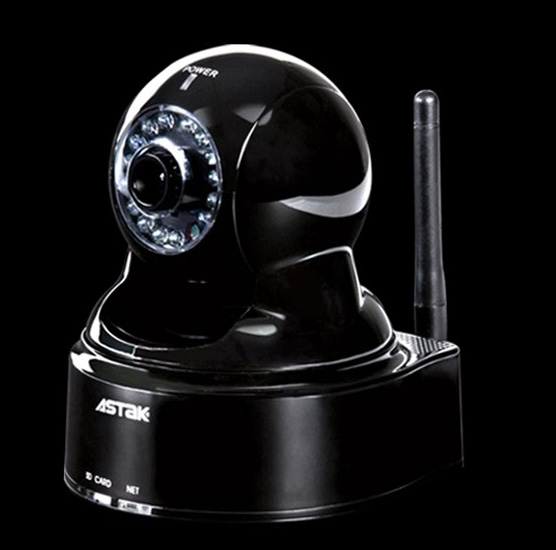
Astak Mole wired/wireless Internet camera
Image used with permission by copyright holder

The Mole should be available from Astak’s retail partners (including Fry’s Costco, NewEgg, Amazon, Walmart, and more) this November at a suggested price of $299.99.

Geoff Duncan
Former Contributor
Geoff Duncan writes, programs, edits, plays music, and delights in making software misbehave. He's probably the only member…
Google is making Gemini and Search work better with the apps you love
Gemini's guest list is growing, and your favorite apps are invited.
Gemini AI on a phone.

Google has been finding more ways to make Gemini a part of your daily routine, from putting together playlists to ordering groceries through your favorite apps. Now it's expanding those capabilities to more services, with Google Search joining in, too.

The company has announced a new Connected Apps Platform that makes it easier for developers to bring their services to both Gemini and Search. Alongside this, Google is adding new partners to its growing lineup, bringing more of the apps people already use into its AI ecosystem.

Read more
AI bots are now trying to sabotage public health policies, like banning disposable vapes
Thousands of AI bots voted in a public health poll to block sales restriction on disposable vapes. It's like Big Tobacco is back from the dead.
Woman smoking a vape.

In the broad context of AI and its perceived harms, health and medical risks often pop up in the conversation. The warnings even come from frontier AI labs, such as ChatGPT-maker OpenAI and Anthropic, both of which have warned about misusing AI to cook up bioweapons. Security experts have already spotted a few such incidents in the wild, especially with the usage of AI models without any solid guardrails. 

Well, it appears that the risks run deeper. As per an analysis appearing in the British Medical Journal (BMJ), AI bots are now being deployed to influence public policies governing health risks to citizens. In this instance, an attempt was made using AI bots to thwart regulations that aim to restrict the sale of disposable vapes, all while disguising the manipulation efforts as a response from real humans. 

Read more
A tiny smartphone gadget can detect some of the nastiest chemicals in your water
Scientists built a tiny smartphone gadget that can spot toxic 'forever chemicals'
Smartphone-connected drinking water safety sensor Featured

What if checking your drinking water for dangerous chemicals were as simple as plugging a tiny gadget into your smartphone? Researchers in Japan have developed a compact sensor that could make that possible, potentially bringing sophisticated water contamination testing out of expensive laboratories and into people's hands.

Scientists at the Okinawa Institute of Science and Technology (OIST) have created a portable device capable of detecting extremely low concentrations of PFAS, commonly known as "forever chemicals." The findings were published in the journal Biosensors and Bioelectronics, which demonstrate how an inexpensive sensor and a smartphone could make identifying potentially harmful chemicals in water a lot easier.

Read more