  1. Home
  2. Emerging Tech
  3. Computing
  4. News

Baidu’s new A.I. can mimic your voice after listening to it for just one minute

Add as a preferred source on Google
Image used with permission by copyright holder

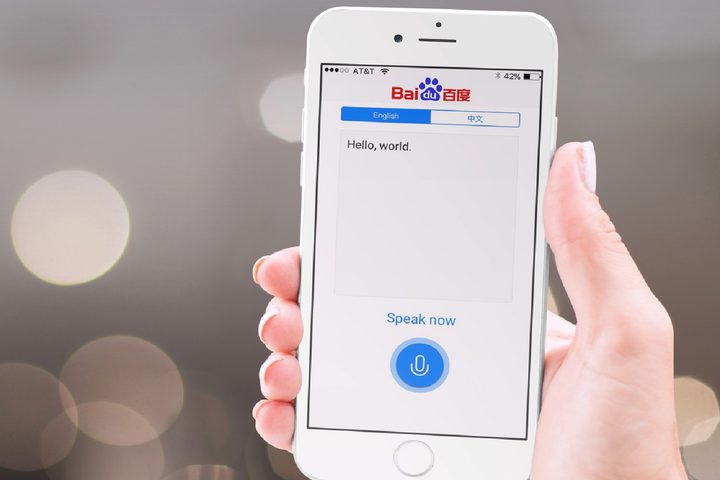
We’re not in the business of writing regularly about “fake” news, but it’s hard not to be concerned about the kind of mimicry technology is making possible. First, researchers developed deep learning-based artificial intelligence (A.I.) that can superimpose one person’s face onto another person’s body. Now, researchers at Chinese search giant Baidu have created an A.I. they claim can learn to accurately mimic your voice — based on less than a minute’s worth of listening to it.

“From a technical perspective, this is an important breakthrough showing that a complicated generative modeling problem, namely speech synthesis, can be adapted to new cases by efficiently learning only from a few examples,” Leo Zou, a member of Baidu’s communications team, told Digital Trends. “Previously, it would take numerous examples for a model to learn. Now, it takes a fraction of what it used to.”

Recommended Videos

Baidu Research isn’t the first to try and create voice-replicating A.I. Last year, we covered a project called Lyrebird, which used neural networks to replicate voices including President Donald Trump and former President Barack Obama with a relatively small number of samples. Like Lyrebird’s work, Baidu’s speech synthesis technology doesn’t sound completely convincing, but it’s an impressive step forward — and way ahead of a lot of the robotic A.I. voice assistants that existed just a few years ago.

The work is based around Baidu’s text-to-speech synthesis system Deep Voice, which was trained on upwards of 800 hours of audio from a total of 2,400 speakers. It needs just 100 5-second sections of vocal training data to sound its best, but a version trained on only 10 5-second samples was able to trick a voice-recognition system more than 95 percent of the time.

“We see many great use cases or applications for this technology,” Zou said. “For example, voice cloning could help patients who lost their voices. This is also an important breakthrough in the direction of personalized human-machine interfaces. For example, a mom can easily configure an audiobook reader with her own voice. The method [additionally] allows creation of original digital content. Hundreds of characters in a video game would be able to have unique voices because of this technology. Another interesting application is speech-to-speech language translation, as the synthesizer can learn to mimic the speaker identity in another language.”

For a deeper dive into this subject, you can listen to a sample of the voices or read a paper describing the work.

Luke Dormehl
I'm a UK-based tech writer covering Cool Tech at Digital Trends. I've also written for Fast Company, Wired, the Guardian…
Anti-surveillance clothing is getting cheaper, but don’t expect an invisibility cloak
Affordable shirts now claim to confuse facial recognition, although their protection depends heavily on the camera and software watching you
Chart, Plot, Adult

Anti-surveillance clothing is starting to look less like an art-school experiment and more like something you could actually wear outside. Shirts designed to confuse facial recognition systems now cost about as much as ordinary streetwear, although buying one won’t make you disappear.

The Guardian reports that designers are using face-like prints, unusual cuts and infrared lights to interfere with computer vision. These techniques target specific weaknesses, so their success depends on what happens to be watching you.

Read more
This spinning drone hides in plain sight using a visual illusion
This drone doesn't turn invisible. It tricks your brain into thinking it has.
Phantom Twist

For decades, engineers have chased the dream of an invisible drone. The usual approaches have involved transparent materials, camouflage coatings, or complex optical systems that bend light around an object. Researchers at Northwestern University decided to take a completely different route. Instead of hiding the drone itself, they chose to fool the human eye.

The result is Phantom Twist, an experimental drone that spins so rapidly it almost disappears into the background. It's not technically invisible, but to anyone watching, it looks more like a faint blur than a flying machine.

Read more
This smart knitted fabric can flip switches, count your steps, and even change shape
Grandma's knitting just entered its Iron Man era
Representative Image

For most of us, knitting brings to mind sweaters, scarves, and perhaps an ambitious grandmother determined to make winter more fashionable. Researchers at Harvard University, however, have a far more futuristic vision. They've transformed ordinary knitted fabric into a programmable material capable of changing shape, acting as an electrical switch, sensing movement, and potentially forming the foundation of tomorrow's wearable technology.

The research, published in Advanced Functional Materials by scientists at the Harvard John A. Paulson School of Engineering and Applied Sciences (SEAS), demonstrates how machine-knitted textiles can "snap" between multiple stable shapes without relying on motors or rigid mechanical parts.

Read more