1. Home
  2. Emerging Tech
  3. News

Cubs trail in the series but lead in the clubhouse

Add as a preferred source on Google

At this writing, the Cubs are down 3-1 in the World Series and are looking at a fast exit in their first Fall Classic in ages. While they may be in dire straits when it comes to the Series, they can at least relax in what may be the coolest clubhouse this side of … well, the bridge of the Starship Enterprise.

Yes, the Enterprise isn’t an MLB clubhouse, but that’s what this one looks like! Wrigley Field opened in 1902 and until recently, the home and visiting clubhouses were little more than broom closets — ill-suited to today’s players. Players bumped into and stumbled all over themselves getting from here to there. Cubs management decided to fix that, and began a five year renovation program in the winter of 2014 to bring The Friendly Confines up to spec. Well, at least most of it. The Cubs now have the second-largest clubhouse in The Show, second only to the Yankees, who could never take a backseat to anyone.

The spacious lockers are fully wired for tech. No doubt the entire place is a massive Wi-Fi hotspot. The video replay room is ready to take a close look at any play. The Tribune adds the team now has an “expanded locker room, a strength and conditioning center, training areas, offices, a lounge, a media room and, of course, the celebration room — aka ‘the party room.'” While the Cubs may have to wait awhile longer for a World Series title, their technology is clearly up to date.

Recommended Videos

According to the Chicago Tribune, work on the visiting team clubhouse is set to begin in 2018 and wrap in 2019. They took care of their guys quickly, but the road team will have to make do for a bit longer. After all, why rush to make the other guys comfortable? Dodgers manager Dave Roberts told the Tribune (with a wink) during a June series, “These close quarters build team unity.”

Brinke Guthrie
Former Contributor
Brinke’s favorite toys include his Samsung Galaxy Tab S, Toshiba Chromebook 2, Motorola Moto G4, and two Kindles. A…
I let Gemini take care of my houseplants, and they’ve never looked better
Study guide created by Gemini

I am, by every reasonable measure, a serial plant killer. I've lost count of the pothos, the peace lilies, the one very expensive fiddle-leaf fig that judged me silently for a month before giving up entirely. My problem was never a lack of love. It was that I'd either drown them out of guilt or forget they existed for a fortnight, with no middle ground. So when I started leaning on Gemini for the odd everyday question, letting it babysit my plants wasn't some grand plan. It happened almost by accident, and now my flat looks like something a person with their life together would own.

It started the way most of my plant emergencies do, with a leaf going a color it definitely shouldn't. Instead of doom-scrolling through contradictory Google searches like I usually would, I snapped a photo, handed it to Gemini, and asked what was wrong. What I got back was a proper answer, and it was the first of many.

Read more
I underestimated this NotebookLM feature until it completely changed how I study
google-adds-data-tables-feature-in-notebooklm

I'll admit it: I ignored NotebookLM's Mind Maps feature for far longer than I should have. I mostly used the app to ask questions about my documents or generate Audio Overviews and Short Video Overviews, while that little Mind Map button sat untouched. I assumed it was more of a nice-to-have than something I'd actually use. Turns out, I was completely wrong.

I stopped drowning in my own notes

Read more
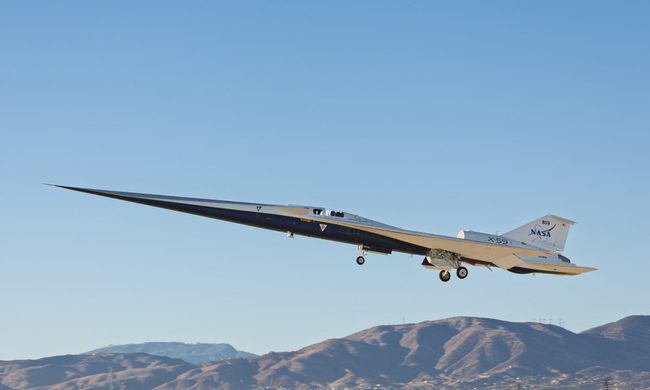
The Concorde dream is within reach. NASA X-59 just has to silence the supersonic boom
The jet built to kill the sonic boom just reached full speed
Lockheed Martin’s X-59

NASA has already proved that its needle-nosed X-59 can move seriously fast in recent test flights. Now, the next step is to find out whether it can break the sound barrier without announcing its arrival to everyone below. The experimental aircraft recently reached Mach 1.4, or about 924 mph (1,487 kph), at an altitude of 55,000 feet. Those are the target conditions NASA plans to use during future tests of the X-59’s quieter sonic signature, making the flight a major milestone for the agency’s Quesst mission.

NASA’s supersonic jet has reached full speed

Read more