  1. Home
  2. Emerging Tech
  3. Legacy Archives

High-tech helmet sensor knows when you crash and then calls for help

Add as a preferred source on Google

Last week Anthony Margrave took his new motorbike out for a spin near his home in Yorkshire, England. But he didn’t come home.

His girlfriend raised the alarm and the emergency services went out looking for him, but after two long days of searching they failed to locate either Margrave or his bike.

Recommended Videos

Then, three days after going missing, a small amount of motorbike debris was found on a country road. After a thorough search of the nearby area, police discovered Margrave at the bottom of a 180cm-deep roadside ditch. Incredibly, the 40-year-old Brit was still alive, though badly injured. Unable to reach his phone due to his injuries, he had only been able to call out, but being in such a remote area, nobody heard him.
Margrave is currently recovering in hospital, surrounded by family and friends who’d been starting to wonder if they’d ever see him again.

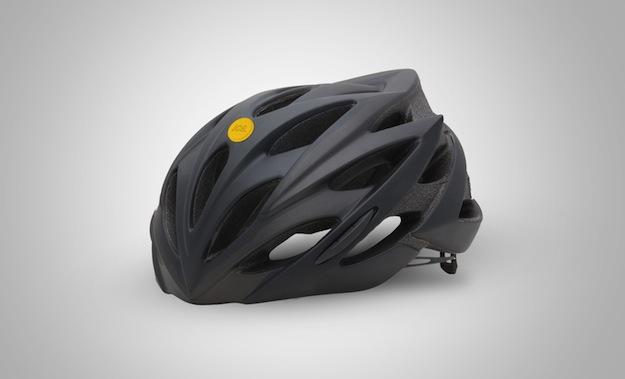
This miracle story ties in nicely with news of the creation of a helmet-based crash sensor – something which Margrave may well consider getting, should he ever climb back on a bike.

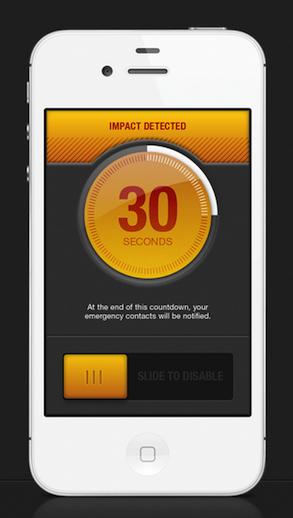
Made by a company based in Oklahoma, the small ICEdot device, which attaches to any helmet, is capable of detecting an impact suffered by its wearer. Communicating with the ICEdot app on the user’s smartphone, a message is then sent out to a family member or friend informing them of the incident, together with GPS data pinpointing their location. Such a device would be ideal for cyclists, motorcyclists, horse riders, skiers….you get the idea.

A countdown clock starts upon impact, giving the user time to cancel sending the message should the incident not require an emergency response.

ICEdot partnered with Colorado-based SenseTech LLC to create the product. Dr. Tim Bauer of SenseTech built an early version of the sensor following a cycling accident where he banged his head. “ICEdot goes into action when an individual cannot,” he said.

The device is making its debut this week at the Interbike trade show in Las Vegas and is expected to cost around $200 when it hits the market next year.

[GearJunkie via Tecca]

Trevor Mogg
Contributing Editor
Not so many moons ago, Trevor moved from one tea-loving island nation that drives on the left (Britain) to another (Japan)…
Researchers hid a prompt injection inside a PNG, and AI fell for it
Hacker

AI coding assistants like Claude are becoming every developer's favorite coworker. They can review code, explain confusing functions, and even write entire features with a single prompt. But new research suggests that this growing trust could also become their biggest weakness.

A team of security researchers (professor Sudipta Chattopadhyay and researcher Murali Ediga) has demonstrated an unusual attack that doesn't target the AI model directly. Instead, it targets what the AI doesn't pay enough attention to during code reviews. Rather than hiding malicious instructions in lines of code, the researchers tucked them inside an image file. Since many AI review tools treat images as decorative assets rather than as something worth inspecting, the pull request can appear perfectly harmless and sail through the review.

Read more
AI has already fallen into the wrong hands and they’re using it to make bombs
Logo, Text

Artificial intelligence has quickly become the go-to tool for everything from writing emails and summarizing meetings to helping students study or developers debug code. But the same technology that saves people time can also be misused, and a new report suggests that terrorist organizations are finding ways to do exactly that.

According to a research paper shared with The New York Times ahead of its publication, researchers found evidence that members of Boko Haram have been using popular AI chatbots to support both day-to-day activities and combat-related tasks. Interviews with 27 former members conducted in Nigeria over the past two years suggest that tools such as ChatGPT, Gemini, Claude, Grok, Meta AI, and DeepSeek were used to gather technical information, troubleshoot weapons, and even assist with planning attacks.

Read more
Claude Code can now browse the web without opening Chrome
The desktop app now includes an in-app browser that can read websites, click links, and interact with web apps.
Claude Code Featured

Developers spend a surprising amount of time bouncing between their code editor, browser tabs, API documentation, GitHub issues, and design files. Anthropic thinks Claude Code should simply do all of that without constantly asking users to switch windows. The company has announced a new in-app browser for Claude Code on desktop, allowing its AI coding assistant to open websites, read documentation, inspect designs, and interact with web pages directly from within the application.

A browser built into Claude Code

Read more