One truth about boats is that they make noise. Most engine-powered water vessels make quite a racket. Some styles are designed for maximum rumble and roar for the same reasons many motorcycles and performance cars audibly proclaim their power and speed. Heesen Yachts has taken an opposite approach with the newly christened M/Y Home. It’s reportedly very quiet on Home.
Home is the first of Heesen’s new breed of superyachts designed to be cleaner, quieter, and more fuel-efficient than typical vessels. The two major factors that account for the 50-meter (164-foot) Home’s desirable attributes are a Fast Displacement Hull Form (FDHF) and a hybrid propulsion system.
According to Heesen, Home is the first yacht to combine a Fast Displacement hull with hybrid power. Like other Heesen yachts, Home’s has an aluminum hull.
Fast Displacement Hulls
Here’s a quick rundown on some terms. A displacement hull vessel never leaves the water at any speed, but pushes through the water, creating bow waves and rear waves. Semi-displacement hulls flatten towards the back of the hull to lessen the resistance. A semi-displacement hull rises in the front as speed builds but never entirely leaves the surface — not by plan, at least.
If a semi-displacement hull boat does come up out of the water, bad things can happen, as boat hulls have no way to control movement under those circumstances. You may have seen videos of racing boats flipping end-over-end or flying into fast and often deadly barrel rolls.
Displacement boats are designed for both a maximum speed and an efficient cruising speed. In general, it’s rare that a large vessel will travel at full speed — full consumption at top speed can easily be double or more than at cruising speed.
Heesen Yachts works closely with Van Oossanen marine architects on many projects, and Van Oossanen patented the FDHF.
Fast Displacement hulls are rated 30 percent more efficient at cruising speeds and 15 percent at maximum speed compared to typical hulls. Those numbers translate to greater fuel efficiency, quieter operation, and a more comfortable ride.
If you’re loving all this info, you can learn a lot more about FDHFs here and here. The bottom line (both of which are hull jokes) is all about water resistance. FDHFs have less resistance than non-FDHFs.
Hybrid Propulsion Power
The second half of Home’s quiet, efficient operation formula is its hybrid power system. Home has two water-cooled 127 kW electric motors. Using only generator power, Home can cruise at 9 knots, keeping life on board unusually quiet.
Home also has two MTU 12V, 600 kW diesel engines. She can run on either power system or both. Maximum speed with both systems is 16.3 knots, but at Home’s 12-knot cruising speed the range is an estimated 3,750 nautical miles.

Amenities
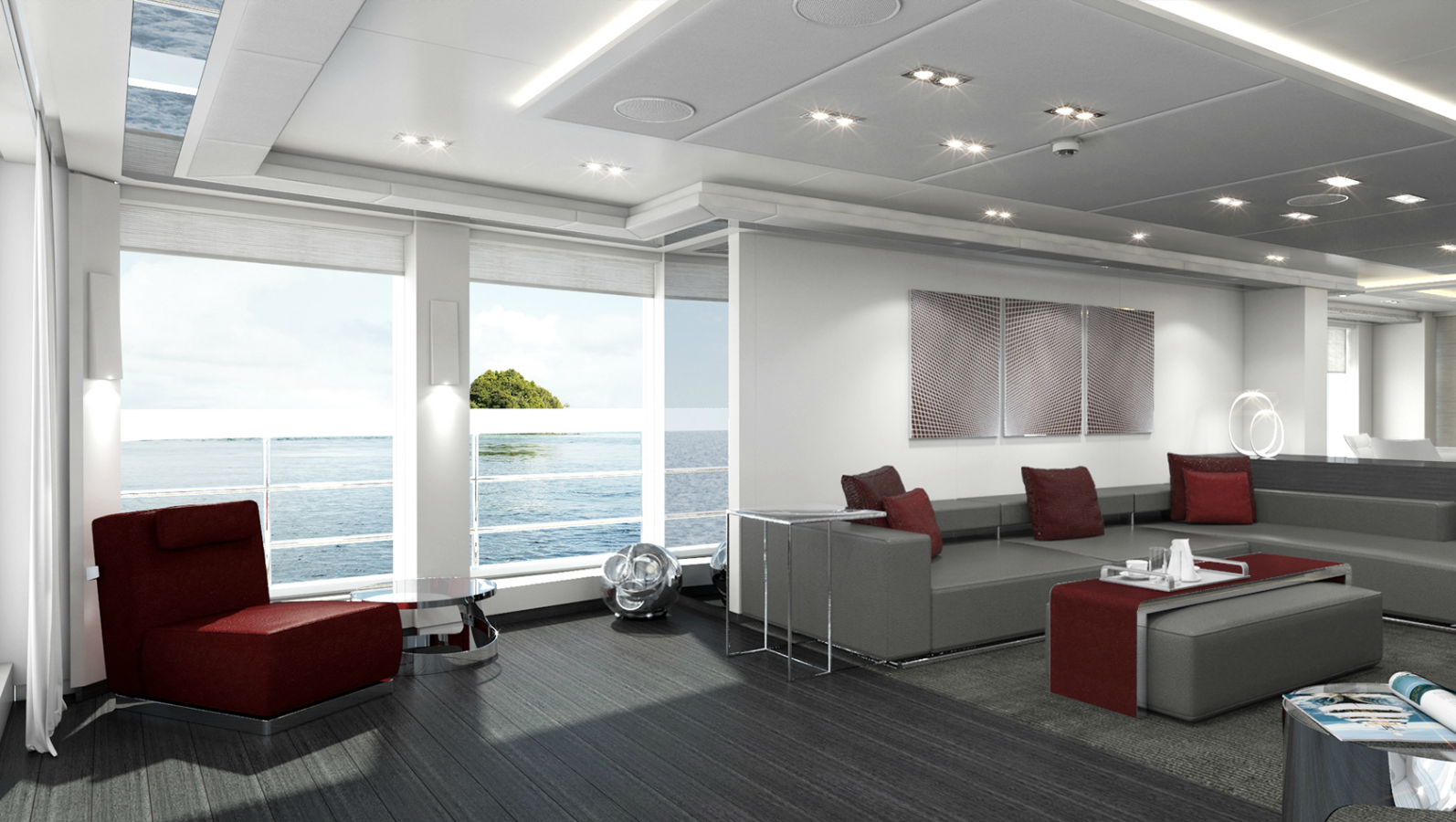
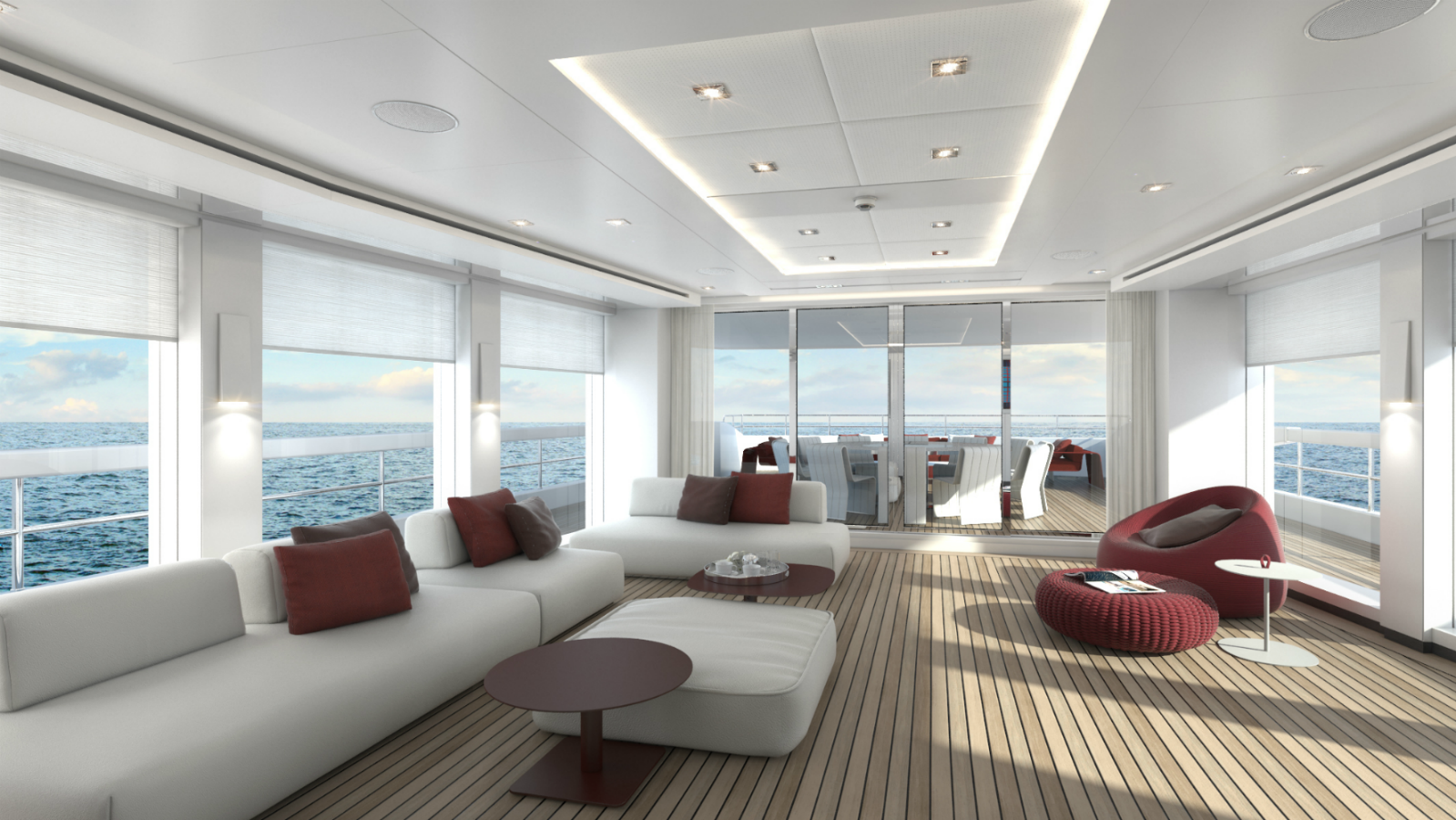
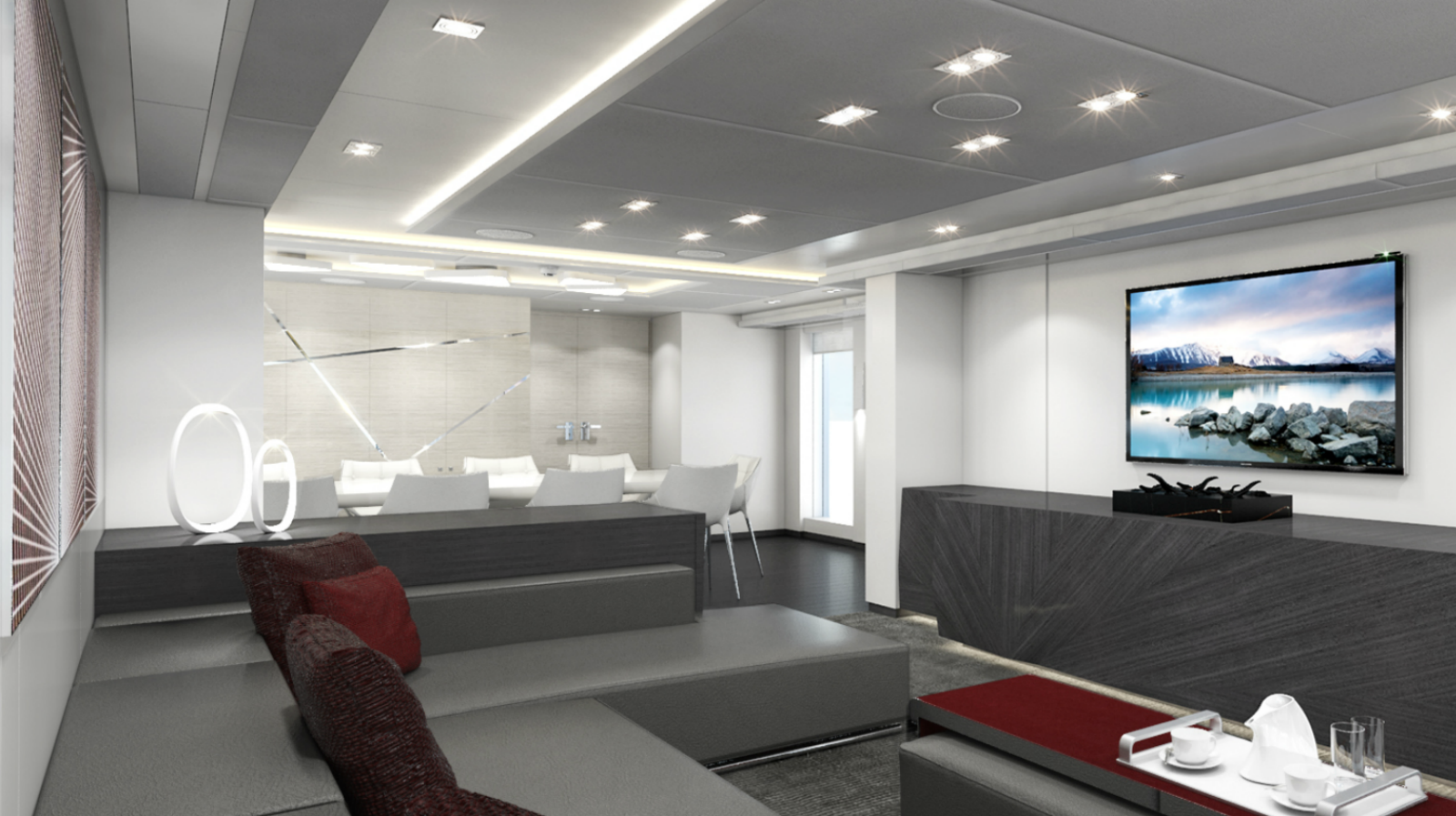
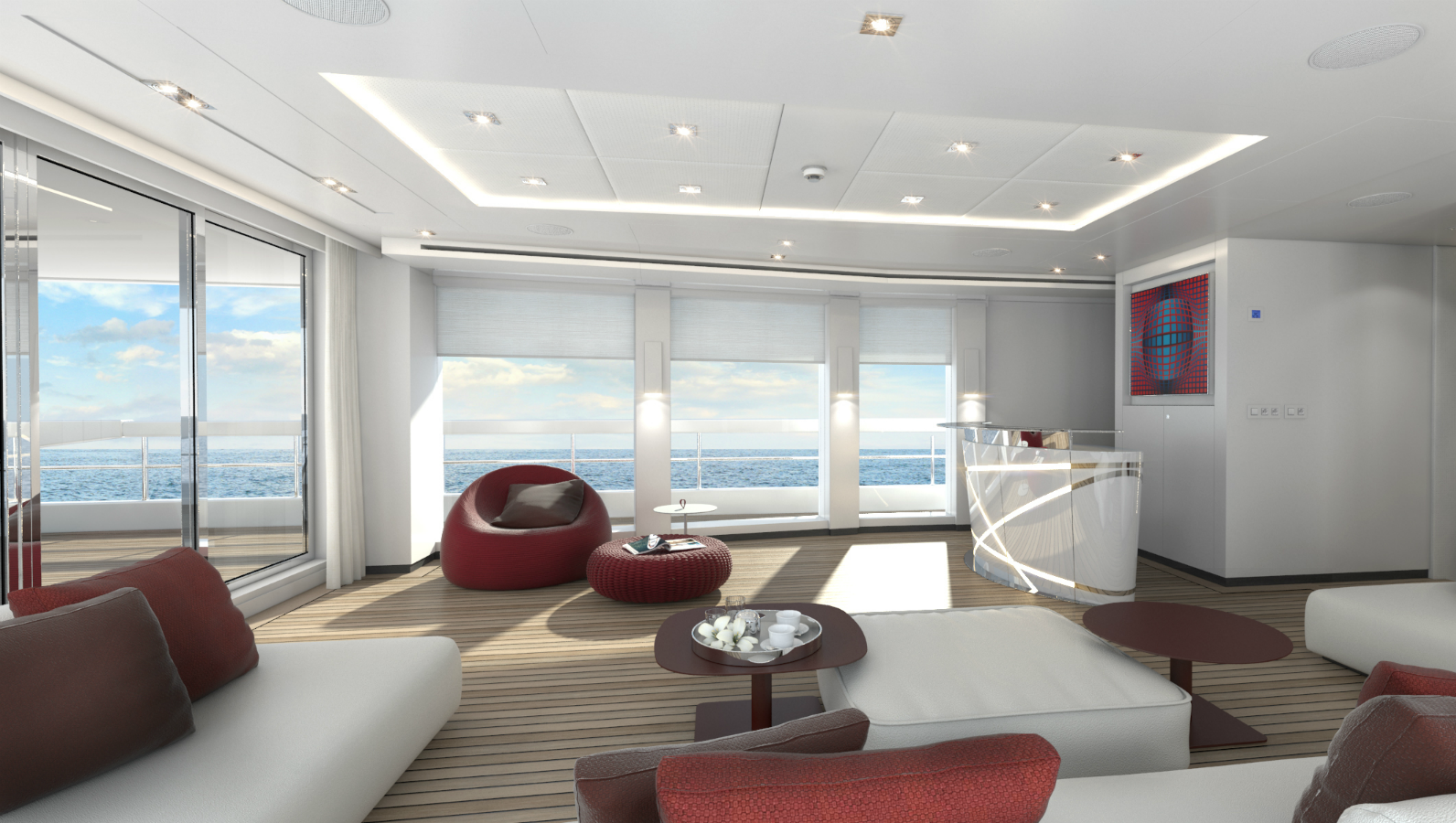
There’s an owner’s apartment forward on Home’s main deck with a study, a large bathroom, and a full-beam bedroom. Five guest staterooms on the lower deck include two singles, two doubles, and a full-beam VIP suite. A gym and spa are also on the lower deck.
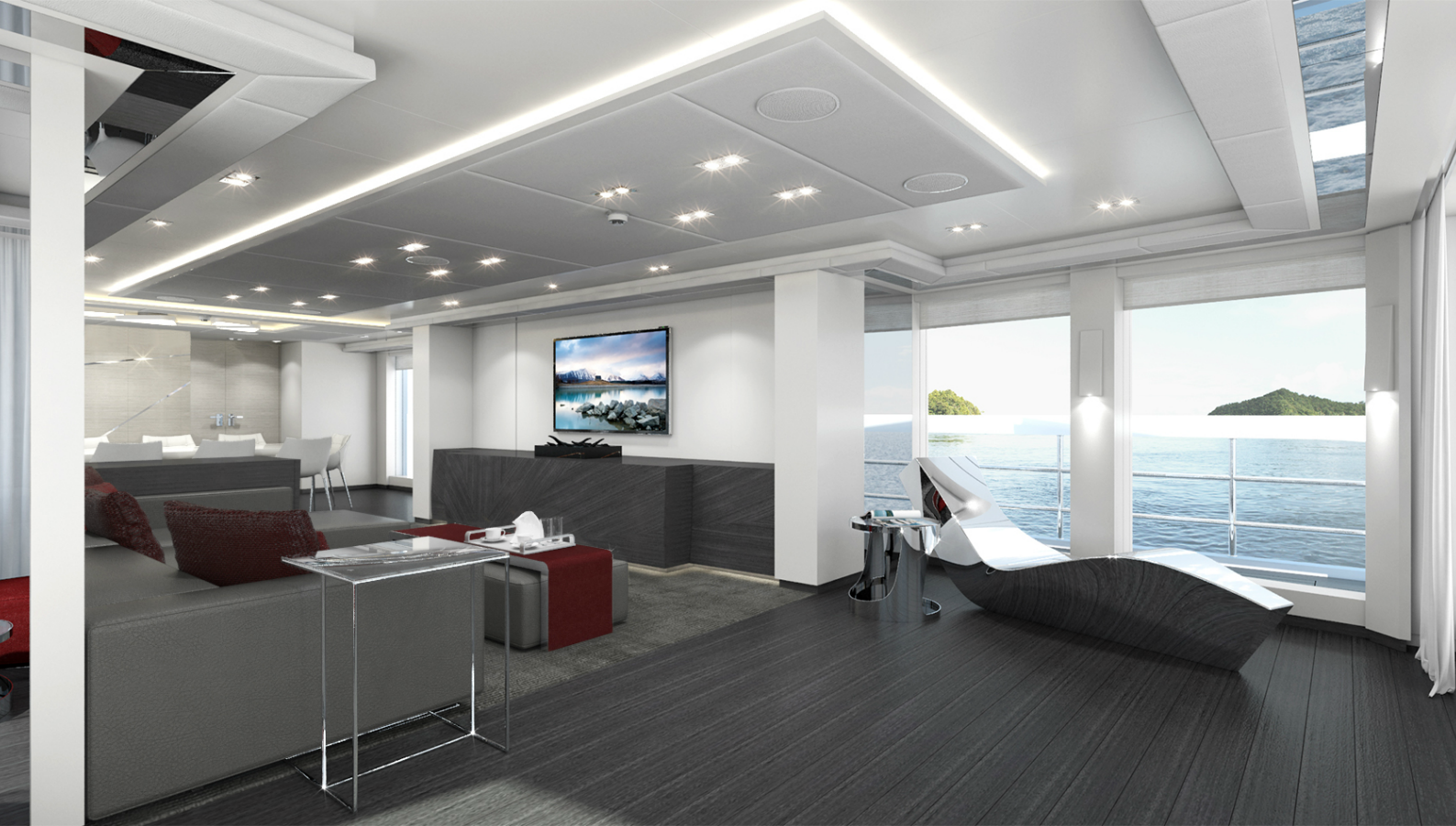
Home’s sky lounge has floor to ceiling windows overlooking the ocean and teak finishings to match the exterior design. The interior design is by Christiano Gatto.
Home’s design is all and more than we’ve come to expect from Heesen and other top yacht builders. But there’s one thing missing — a typical feature reportedly absent is one no one will miss: the incessant roar and grind of huge diesel engines while the vessel is underway.