
  1. Home
  2. Emerging Tech
  3. Legacy Archives

Interead Reveals New COOL-ER Ereader Models

Add as a preferred source on Google

cool-er-ereaderInteread today announced its new models that will be introduced at CES 2010 this week. The new pack of brightly colored ereaders is also multicultural—the company says these new COOL-ER readers work in every country on the planet. The COOL-ER ereaders support ebooks in every language and have menus in English, Spanish, Portuguese, German, French, Russian, Japanese and Chinese, and also support multiple zoom levels to create a customized and comfortable reading experience.

The new COOL-ER Classic is the lightest and, according to Interead, “most elegant” ereader model being announced. This model is currently available in a variety of places and colors. The Classic features a Samsung S3C2440 ARM 400MHz processor, 1GB of storage and a Linux operating system.

Recommended Videos

The petite and portable COOL-ER Compact measures in at only 6.7″ x 4.6″ x 0.41″ (170 mm x 117 mm x 10 mm) and Interead claims it has the “smallest footprint of any ereader while still maximizing the reader experience” with a 6″ E Ink screen. The Compact sports a 2GB onboard memory (expandable via SD card to 6GB total) and will be available this Spring.

Another new model, weighing in at only 5.8 ounces (164 grams), the COOL-ER Connect has built-in WiFi-enabled connectivity. The Connect also sports an “easy-to-use” touch screen—which is nice because most people are turned off by hard-to-use touchscreens. This model will also be available this Spring.

Last but not least, the new COOL-ER 3G model adds 3G connectivity to the ereader experience, keeping you connected on the go and where ever you are. This 3G connected ereader will be available in mid-2010.cooler-e-reader-side
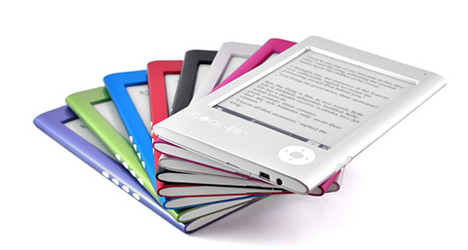
“As we have seen the ereader market evolve over the last year, it has become clear that the ereader is now a lifestyle device–not just a niche gadget,” says Neil Jones, Interead’s CEO. “As such, it’s important that we offer a range of ereaders to accommodate a variety of preferences and reading habits, and this product range does just this.”

More images and prices are to come once the final announcement is made at CES.

Dena Cassella
Former Digital Trends Contributor
Haole built. O'ahu grown
Elon Musk says Neuralink’s brain implants could help people with paralysis and blindness
Neuralink's Telepathy helps people control computers through thought, while Blindsight aims to restore visual perception.
elon-musk-neuralink-brain-implant

Elon Musk has revealed ambitious plans for Neuralink, and they go beyond controlling computers with your thoughts. The company is developing two brain implants, Telepathy and Blindsight, aimed at helping people with paralysis and severe vision loss. Musk also believes future advances could help people regain control of their hands and legs by reconnecting the brain with their limbs.

How Neuralink's Telepathy can help people with paralysis

Read more
Sony has shrunk its glasses-free 3D technology into a tiny screen, and it can bring anime characters to life on your desk
It's almost like having a digital, three-dimensional companion on your desk.
Sony's smaller 3D display for desk

Glasses-free 3D has always felt like a luxury I could admire from afar. Those screens were built for design studios, not smaller desks like mine. But Sony’s new version is small enough to sit beside my keyboard, and I’m genuinely excited.

The company has unveiled the ELF-MN1, a 6-inch display that makes 3D characters and avatars look like they’re coming out of the screen without any special glasses or a headset. It plugs into a phone or PC with one USB-C cable, and that’s pretty much it (via Sony).

Read more
3D-printed ghost guns are a notorious blind spot. Scientists may have finally cracked the traceability problem
The plastic used to make these weapons could hold clues that conventional forensic methods often miss.
3D printed Gun replica

Most conventional firearms come with serial numbers and leave unique microscopic markings on bullets and cartridge cases when fired. Investigators can use these clues to trace weapons or connect them to crimes. However, 3D-printed firearms, commonly called ghost guns, present a different challenge. They can be manufactured without serial numbers, and their unconventional construction can make traditional forensic analysis more difficult.

Now, researchers in Australia may have found another way to trace these weapons, using clues hidden in the plastic they're made from.

Read more