1. Home
  2. Space
  3. Emerging Tech
  4. Photography
  5. News

Lightweight infrared camera technology to help uncover what's unknown about our moon

Add as a preferred source on Google

A set of infrared cameras could just make another moon landing possible, and after that, maybe even Mars.

This week, NASA signed a contract with Lockheed Martin allowing a 2018 Orion Exploration Mission to include a system of infrared cameras known as SkyFire. Those cameras are expected to obtain more detailed images of the moon’s surface, scouting out potential areas for future human exploration. If the launch is successful, similar technology could be used to assess the possibility of sending astronauts to Mars.

Recommended Videos

The agreement lets Lockheed Martin put SkyFire on NASA’s Orion EM-1 launch, in exchange for data from the cameras. According to Lockheed Martin’s SkyFire project manager, John Ringelberg, the lunar flyby will help fill in lunar knowledge gaps as well as explore the potential for using the technology for further space exploration.

The SkyFire is a six-unit CubeSat, or a miniature satellite made up of several smaller units. CubeSats allow for smaller auxiliary projects to be completed alongside a larger mission.

Cameras in space certainly aren’t a new concept, but the technology under development by Lockheed Martin is lighter. Cutting out weight means the satellite could orbit closer to the moon than current technology allows, since a lighter load would make it easier to maneuver.

“The CubeSat will look for specific lunar characteristics like solar illumination areas,” James Russell, a Lockheed Martin SkyFire principal investigator, said in a press release. “We’ll be able to see new things with sensors that are less costly to make and send to space.”

According to Lockheed Martin, the moon mission serves as a sort of trial run for the SkyFire system. If the cameras are successful shooting the moon, they could be used to photograph Mars. And the IR photos aren’t your average space photos – the system could potentially reveal details like ideal landing sites and the safest areas for human exploration.

“For a small CubeSat, SkyFire has a chance to make a big impact on future planetary space missions,” Russell said. “With less mass and better instruments, we can get closer, explore deeper, and learn more about the far reaches of our solar system.”

SkyFire is one of 13 other CubeSats expected to hitch a ride on the EM-1 sometime in 2018.

Hillary K. Grigonis
Hillary never planned on becoming a photographer—and then she was handed a camera at her first writing job and she's been…
Getting to Mars may require a pit stop in orbit, and NASA just tested the nozzle to make that happen
A gas pump nozzle for spacecraft sounds simple. It is not, and that's what makes this test worth paying attention to.
Architecture, Building, Factory

Getting a spacecraft to Mars or beyond requires an enormous amount of fuel, most of which has to be hauled from Earth, adding to the overall cost and weight of the spacecraft. NASA has been working on a different approach, one that could be more efficient and effective.

It wants to refuel a spacecraft in orbit before heading out for the mission. What’s even more interesting is that the space agency just finished testing a component that could make that possible: a cryocoupler.

Read more
Elon Musk’ Starlink could soon offer mobile services as a US carrier
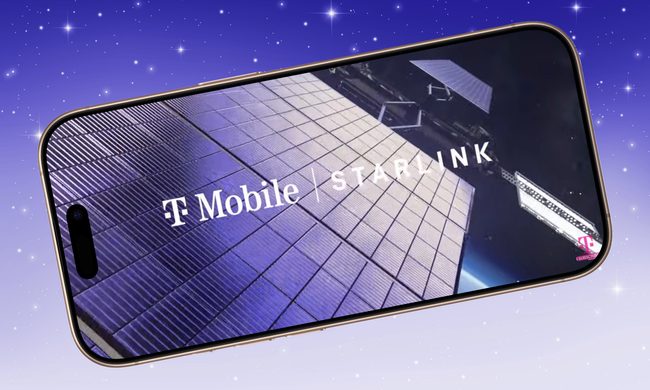
Showcase of T-Mobile Starlink service on an iPhone.

Elon Musk’s Starlink has already changed how millions of people access the internet, especially in places where traditional broadband struggles to reach. Now, the satellite internet service could be preparing for an even bigger leap — becoming your mobile carrier.

According to a Financial Times report, SpaceX has told investors it’s considering launching a retail Starlink mobile service in the US. Instead of simply partnering with wireless carriers, the company could begin selling mobile plans directly to consumers, putting it in direct competition with Verizon, AT&T, and T-Mobile.

Read more
Lightsails have hit another speed bump on the road to interstellar travel
The coolest interstellar travel idea may get betrayed by the light pushing it
LightSail in Earth orbit

Laser-powered lightsails are one of the coolest answers to spaceflight. It might not be as sci-fi-sounding as a warp drive, but now, its practicality has also come under question. Using lightsails, a spacecraft could unfurl an ultra-thin reflective sail and let a powerful laser push it toward another star, without relying on fuel.

The tech was simple and elegant--except it's also more complicated than it sounds. A new preprint from researchers Chao Shen and Jiaze Li of the Harbin Institute of Technology suggests that relativistic lightsails may run into a hidden propulsion problem once they start moving extremely fast.

Read more