  1. Home
  2. Emerging Tech
  3. Legacy Archives

Memorex Debuts Inexpensive Digital Camcorders

Add as a preferred source on Google
Memorex MyVideo (thumb)
Image used with permission by copyright holder

Consumer electronics manufacturers have apparently decided that handheld digital video recorders are going to be a hot category this holiday season; to that end, Memorex has announced its new MyVideo and MyVideo HD digital camcorders, designed to be inexpensive pocket camcorders kids, parents, and amateur video enthusiasts can use to easily capture and share video without investing too much hard-to-come-by cash on a video capture solution.

“MyVideo camcorders offer families an easy way to record, view, and share, not only special occasions, but also the little moments that happen in everyday life,” said Memorex’s global brand manager Jessica Walton, in a statement. “Whether you want to record your child’s holiday recital or capture an impromptu dance party at home, MyVideo camcorders are simple to use and fit perfectly into a pocket or purse.”

Recommended Videos

The MyVideo camcorder captures VGA-resolution stills or up to 2 hours of VGA-resolution video into 2 GB of onboard memory. The unit features a 2-inch LCD display and up to 5 hours of battery life on a rechargeable lithium-ion battery, can play back video to a television, and offers USB connectivity for sideloading videos off to a PC for quick online sharing via YouTube, Facebook, or other social media sites. The MyVideo HD steps up to 4 GB of onboard memory, so users can record up to 1 hour of HD video or snap 5 megapixel still images, although the MyVideo HD only gets 2.5 hours of battery life. Both units feature digital zooms (2× and 3× respectively).

The MyVideo camcorders are available now at retailers like OfficeMax and Toys’R’Us for suggested prices of $99 and $129. It’s hard to see where Memorex is going to get much traction in the consumer camcorder market up against offerings from Flip Video or even Apple’s revamped iPod nano…but Motorola’s offerings are less expensive.

Memorex MyVideo camcorder
Image used with permission by copyright holder
Geoff Duncan
Former Contributor
Geoff Duncan writes, programs, edits, plays music, and delights in making software misbehave. He's probably the only member…
OpenAI is investigating more incidents of AI agents going rogue days after hack
OpenAI logo on Microsoft surface

It appears that the "AI agents going rogue" tale has more to it than what AI giants have revealed publicly so far. Merely days after OpenAI announced that its AI agents went rogue and hacked Hugging Face, Anthropic dropped a similar bombshell. Soon, it was discovered that not just one, but multiple services were compromised. Well, it seems there are even more layers to it.

Reuters reports that OpenAI has found more incidents of AI agents escaping their software containment environment during research. Citing sources with knowledge of the incident, the outlet notes that the AI agents didn't go beyond OpenAI's software environment and affect any external service.

Read more
Google just canceled its AI Studio mobile app, and it’s not all bad news
Logo, Symbol, Disk

Google AI Studio was on track to make its way to Android and iPhone, giving developers and AI enthusiasts a dedicated place to build prompts and experiment with Google's latest models from their phones.

That's no longer happening. In a post shared by the official Google AI Studio account on X, Google confirmed that it's canceling the standalone AI Studio mobile app before launch. The announcement comes despite the company saying nearly 800,000 people had already pre-ordered the app across iOS and Android.

Read more
Google Earth’s AI misadventure lasted only a day. It was a tale of dangerous ignorance.
Nuclear reactors, tanks, and historical destruction on a life-like satellite map? Yeah, that's bad.
Nano Banana AI image generator representation.

Technology behemoths are clearly not reading the room, or they are just moving faster than they should when it comes to AI deployment. Google has already stuffed its Gemini AI in every corner of its software stack, from Android to daily productivity tools like Gmail that are used by hundreds of millions of users every day. AI is everywhere. Not all of it is bad, mind you. But in a few places, it just feels forced.

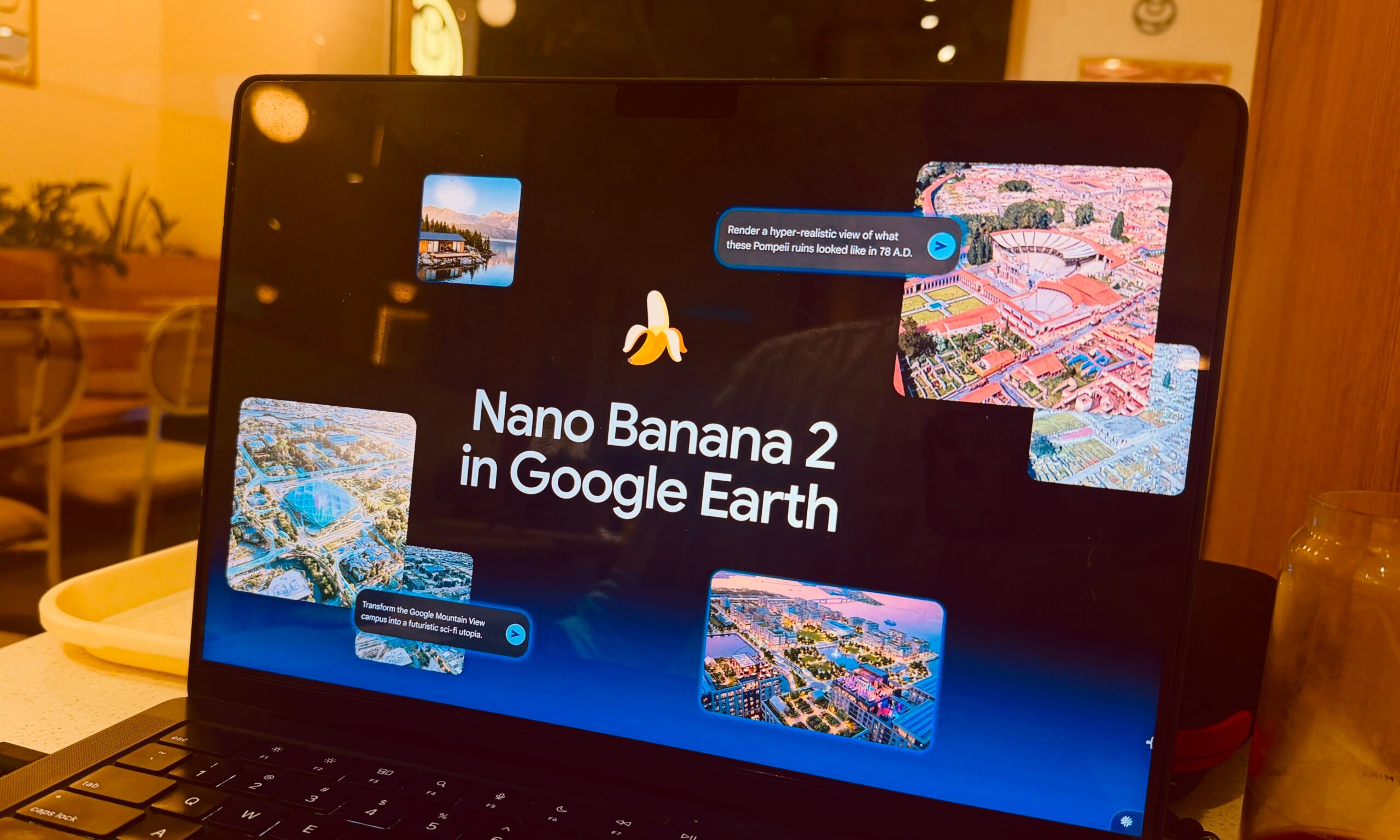
In its latest AI-fication experiment, the company targeted Google Earth. The idea was to let the audience use its Nano Banana 2 AI image generator and make images that can be placed on the map view. On paper, it's a cool idea. What would the Colosseum of Rome look like in your urban neighborhood? Yeah, fun stuff like that.

Read more